Colonial kitchens were where culinary traditions merged with local resources, resulting in unique dishes that reflect a blend of cultures. These spaces were often bustling hubs of activity, where families gathered to prepare meals, share stories, and bond over the food that nourished them. Exploring the details of colonial kitchens offers a glimpse into the lives of those who shaped our modern culinary landscape.
The Heart of the Colonial Home

Colonial kitchens were more than just cooking spaces; they were the heart of the home. This image captures a cozy colonial kitchen filled with warmth and charm. The wooden beams and brick fireplace create a welcoming atmosphere, perfect for gathering with family.
The large dining table, adorned with a simple tablecloth, invites meals shared together. A teapot and fresh produce sit ready, hinting at the delightful meals that could be created. In colonial times, kitchens were bustling places where stories were told and traditions passed down.
Every detail in this kitchen speaks of comfort and functionality. The blend of rustic wood and classic design offers a glimpse into the past, showcasing how kitchens served as a hub for family life. The carefully arranged decor adds a personal touch, making it feel like a home.
The Role of Women in Colonial Kitchens
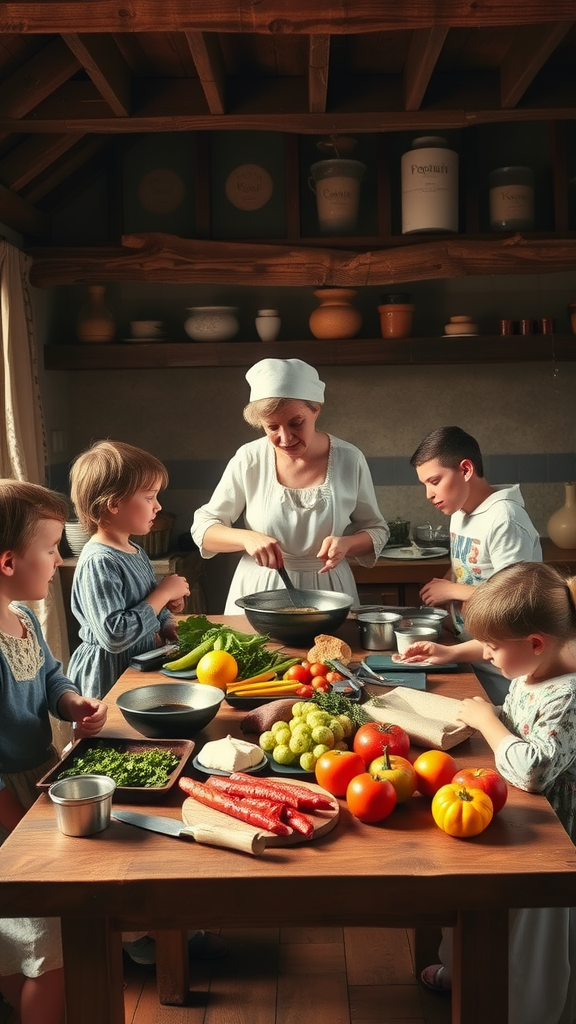
The image captures a warm scene in a colonial kitchen, where a woman stands at the center, guiding children as they help prepare a meal. This moment highlights the essential role women played in the kitchen, not just as cooks but as educators in the family. Food was a vital part of daily life, and women were often the ones passing down recipes and skills to the next generation.
Women in colonial kitchens managed many tasks, from cooking to preserving food for the winter months. They used local ingredients, making the most of what was available. This image showcases a variety of fresh vegetables and fruits, illustrating the importance of farm-to-table practices even back then.
Cooking was often a communal activity. Children learned by watching and helping, fostering a sense of teamwork and tradition. The kitchen was more than just a place for food; it was where family bonds were strengthened, and cultural traditions were shared. Women’s contributions in this space were vital for both sustenance and family unity.
Herbs and Spices in Colonial Cuisine
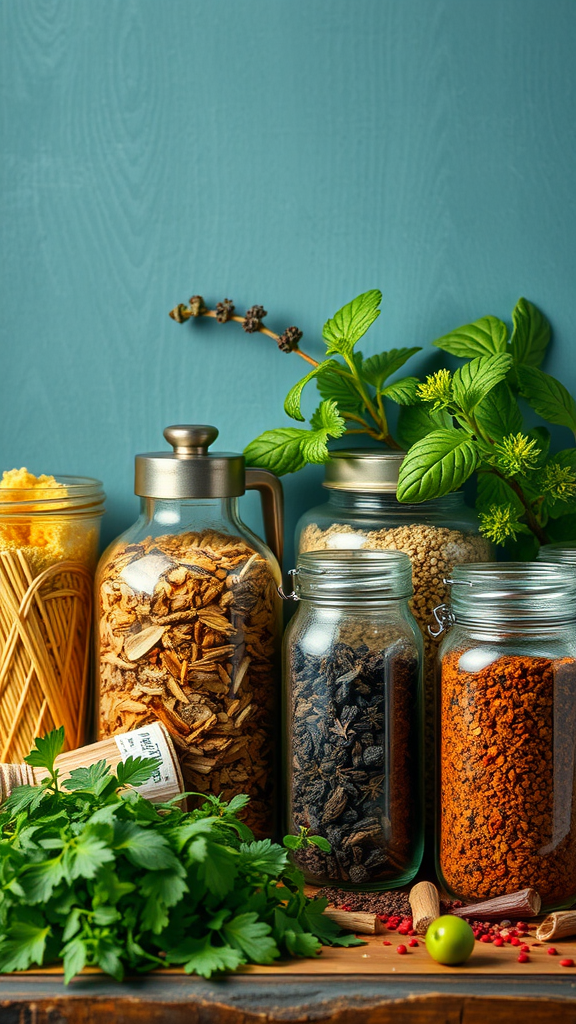
Colonial kitchens were filled with a variety of herbs and spices that brought life to everyday meals. The image showcases an array of jars filled with different spices, along with fresh herbs like mint and coriander. These ingredients were essential for flavoring dishes and highlighting the diversity of colonial cooking.
During colonial times, herbs such as mint and basil were commonly grown in home gardens. These plants not only added taste but also served practical purposes, like aiding digestion. The spices in the jars represent the trade routes that connected the colonies to distant lands, introducing flavors from around the world.
Cooking with herbs and spices was more than just about taste; it was about health benefits too. Many spices, like cinnamon and turmeric, were valued for their medicinal properties. The vibrant colors of the spices in the jars show how important they were in making meals visually appealing.
Exploring these ingredients gives us a glimpse into the culinary practices of the past. Each jar tells a story of trade, tradition, and creativity. Today, we can still enjoy these flavors in our kitchens, connecting us to our history while enhancing our meals.
Traditional Cooking Implements
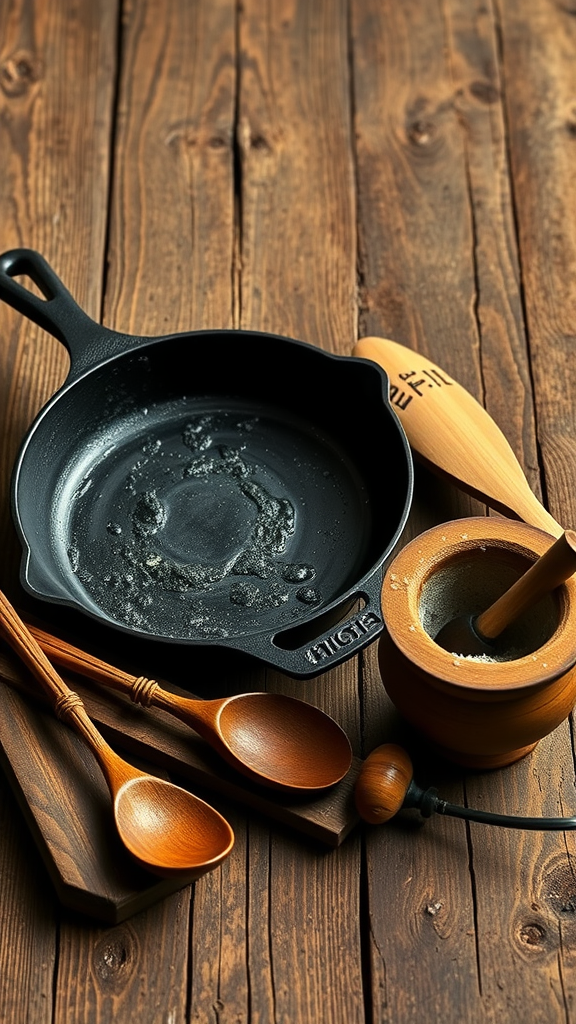
This image showcases some essential cooking tools commonly found in colonial kitchens. The rustic wooden table sets a warm tone, enhancing the charm of these traditional implements.
The cast iron skillet in the center is a classic choice for cooking. Its durability made it a staple for many households. It can be used for frying, baking, and even roasting.
Surrounding the skillet, you can spot several wooden spoons. These utensils are perfect for stirring and serving, and they also add a handmade touch to the kitchen. Each spoon tells a story of meals prepared and memories made.
Next to the skillet is a clay mortar and pestle. This tool was essential for grinding spices and herbs, allowing flavors to blend beautifully. It shows how cooking was often a labor of love, requiring effort and care.
In colonial times, these simple yet effective tools were the backbone of meal preparation. They highlight a time when cooking was an art form, and the kitchen was the heart of the home.
Preserving Food Techniques
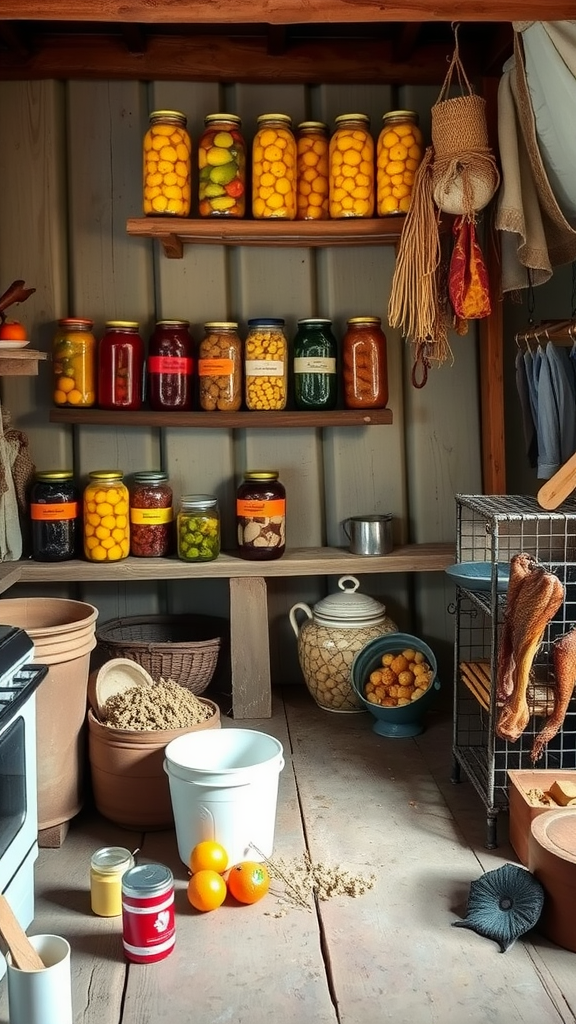
The image showcases a charming colonial kitchen filled with jars of preserved foods. Shelves lined with colorful jars highlight various fruits and vegetables, showcasing the art of food preservation. This method was crucial for families in the past, allowing them to enjoy seasonal produce throughout the year.
In colonial times, people relied on preserving techniques like canning, pickling, and drying. These methods helped prevent spoilage and ensured that food was available during the colder months. The vibrant colors of the jars suggest a rich variety of flavors, from sweet jams to tangy pickles.
The kitchen is not just a place for cooking; it’s a hub for preparation and storage. Notice the elements like baskets and clay pots. These were often used to store grains and root vegetables, essentials for any household. The care put into organizing this kitchen reflects the importance of food in daily life.
Families would gather to help with the preserving process, making it a community activity. The kitchen was alive with laughter, stories, and the delicious smells of fruits bubbling on the stove. It’s a beautiful reminder of how food brings us together, both then and now.