House rules are here to make sure everyone enjoys their time and feels comfortable. They’re designed to keep things chill and fun, so take a moment to check them out and see how we can all get along while having a great time together!
Encouraging Respect and Courtesy Among Residents

In the image, a group of young people is gathered in a bright, welcoming kitchen. They are preparing food together, showcasing teamwork and camaraderie. This scene represents more than just cooking; it’s about building relationships and fostering respect among residents.
When people come together for a shared activity, like cooking, they naturally engage in conversation and collaboration. This interaction encourages understanding and respect for one another’s ideas and contributions. It’s a simple yet effective way to strengthen community ties.
Creating an environment where everyone feels valued is essential. In settings like this, residents can learn to appreciate diverse perspectives and skills. Cooking together allows individuals to share their traditions and tastes, promoting inclusivity.
Additionally, respecting each other’s space and efforts while cooking helps develop courtesy. Simple gestures, like offering to help with tasks or cleaning up together, go a long way in showing support and appreciation. Such actions contribute to a positive community atmosphere.
Creating a System for Conflict Resolution
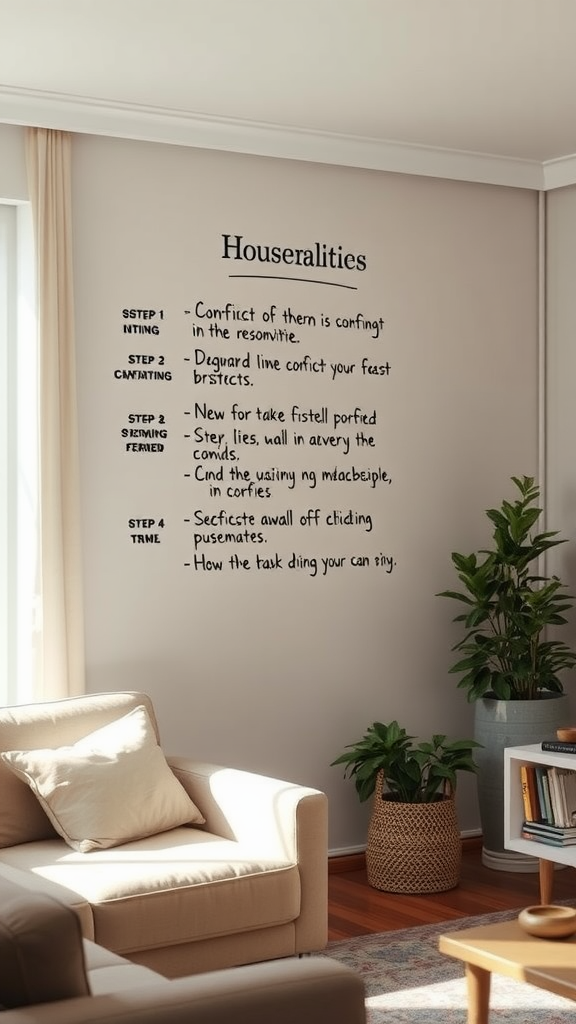
Conflict resolution is key in any home or shared space. The image shows steps on a wall that outline a system to handle disagreements. It’s clear and straightforward, making it easy for everyone to follow.
Each step is designed to guide individuals through resolving issues effectively. From identifying the conflict to taking action, these steps emphasize communication and understanding. It’s about creating a peaceful environment where everyone feels heard.
This visual approach helps make conflict resolution less daunting. When people can see the process laid out, it becomes easier to approach tough conversations. Clear steps can lead to smoother resolutions, fostering a sense of community.
Having a set plan like this encourages accountability among housemates. It reminds everyone to contribute positively to the household dynamics. With a little effort from each person, conflicts can be resolved amicably, maintaining harmony at home.
Implementing House Chores and Responsibilities
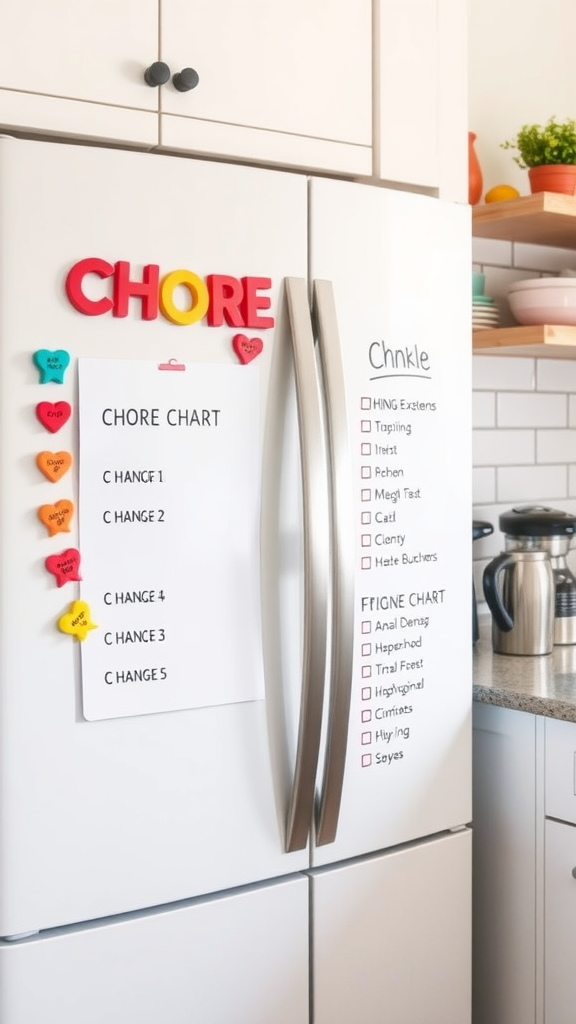
Managing household chores can feel overwhelming, but a little organization can make a big difference. The image shows a fridge adorned with a chore chart, making it easy for everyone to see their tasks at a glance. This setup encourages everyone to take responsibility for their share of the work.
The colorful letters spelling ‘CHORES’ grab attention, while the chore chart lists specific tasks. This visual reminder helps keep everyone accountable. You can even personalize it with fun magnets to make it more engaging for the family.
Having a clear chore chart can spark conversations about responsibilities. It’s a simple way to ensure chores are divided fairly, making household management smoother. Encourage each family member to check off tasks as they complete them. This creates a sense of accomplishment and motivates everyone to pitch in.
The additional lists on the side add layers to the organization, possibly outlining meal planning or other household tasks. This not only streamlines chores but also fosters a sense of teamwork. Implementing a system like this can turn chores into a fun family activity.
Establishing Clear Communication Protocols
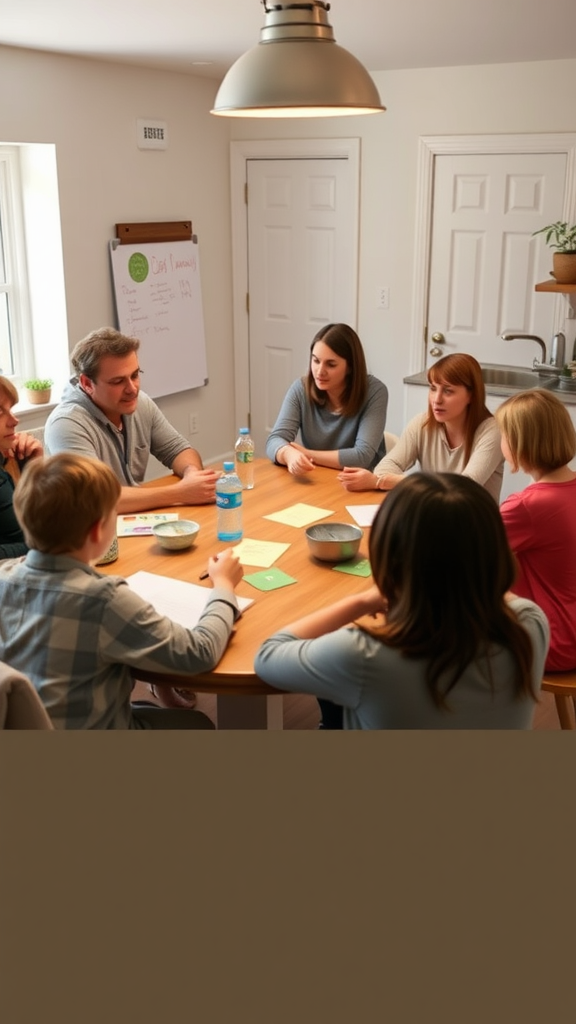
In this image, a group of people gathers around a table, likely engaging in a discussion or brainstorming session. The setting feels warm and inviting, with natural light pouring in from the windows. On the table, there are various items, including bowls and perhaps notes reflecting their discussions. This casual atmosphere encourages open dialogue.
Clear communication protocols are essential for any team. They help everyone understand their roles and responsibilities, leading to better teamwork. When everyone feels heard, collaboration improves.
Creating these protocols can be as simple as having regular check-ins or using tools that allow for shared updates. The key is to ensure everyone knows how and when to communicate. This can include guidelines on response times and preferred communication channels.
By establishing these practices, teams can avoid misunderstandings and keep projects moving forward smoothly. The image reflects the essence of this idea—people engaged in conversation, sharing ideas, and building connections.
Setting Boundaries for Shared Spaces

Creating a shared space in your home can be a fun experience, but it also requires some thoughtful planning. The image shows a cozy living room setup, filled with personal touches and a welcoming vibe.
The arrangement includes comfortable seating, a beautiful coffee table, and shelves adorned with art and books. Each piece contributes to a relaxed atmosphere, perfect for gathering with friends or relaxing alone.
In shared spaces, boundaries are key. It helps to define areas for different activities. For instance, the cozy couch is great for lounging, while the coffee table can serve as a workspace or a dining area. Consider using items like rugs or furniture to create these distinctions.
In the image, the vibrant colors and thoughtful decor showcase how personal items can enhance a space while still respecting shared boundaries. This encourages everyone to feel at home without stepping on each other’s toes.