Ever wonder what a lighthouse is all about? These towering structures serve as guiding lights for sailors, helping them navigate tricky waters and avoid hazardous shores. Whether perched on cliffs or standing boldly at sea’s edge, lighthouses combine functionality with unique charm, often becoming beloved symbols of coastal towns.
Conservation and Preservation Efforts
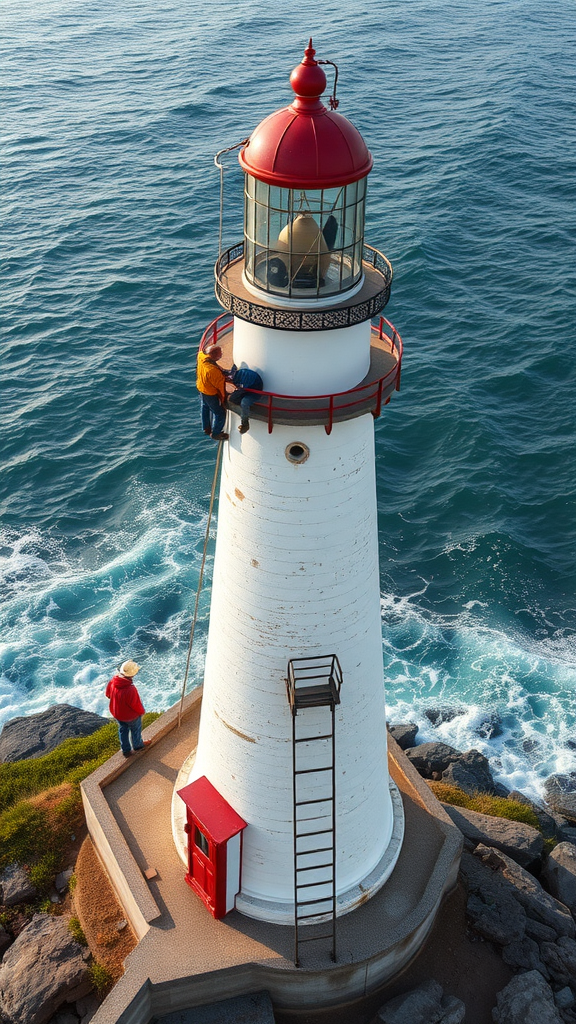
This image captures a lighthouse surrounded by the ocean, a structure that symbolizes guidance and safety. The lighthouse is being maintained by two individuals, showcasing the hands-on efforts needed to keep such historical landmarks in good shape. Their work is vital to preserving not only the lighthouse itself but also the maritime heritage it represents.
Conservation efforts like these are crucial for maintaining lighthouses, which often have deep historical significance. They provide a link to our past, reminding us of the days when they were essential for navigation. Today, they serve as popular attractions, drawing visitors with their charm and stories.
As we focus on preservation, it’s important to support initiatives that protect these structures. Many lighthouses face challenges such as erosion, weather damage, and funding for maintenance. Community support and awareness can help ensure these beautiful landmarks continue to stand tall for future generations.
Historical Significance of Lighthouses

Lighthouses are symbols of safety and guidance, standing tall against the backdrop of the sea. The image shows a lighthouse that has witnessed countless maritime journeys since its construction. This particular structure is more than just a tower; it’s a historical landmark. Built in a time when navigation relied heavily on visual cues, its light has been a lifeline for sailors.
Each lighthouse has a unique story, often reflecting the maritime history of its region. They were strategically placed at perilous coastal areas, helping to prevent shipwrecks. The one depicted here likely guided vessels safely along rocky shores, marking hazards in treacherous waters.
Moreover, lighthouses served as points of community pride. Many coastal towns centered around them, developing economies built on fishing and shipping. The presence of a lighthouse often meant safety and prosperity, making them crucial to local histories.
Lighthouses Around the World

This charming map showcases lighthouses from various parts of the globe. Each lighthouse is marked clearly, making it fun to spot them as you travel across the map. With illustrations that pop against a light blue background, the artwork is both informative and visually appealing.
The lighthouses serve as symbols of safety and guidance for sailors. You can see notable examples like the famous lighthouse in France and the iconic ones scattered along coastlines in the United States. Each one has its own story and significance.
Maps like this help celebrate the beauty of these structures. They remind us of the importance of navigation and the maritime history that connects places around the world. Whether you’re a fan of travel or just enjoy unique art, this map is sure to inspire a sense of wanderlust.
Architectural Styles of Lighthouses
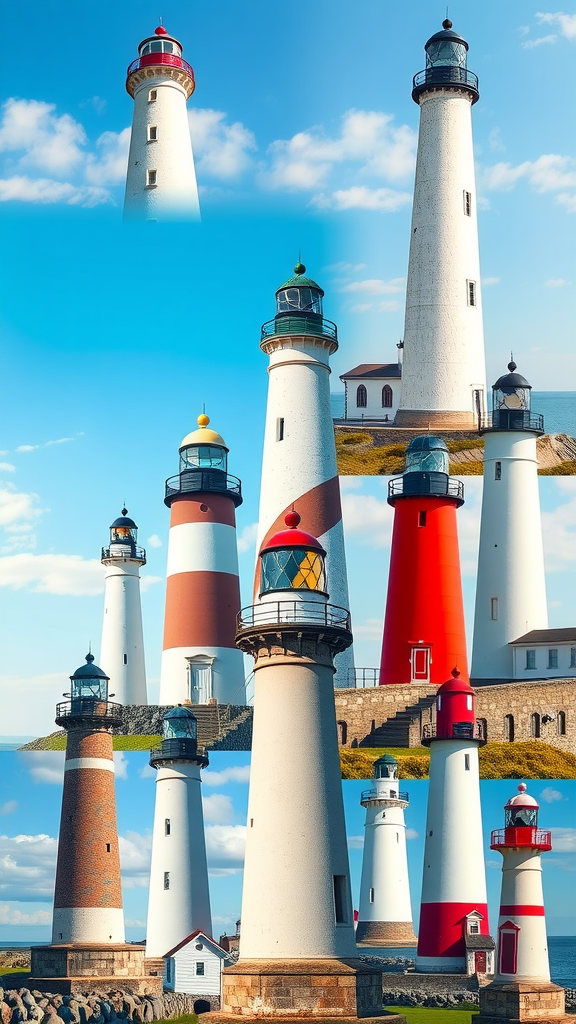
Lighthouses have a unique charm that comes from their designs and colors. The image showcases a variety of lighthouse styles, each with its own character.
You can spot lighthouses that are tall and slim, as well as those that are shorter and more stout. The differences in color schemes—like bold reds, classic whites, and playful patterns—add to their visual appeal.
Some lighthouses feature distinct architectural elements, such as balconies and domes, while others have a more straightforward design. These structures not only guide sailors but also tell stories about the regions they belong to.
Overall, the image highlights how diverse lighthouse architecture can be. Each one has its own flair, making them special landmarks along coastlines.
5 Stunning Lighthouses to Visit Along the Coast
Lighthouses have been guiding ships safely to shore for centuries, standing tall against the crashing waves and changing tides. These iconic structures are not just functional; they carry a rich history and symbolize hope and safety for sailors navigating treacherous waters. From picturesque coastlines to rugged cliffs, each lighthouse has its own story, making them fascinating landmarks worth exploring.
The Role of Technology in Modern Lighthouses
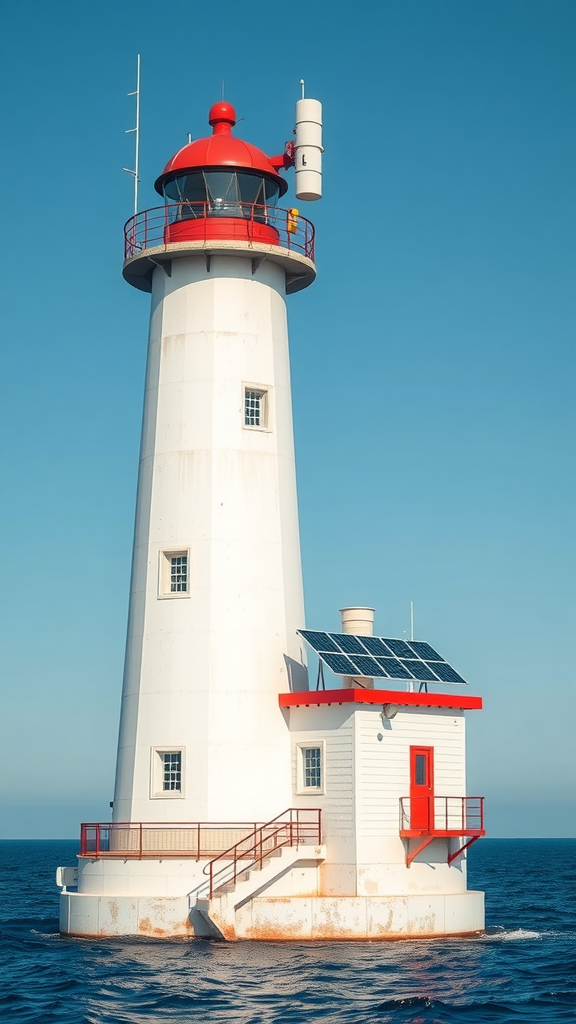
Modern lighthouses are much more than just tall structures guiding ships. They now incorporate advanced technology, blending traditional roles with innovative solutions. The lighthouse in the image showcases this evolution beautifully.
At first glance, the bright red roof and solar panels catch your eye. These solar panels are a significant upgrade. They provide sustainable energy, reducing the reliance on traditional power sources. This not only cuts costs but also minimizes the environmental impact.
Look closely at the antennas atop the lighthouse. These are essential for communication. They help relay important information to vessels navigating nearby waters. This technology ensures safety and enhances navigation, making the waters more secure for all.
The white and red colors are not just for aesthetics. They help in visibility, allowing sailors to identify the lighthouse from a distance. This is crucial for safe passage, especially in challenging weather conditions.
Incorporating technology in lighthouses is a game changer. It ensures they remain relevant and effective in today’s maritime landscape. The image perfectly illustrates how lighthouses adapt to modern needs while maintaining their core mission.
Lighthouses as Coastal Landmarks

Lighthouses are more than just tall structures; they symbolize safety and guidance along rugged coastlines. This image shows a lighthouse perched on a rocky cliff, surrounded by vibrant blue waters. You can almost feel the fresh ocean breeze and hear the waves crashing against the rocks.
This specific lighthouse stands proudly, its bright white color contrasting beautifully with the natural hues of the landscape. It plays a vital role in maritime navigation, helping boats safely navigate treacherous waters. It’s a reminder of the skilled craftsmanship that goes into building these coastal sentinels.
Visiting such lighthouses can be quite the treat. Many have walking paths leading up to them, offering stunning views of the coastline. The combination of sea, sky, and land creates a picturesque scene perfect for photographs. You might even find local wildlife, adding to the charm of the experience.
Architectural Styles of Lighthouses
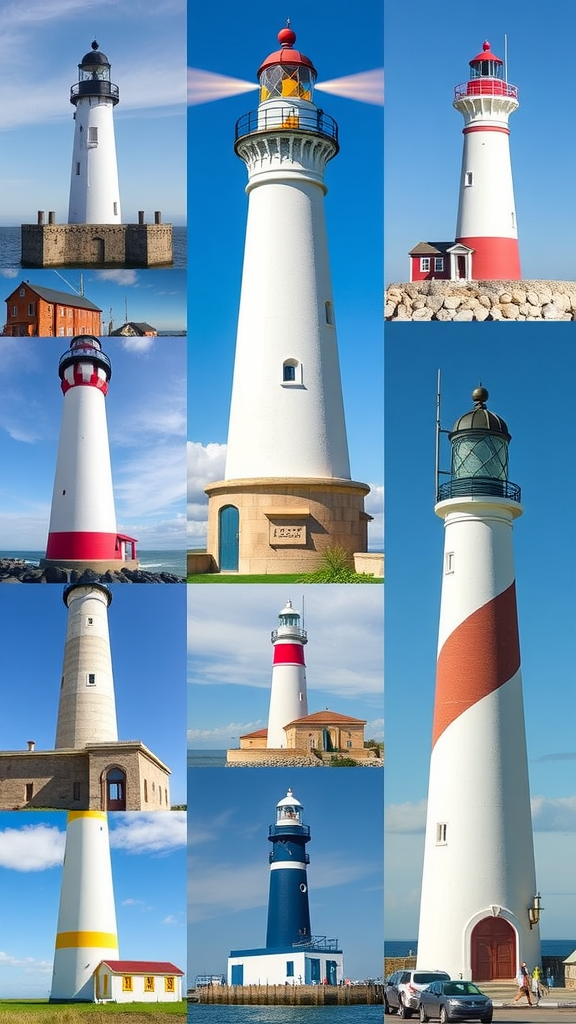
Lighthouses come in various designs, each with unique features. The image showcases several distinct lighthouse styles, highlighting their diverse shapes, colors, and structures. From classic brick towers to colorful coastal lighthouses, each one tells its own story.
The tall towers are often painted in bright colors or patterns, making them easily visible from afar. Some have charming houses nearby, adding to their quaint aesthetic. The differing heights and styles reflect the local culture and maritime history of their regions.
For those interested in visiting, many lighthouses are located in scenic areas, perfect for a day trip. Some even offer tours, giving insight into their history and function. Whether you’re a photography enthusiast or just love coastal views, exploring these lighthouses can be a delightful experience.
Lighthouses in Literature and Art

Lighthouses have captured our imagination in many ways. They stand tall, guiding sailors through treacherous waters. In art and literature, they symbolize hope and safety. This image beautifully illustrates that theme. The lighthouse is surrounded by books, emphasizing its place in storytelling.
The bright light from the lighthouse shines against a stunning sky. Behind it, a calm sea adds to the peaceful scene. The open book in the foreground invites readers to dive into stories where lighthouses play a vital role. Each book could hold tales of sailors, lost ships, and the beacons that saved them.
This mix of literature and art highlights how lighthouses have become timeless symbols. They remind us of journeys taken and stories shared. Whether in a painting or a novel, lighthouses continue to inspire creativity and wonder.
Historical Significance of Lighthouses
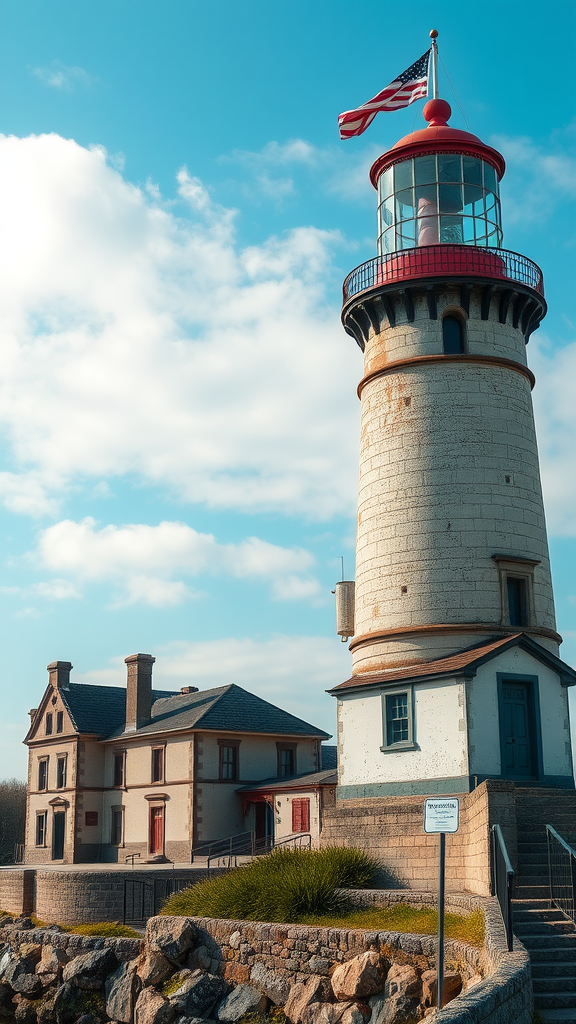
Lighthouses have long been symbols of guidance and safety for sailors navigating treacherous waters. They stand tall against the backdrop of the ocean, serving both practical and symbolic roles. The image shows a classic lighthouse, its red and white structure marking the coastline. This particular lighthouse not only directs vessels safely but also represents the rich maritime history of the area.
These structures were built out of necessity, often in rugged locations where land and sea meet. Before modern navigation tools, lighthouses were crucial for preventing shipwrecks. They provided a visible reference point, helping sailors determine their position relative to land.
Many lighthouses also served as homes for lighthouse keepers and their families, creating a unique lifestyle that combined duty with isolation. The architecture often reflects local styles, making each lighthouse a piece of cultural history. Today, many are preserved as historical sites, allowing visitors to appreciate their beauty and understand their significance.