Egg drop challenges are a fun and educational way to explore the principles of physics, engineering, and design. Whether you’re a student preparing for a science fair or just looking for a creative project to tackle, these egg drop project ideas will inspire you to think outside the box and create a successful egg protection system.
From simple designs using everyday materials to more complex structures, there’s something here for everyone. Get ready to unleash your creativity and see how well you can protect an egg from a high drop!
Innovative Egg Drop Designs
Engaging in egg drop projects allows students to express their creativity while applying scientific principles. Each design serves a unique purpose, showcasing how different materials and strategies can protect an egg during a fall.
Project ideas often include a mix of lightweight structures and energy-absorbing materials. By experimenting with these elements, participants can learn about the forces at play when the egg is dropped and how to effectively mitigate them.
Cushioned Capsules
The cushioned capsule concept is a straightforward yet effective approach. Using a plastic container filled with cotton balls, students create a protective environment for the egg. The cotton absorbs impact, providing a safe landing zone.
This design demonstrates how simple materials can offer significant protection, encouraging students to think about the physics involved. By adjusting the number of cotton balls or the size of the container, participants can experiment with different outcomes.
Parachute Drop
The parachute drop project introduces the concept of air resistance. By crafting a parachute from a plastic bag and attaching it to the egg with string, students can slow down its descent, reducing the risk of breakage.
Incorporating weights ensures stability during the fall. This process highlights the importance of design and balance, helping students understand how parachutes work in real-life scenarios.
Egg Bungee System
The egg bungee project utilizes rubber bands to create a bungee effect. Students can design a system where the egg is suspended and allowed to bounce, providing a unique way to absorb shock when the egg lands.
This project encourages creativity as students can experiment with the number of rubber bands and the height of the drop. Each variation may yield different results, making it a fun and dynamic experiment.
The Foam Fortress
A foam fortress offers a sturdy approach to egg protection. By surrounding the egg with foam padding and using cardboard for structure, students create a mini fortress specifically designed to withstand impacts.
This idea emphasizes the concept of cushioning and how layering materials can enhance safety. It allows students to think critically about how to build a robust protective system for fragile items.
Balloon Shield
The balloon shield project takes advantage of inflated balloons to act as a protective barrier around the egg. When dropped, the balloons absorb the impact, reducing the chance of the egg cracking.
This fun and colorful design not only protects the egg but also adds an element of excitement to the project. Students can experiment with the number of balloons used to find the perfect combination for maximum protection.
Collaborative Learning Environment
The classroom setting plays a vital role in these projects. Students can share ideas, discuss their designs, and support one another through the trial-and-error process. This collaborative atmosphere fosters creativity and critical thinking.
As students eagerly discuss their designs, they engage in meaningful conversations about physics and engineering principles. This interactive learning experience enhances their understanding while making science enjoyable.
Innovative Egg Drop Designs
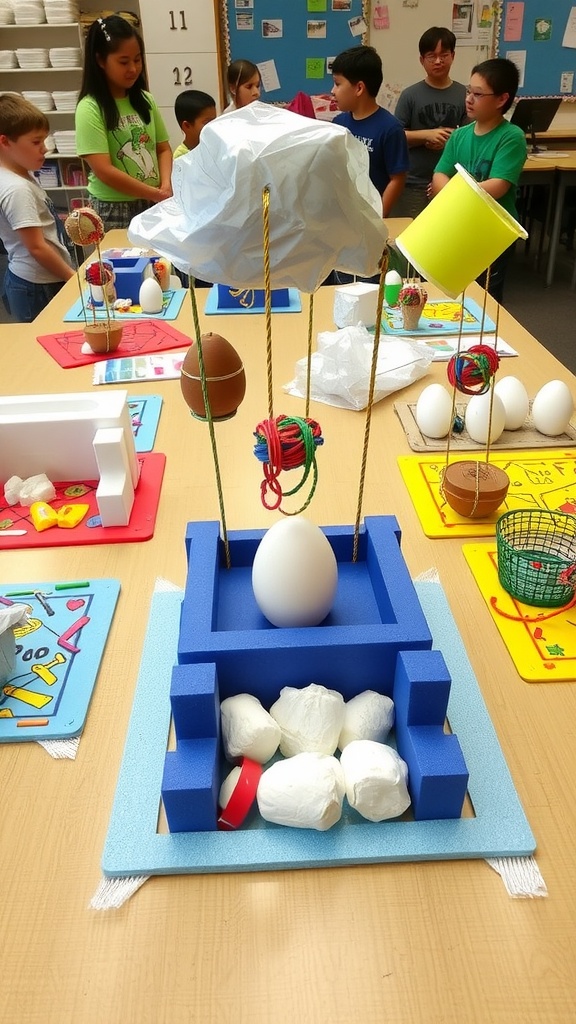
Each of these egg drop projects focuses on using different materials and strategies to cushion and protect the egg, ensuring it survives the fall. Expect a mix of lightweight structures, energy-absorbing materials, and innovative design approaches.
These projects not only emphasize creativity but also provide an opportunity to learn about the forces at play during the drop and how to mitigate them.