Baking is both an art and a science, and one of the most critical aspects of baking bread and pastries is the temperature of your dough. Understanding dough temperature can significantly improve your baking results, ensuring that your breads rise perfectly and achieve the ideal texture.
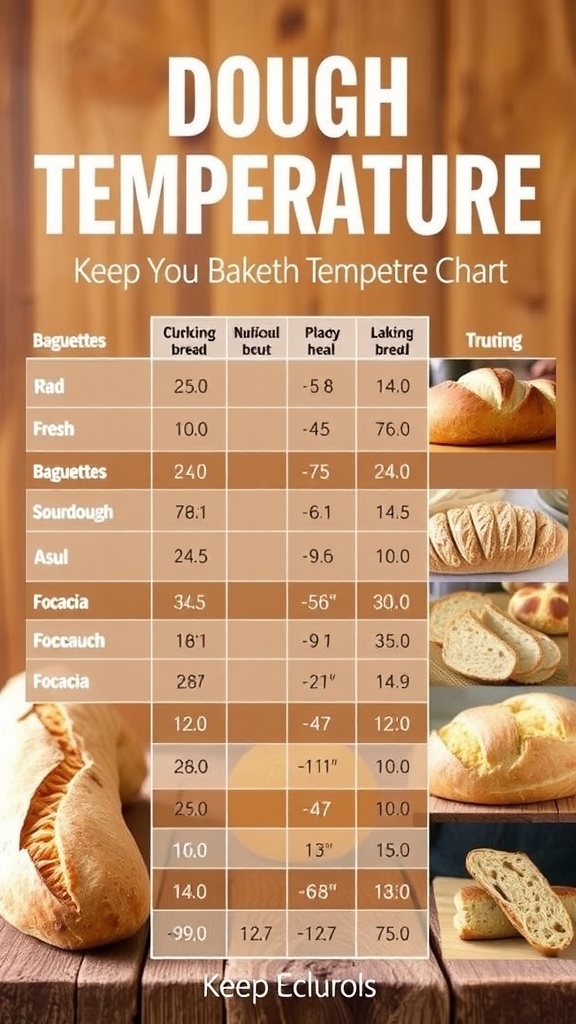
This temperature chart provides a handy reference for bakers of all levels, helping you find the optimal dough temperatures for various types of bread. Whether you’re a novice or an experienced baker, knowing the right temperatures can make all the difference in your baked goods.
Understanding Dough Temperature
Temperature plays a pivotal role in baking, particularly when it comes to dough. It influences yeast activity, gluten formation, and fermentation processes.
When dough is at the right temperature, yeast works efficiently, leading to optimal rising and texture.
This knowledge is essential for bakers seeking consistent and delicious results every time they step into the kitchen.
Why Dough Temperature Matters
The dough temperature is not just a number; it’s a key component in the baking process.
Warmer dough ferments quickly, allowing for faster rises, while cooler dough requires more time to develop.
Understanding these dynamics can help bakers control their baking environment for desired outcomes, making adjustments as necessary based on the type of bread being made.
Essential Dough Temperature Chart
This chart serves as an invaluable resource for bakers looking to achieve perfect dough temperatures.
Here are some common types of bread and their ideal dough temperatures:
- White Bread:75-80°F (24-27°C)
- Whole Wheat Bread:80-85°F (27-29°C)
- Sourdough Bread:78-82°F (26-28°C)
- Baguette:70-75°F (21-24°C)
- Focaccia:75-80°F (24-27°C)
Tips for Accurate Measurement
Achieving the right dough temperature requires precision.
Using a thermometer will enable you to measure dough temperature accurately, ensuring your results are consistent.
Also, adjusting water temperature according to your desired dough temperature is crucial.
Different flours and ingredients can influence dough temperature, so take that into account as well.
Creating a Cozy Baking Environment
Setting the right atmosphere for baking can enhance the experience.
A warm, rustic kitchen pairs well with freshly baked bread, creating an inviting space for bakers.
Having a visual representation of your dough temperature chart nearby serves as a helpful reminder to keep the ideal temperatures in mind while working.
Inviting Bakers to Perfect Their Craft
This dough temperature chart is designed to inspire eager bakers.
With its charming visuals and essential information, it encourages bakers to take note of their dough temperatures.
By keeping this chart handy, bakers can refine their skills and create delicious, perfectly risen bread with every baking session.
Why Dough Temperature Matters
The right dough temperature affects yeast activity, gluten development, and the overall fermentation process. Warmer dough will ferment faster, while cooler dough will take longer to rise. By monitoring dough temperature, you can ensure consistent results, tailored to your specific baking needs.