Anger is a powerful emotion that can be conveyed through many nonverbal cues, including facial expressions. One such expression is the angry eyebrow, which is a physical manifestation of the tension and frustration that accompanies anger. In this essay, we will explore the various ways in which an angry eyebrow can be described, and the impact that it can have on the person displaying it and those around them.
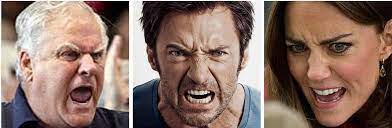
The eyebrow is a crucial feature of the face when it comes to expressing emotion. It is capable of conveying a wide range of feelings, including happiness, surprise, confusion, and anger. When a person is angry, their eyebrows tend to become more pronounced and aggressive-looking. This can take many forms, such as a furrowed brow, a raised eyebrow, or a tightly drawn together brow. Regardless of the specific form that it takes, an angry eyebrow is usually characterized by its sharpness and its intensity.
One way to describe an angry eyebrow is to focus on its physical appearance. For example, one might describe an angry eyebrow as being raised and curved, creating a sharp and menacing angle. Alternatively, one might describe an angry eyebrow as being furrowed, with the skin between the eyebrows drawn tightly together, creating a deep and severe crease. In either case, the angry eyebrow is characterized by its strong and unmistakable presence, which can be intimidating to those who witness it.
Another way to describe an angry eyebrow is to focus on the emotions that it conveys. When a person is angry, their eyebrows can communicate a range of emotions, including frustration, irritation, and aggression. The raised eyebrow, for example, can indicate a sense of disbelief or disapproval, while the furrowed brow can indicate deep-seated anger or frustration. The angry eyebrow can also be accompanied by other nonverbal cues, such as a scowl or a clenched jaw, which further amplify the intensity of the emotion being conveyed.
The impact of an angry eyebrow can be significant, both for the person displaying it and for those around them. For the person displaying the angry eyebrow, it can be a way to communicate their frustration or anger in a nonverbal way. This can be useful in situations where verbal communication is difficult or inappropriate, such as in a noisy environment or in a professional setting. However, the angry eyebrow can also be a sign of pent-up anger or unresolved issues, and can lead to further tension and conflict if not addressed.
For those around the person displaying the angry eyebrow, the impact can be equally significant. The sharpness and intensity of the expression can be intimidating or even frightening, depending on the context. It can also be a signal to others that the person is not in a receptive or open-minded state, which can make communication difficult. This can be especially true in situations where the angry eyebrow is accompanied by other nonverbal cues, such as a clenched jaw or a raised voice.
In conclusion, the angry eyebrow is a powerful nonverbal cue that can convey a range of emotions, from frustration and irritation to deep-seated anger and aggression. It is characterized by its sharpness and intensity, and can be described in a variety of ways, from a raised and curved brow to a tightly drawn together furrow. The impact of the angry eyebrow can be significant, both for the person displaying it and for those around them, and it is important to be aware of its potential for both communication and conflict.