Red hair and blue eyes are an unusual combination, with only around 1% of the world’s population possessing this unique genetic mix. This equates to an estimated 70 million people globally, which is a relatively small number when considering the world’s total population of over 7 billion.
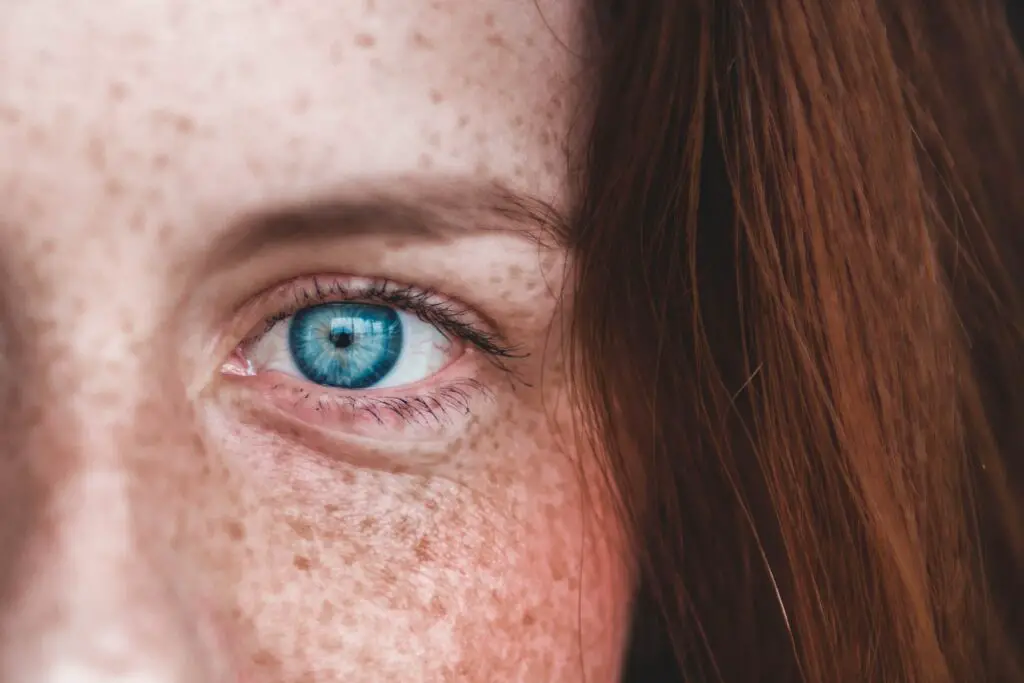
The reason for the rarity of this combination can be attributed to the genetics of hair and eye color. Hair color is determined by the amount and type of melanin present in the hair follicle. Melanin is a pigment that gives color to our skin, hair, and eyes. There are two types of melanin: eumelanin, which produces brown or black hair, and pheomelanin, which produces red or blonde hair. The amount of eumelanin and pheomelanin in the hair follicle is determined by genetics.
Eye color is also determined by the amount and type of melanin present in the iris. The color of the iris can range from light blue to dark brown, depending on the amount of melanin present. Blue eyes are the result of low amounts of melanin in the iris, while brown eyes are the result of high amounts of melanin.
The genes responsible for hair and eye color are not fully understood, but it is known that they are controlled by multiple genes. The most well-known gene responsible for red hair is MC1R, which produces a protein that is involved in the production of pheomelanin. A person who inherits two copies of the MC1R gene from their parents will have red hair, while someone who inherits one copy will be a carrier of the gene but may have different hair color.
The gene responsible for blue eyes is OCA2, which produces a protein that regulates the amount of melanin present in the iris. People with blue eyes have a mutation in the OCA2 gene that reduces the amount of melanin in the iris.
The combination of having red hair and blue eyes is the result of inheriting both the MC1R gene and the OCA2 gene from both parents. As both of these genes are recessive, meaning that their effects are only visible when a person inherits two copies of the gene, it is relatively rare for someone to have both genes.
In addition to genetics, other factors can also influence hair and eye color, such as environmental factors, age, and disease. For example, exposure to sunlight can cause hair to lighten, while certain diseases can cause changes in the pigmentation of the hair and eyes.
In conclusion, the combination of red hair and blue eyes is quite rare, and it is estimated that only about 1% of the world’s population possesses this unique genetic combination. The rarity of this combination is due to the fact that it requires inheriting two recessive genes from both parents, which is a relatively unlikely occurrence. While the genetics of hair and eye color are not fully understood, ongoing research in this field may shed more light on the factors that influence these traits.