Mach 9 is a speed equivalent to nine times the speed of sound, or approximately 6,912 miles per hour (11,120 kilometers per hour). Achieving this speed in a jet is an impressive feat that would require significant technological advancements and design innovations. In this response, we will explore the factors that affect the maximum speed of a jet and the challenges associated with reaching Mach 9.
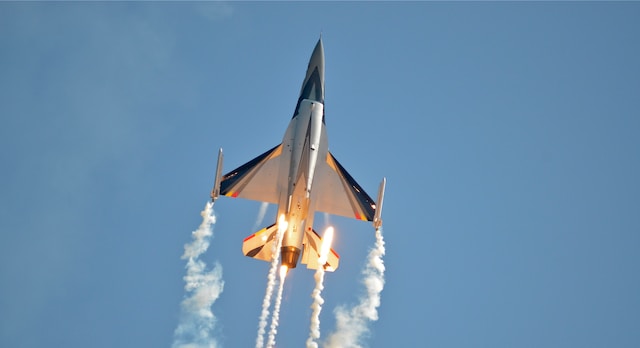
The speed of a jet is primarily limited by three factors: engine power, aerodynamics, and materials. First, let’s consider engine power. To achieve high speeds, a jet requires a powerful engine that can generate sufficient thrust. However, the faster a jet travels, the more drag it encounters, which means that it requires more and more thrust to maintain its speed. Jet engines are typically designed to provide maximum thrust at subsonic speeds, but as the speed increases, the engine efficiency decreases, and the thrust output drops. This means that the engine needs to be designed to operate at high speeds to provide sufficient thrust.
Secondly, aerodynamics is another critical factor that affects the speed of a jet. Aerodynamics refers to the way the aircraft interacts with the air, and it plays a significant role in determining how much drag the jet encounters. At high speeds, the air becomes denser, and the aircraft experiences more drag. To reduce the drag, the aircraft must have a streamlined design that minimizes turbulence and drag-inducing features like sharp angles and protrusions.
Finally, the materials used in the construction of the jet also play a crucial role in determining its maximum speed. To withstand the forces generated at high speeds, the jet’s components must be made from lightweight, high-strength materials. These materials must also be able to withstand high temperatures caused by the friction of the air at high speeds.
Now, let’s examine the challenges associated with reaching Mach 9. Currently, the fastest manned aircraft ever flown is the North American X-15, which achieved a top speed of Mach 6.7. The X-15 was a rocket-powered aircraft that was designed to operate at high altitudes, where the air is less dense, and the drag is lower. The X-15 was also made from advanced materials such as titanium and Inconel X, which allowed it to withstand the high temperatures generated at high speeds.
To reach Mach 9, a jet would need to overcome several challenges. Firstly, the engine would need to be capable of generating sufficient thrust at high speeds. This could potentially be achieved through the use of advanced propulsion technologies such as scramjets, which can operate at speeds up to Mach 15. Scramjets work by compressing incoming air using shockwaves created by the aircraft’s high speed, rather than using a traditional turbofan or turbojet engine.
Secondly, the aerodynamics of the jet would need to be carefully designed to minimize drag at high speeds. This could potentially be achieved through the use of advanced computational fluid dynamics (CFD) simulations to optimize the aircraft’s shape and features such as winglets and vortex generators. The materials used in the construction of the jet would also need to be advanced enough to withstand the high temperatures and stresses generated at high speeds.
Finally, there are practical challenges associated with achieving Mach 9. For example, the aircraft would need to be able to take off and land on a conventional runway, which means it would need to have a relatively low weight and size. The aircraft would also need to be able to carry sufficient fuel to sustain flight at Mach 9 for a meaningful amount of time, which could be a significant challenge given the high fuel consumption rates associated with supersonic flight.
In conclusion, reaching Mach 9 in a jet is a challenging but potentially achievable goal. It would require significant technological advancements in engine design, aerodynamics,