Have you ever wondered what happens when bread gets old? This diagram will guide you through the fascinating world of bread mold, providing insights perfect for Class 8 science students. Mold is not just a common occurrence; it’s a vital part of nature’s recycling process.
In this lesson, students will explore the various stages of bread mold growth, its structure, and how it contributes to the ecosystem. Understanding these concepts can deepen your appreciation for the microscopic life that surrounds us.
Bread Mold Growth and Structure
This diagram illustrates the life cycle of bread mold, showcasing its growth stages from spores to mature mold.
It highlights how mold develops in the right conditions, particularly with warmth and moisture.
Understanding this process can enhance appreciation for mold’s role in our environment.
Key Components of Bread Mold
The life cycle of bread mold consists of several important parts:
1. **Spores** – These tiny reproductive units spread through the air, leading to mold growth when they land on suitable surfaces.
2. **Mycelium** – This is the network of fine filaments that penetrates the bread, absorbing nutrients as it grows.
3. **Fruit Body** – This visible structure emerges from the mycelium and is responsible for producing more spores.
Environmental Factors Influencing Mold Growth
Several environmental conditions contribute to mold growth.
Humidity and temperature are critical factors that can accelerate the development of bread mold.
In damp, warm environments, spores can thrive, leading to rapid mold formation.
The Role of Mold in Ecosystems
Mold plays a vital role in decomposition, breaking down organic material and returning nutrients to the soil.
This process is essential for maintaining healthy ecosystems.
By understanding mold, we can appreciate its importance in nature’s recycling system.
Educational Objectives
Through this diagram, students will achieve several learning goals:
– Identify the different parts of the bread mold life cycle.
– Understand the environmental factors that contribute to mold growth.
– Discuss the role of mold in the ecosystem and its significance in decomposition.
Conclusion
This educational diagram serves as a valuable tool for Class 8 students.
It provides clarity on the life cycle of bread mold and enhances comprehension of its ecological roles.
Encouraging curiosity about the microscopic world fosters a deeper understanding of the environment.
Bread Mold Growth and Structure
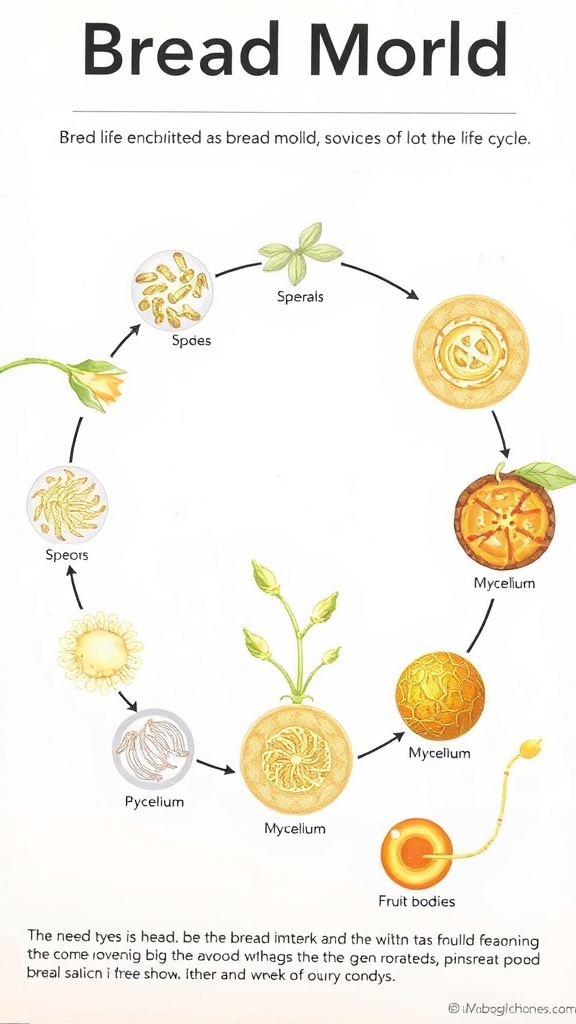
This diagram illustrates the life cycle of bread mold, showcasing its growth stages from spores to mature mold. You’ll learn about the conditions that promote mold growth, such as warmth and moisture, and how mold plays a role in decomposition.
Ingredients
Understanding Bread Mold: A Classroom Guide for 8th Graders
Bread mold is a fascinating subject that can illuminate the world of fungi for 8th-grade students. This diagram will help you visualize the components of bread mold, focusing on its structure and growth stages. With a closer look, students will appreciate the biology behind mold and its role in the ecosystem.
When exploring bread mold, students will encounter various parts, such as hyphae, mycelium, and spores. This knowledge is essential for understanding how mold reproduces and spreads. Engaging with this topic can spark curiosity and lead to further exploration in microbiology.