Yeast infections are common fungal infections that can cause various symptoms, including changes in vaginal discharge. Understanding the characteristics of yeast infection discharge can help in identifying and managing the condition effectively.
Typically, yeast infection discharge is thick, white, and resembles cottage cheese. It is usually odorless, but some women may experience mild irritation or discomfort.
Understanding Yeast Infection Discharge
Yeast infections are prevalent fungal infections that can lead to various symptoms, particularly changes in vaginal discharge. Recognizing the characteristics of yeast infection discharge is crucial for effective identification and management of the condition.
Typically, discharge associated with a yeast infection is thick and white, often resembling cottage cheese. While it is generally odorless, some individuals may experience mild irritation or discomfort alongside the discharge.
Characteristics of Yeast Infection Discharge
Yeast infection discharge is frequently accompanied by additional symptoms, including itching, burning sensations, and redness in the vaginal area. These signs can help differentiate between a yeast infection and other conditions.
If you observe these symptoms along with the discharge, seeking advice from a healthcare professional is recommended for accurate diagnosis and appropriate treatment.
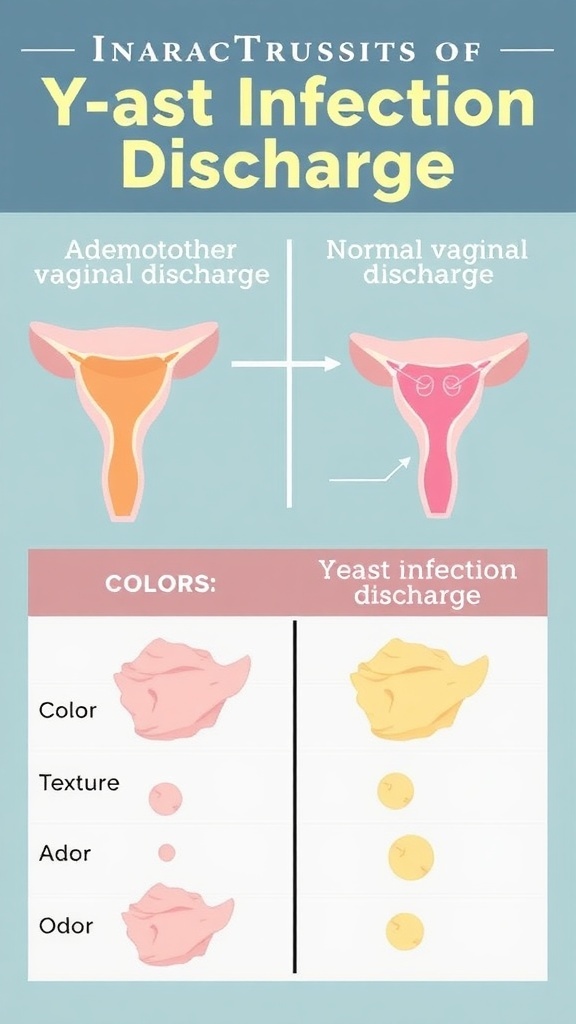
Comparison Chart: Normal vs. Yeast Infection Discharge
To better understand the differences between normal vaginal discharge and yeast infection discharge, a comparison chart can be beneficial. This visual guide highlights key characteristics such as color, texture, and odor.
Normal discharge typically appears clear or milky, is thin and stretchy, and has little to no odor. In contrast, yeast infection discharge is thicker, white, and may have a mild odor or be completely odorless.
Visual Guide to Symptoms
An informative graphic can serve as a valuable resource for those looking to identify symptoms of a yeast infection. By illustrating the differences in discharge characteristics, individuals can gain a clearer understanding of what to look for.
This visual representation not only aids in recognizing the symptoms but also emphasizes the importance of consulting a healthcare provider when experiencing unusual changes in discharge.
When to Seek Medical Advice
It is essential to consult a healthcare professional if you notice any significant changes in your vaginal discharge, especially if accompanied by discomfort or irritation. Early intervention can lead to effective treatment and prevent further complications.
Understanding the characteristics of yeast infection discharge can empower individuals to take charge of their health and seek the necessary care when needed.
Conclusion on Yeast Infection Awareness
Awareness of the symptoms and characteristics of yeast infection discharge is vital for maintaining vaginal health. By recognizing the differences between normal and abnormal discharge, individuals can make informed decisions regarding their health.
Utilizing resources such as comparison charts and informative graphics can enhance understanding and promote proactive health management.
Characteristics of Yeast Infection Discharge
Yeast infection discharge is often accompanied by other symptoms such as itching, burning, and redness in the vaginal area. If you notice these symptoms along with the discharge, it is advisable to consult a healthcare professional for proper diagnosis and treatment.