Ashkenazi eyes are a term used to describe a specific set of physical traits that are common among individuals of Ashkenazi Jewish ancestry. Ashkenazi Jews are a group of Jews who originated from Central and Eastern Europe and comprise the majority of Jews worldwide. The term Ashkenazi eyes refer to the unique combination of physical characteristics that are commonly found in individuals of Ashkenazi Jewish descent. These traits include a tendency towards certain eye colors and shapes, as well as certain facial features.
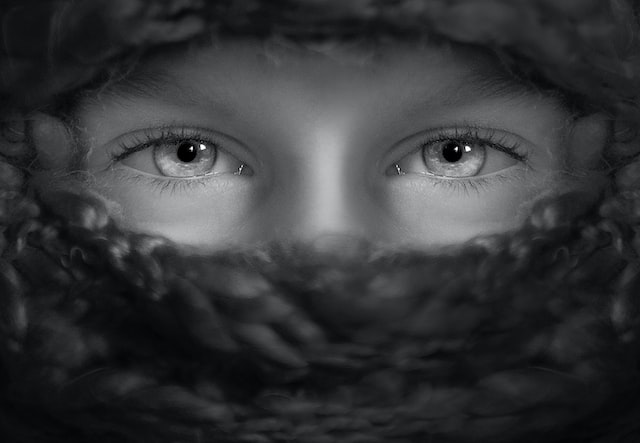
Research suggests that Ashkenazi Jews exhibit a distinct set of physical traits that may be linked to their genetic history. This population has a higher occurrence of certain genetic mutations, including those associated with Tay-Sachs disease and other genetic disorders. It’s believed that these mutations emerged due to a combination of genetic drift and founder effects. Genetic drift pertains to the unpredictable changes in allele frequencies that can arise in a small population, while founder effects occur when a small group of individuals establishes a new population, leading to a decrease in genetic variation.
Although the specific genetic factors that contribute to Ashkenazi eyes are not yet fully comprehended, it is evident that they are a result of the genetic history of the Ashkenazi Jewish population. The distinct combination of physical traits found in Ashkenazi eyes serves as a testament to the variety of human populations and the intricate interaction between genetics and the environment.
The physical traits commonly found in individuals of Ashkenazi Jewish descent are often referred to as Ashkenazi eyes. These traits include a unique combination of eye colors and shapes, as well as certain facial features. Lighter eye colors such as blue, green, and gray are more prevalent in this population, along with an almond shape to the eyes. Other facial features commonly seen among Ashkenazi Jews are a prominent nose and high cheekbones. The exact genetic factors that contribute to these traits are not fully understood, but they are thought to be related to the genetic history of the Ashkenazi Jewish population, which has a higher frequency of certain genetic mutations.