When a hard-boiled egg floats, it usually means that it is old. This is because the air cell at the rounded end of the egg has enlarged over time as the egg has lost moisture through its porous shell. As the air cell expands, it displaces some of the liquid egg white and yolk, causing the egg to become less dense and thus more buoyant in water. While there are other factors that can cause an egg to float, such as salt water or a damaged shell, age is the most common culprit.
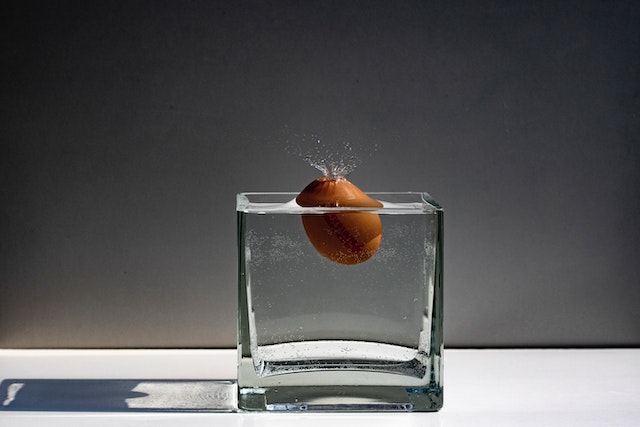
An egg’s air cell forms as a result of the way it is packaged at the farm. The egg is laid with a small pocket of air at the rounded end, and as the egg cools and contracts, the contents of the egg shrink away from the shell, leaving more space for air to enter the air cell. As the egg ages, more and more moisture evaporates through the shell, causing the air cell to expand. The rate of moisture loss is affected by factors such as temperature and humidity, which is why eggs stored at room temperature will age faster than those stored in the refrigerator.
As the air cell grows, the egg becomes less dense, and eventually, it will float in water. This is because the buoyant force of the water is greater than the force of gravity acting on the egg. The same principle explains why boats and other objects float in water. When an object is placed in water, it displaces some of the water, creating an upward force called buoyancy. If the buoyant force is greater than the force of gravity acting on the object, the object will float.
While floating eggs are not unsafe to eat, they are an indication that the egg is old and may not be as fresh as you would like. Fresh eggs will sink to the bottom of a bowl of water, while slightly older eggs will stand on end at the bottom. Eggs that float should be discarded, as they are likely to be several weeks old and may be spoiled or contaminated with bacteria.
To ensure that your eggs are fresh, it’s important to buy them from a reputable source and to check the sell-by or use-by date on the carton. Eggs should be stored in the refrigerator at a temperature of 40°F or below and should be consumed within three to five weeks of the pack date, depending on how they are stored. It’s also important to handle eggs properly to avoid the risk of foodborne illness. Eggs should be cooked to an internal temperature of at least 160°F to kill any harmful bacteria that may be present.
In conclusion, when a hard-boiled egg floats, it is usually a sign that the egg is old and has lost moisture through its porous shell. The air cell at the rounded end of the egg has expanded, causing the egg to become less dense and more buoyant in water. While floating eggs are not necessarily unsafe to eat, they are an indication that the egg is not as fresh as you may want it to be. To ensure that your eggs are fresh and safe to eat, it’s important to buy them from a reputable source, store them properly, and handle them with care.