If you’ve ever cooked a steak and noticed that it turns blue in certain areas, don’t panic! This is a natural reaction that can happen when cooking meat, and it’s generally not a cause for concern. In this article, we’ll explore why your steak might turn blue and what you can do about it.
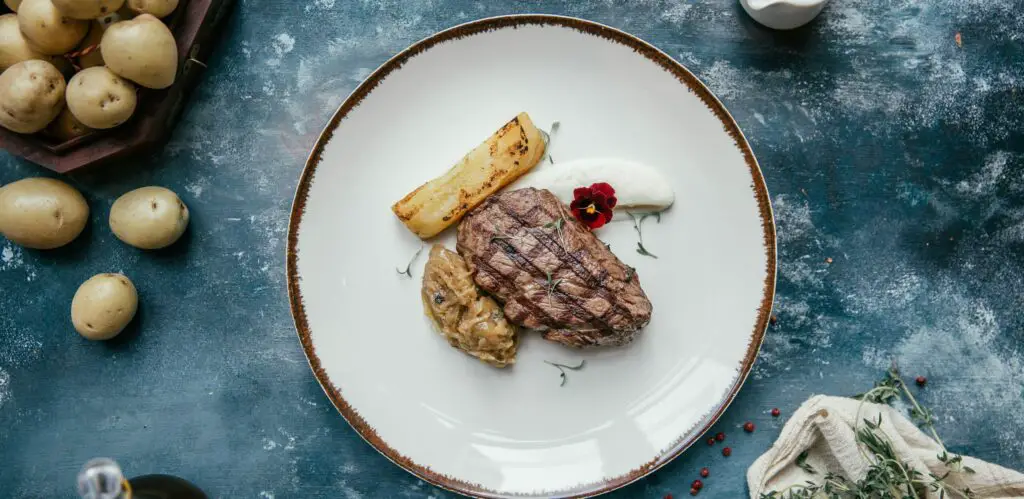
The first thing to understand is that the blue color is not actually in the meat itself. Instead, it’s a result of a chemical reaction that occurs between the meat and the heat. Specifically, the blue color is caused by a reaction between the iron in the meat and the heat from your cooking method. This reaction is known as the Maillard reaction, and it’s responsible for creating the brown crust on the outside of a steak.
However, in some cases, the Maillard reaction can create a blue or green hue instead of a brown one. This happens when the meat is cooked at a relatively low temperature, such as when it’s cooked sous vide or when it’s cooked slowly over low heat. When meat is cooked at a low temperature, the myoglobin in the meat doesn’t break down as much, and it can react with the heat to produce a blue or green color.
It’s important to note that while the blue color might look strange, it’s generally not a sign that the meat is unsafe to eat. In fact, the meat is probably perfectly fine to eat as long as it has been cooked to a safe internal temperature. However, if the blue color is accompanied by a foul odor or slimy texture, then it’s possible that the meat has gone bad and should be discarded.
If you’re concerned about the blue color, there are a few things you can do to prevent it from happening. One of the easiest things you can do is to cook your meat at a higher temperature. This will ensure that the myoglobin in the meat breaks down more completely and doesn’t have a chance to react with the heat to produce a blue color. You can also sear your meat before cooking it at a lower temperature to help break down the myoglobin and prevent it from reacting with the heat.
Another thing you can do is to marinate your meat before cooking it. Marinating can help to break down the myoglobin in the meat and make it less likely to turn blue. Additionally, some marinades contain acidic ingredients like vinegar or citrus juice, which can help to denature the proteins in the meat and make it more tender.
Finally, if you’re still concerned about the blue color, you can use a meat thermometer to ensure that the meat has been cooked to a safe internal temperature. The USDA recommends cooking beef to an internal temperature of 145°F for medium-rare, 160°F for medium, and 170°F for well-done. By using a meat thermometer, you can ensure that the meat has been cooked to a safe temperature without overcooking it and causing it to turn blue.
In conclusion, a blue color on your steak is generally nothing to worry about. It’s simply a result of the Maillard reaction between the meat and the heat, and it’s not a sign that the meat is unsafe to eat. If you’re concerned about the blue color, you can take steps to prevent it from happening by cooking your meat at a higher temperature, searing it before cooking, marinating it, or using a meat thermometer to ensure that it has been cooked to a safe internal temperature. By taking these simple steps, you can enjoy a perfectly cooked steak without any strange coloration.