This yeast fermentation experiment is a simple and educational way to observe the process of fermentation in action. Using basic ingredients like sugar and warm water, you can see how yeast converts sugar into carbon dioxide and alcohol, making it a fascinating project for all ages.
The experiment is straightforward and requires minimal equipment. It’s a great way to learn about the science of yeast and fermentation while also having fun.
Understanding Yeast and Fermentation
Yeast plays a vital role in various biological processes, particularly fermentation. This microscopic fungus is responsible for converting sugars into alcohol and carbon dioxide, a process that is not only essential in baking and brewing but also serves as a fascinating subject for scientific exploration.
In this experiment, you will observe firsthand how yeast interacts with sugar and warm water, producing bubbles of carbon dioxide. This visual representation of fermentation is a great way to engage with science, making it accessible for learners of all ages.
Setting Up Your Experiment
To begin, gather your materials. You will need a clear bottle or jar, active dry yeast, sugar, and warm water. The simplicity of these ingredients belies the exciting reaction that will occur.
Start by combining the warm water and sugar in your bottle. Stir until the sugar is completely dissolved, creating a sugary solution that will serve as food for the yeast. This initial step is crucial for ensuring that the yeast has the necessary nutrients to thrive.
Activating the Yeast
Once your sugar water is ready, it’s time to add the yeast. Sprinkle the yeast over the surface of the mixture and let it sit for about five minutes. This waiting period allows the yeast to activate, preparing it for the fermentation process.
After the yeast has had time to activate, gently stir the mixture. You will soon notice bubbles forming as the yeast begins to consume the sugar and produce carbon dioxide. This bubbling action is a clear indication that fermentation is taking place.
Capturing the Carbon Dioxide
If you want to take your experiment a step further, consider using a balloon to capture the carbon dioxide gas produced by the yeast. Stretch the balloon over the opening of the bottle, and watch as it inflates with the gas released during fermentation.
This visual demonstration not only makes the experiment more engaging but also provides a tangible result of the fermentation process. Observing the balloon inflate serves as a fun reminder of the activity occurring within the bottle.
Observing and Recording Changes
As the experiment progresses, take the time to observe and record the changes happening in your mixture. Note the amount of bubbles, the inflation of the balloon, and any alterations in the appearance of the liquid.
These observations can lead to discussions about the science behind fermentation, including the role of temperature and sugar concentration in the process. Engaging with these details enhances the educational value of the experiment.
Conclusion of Your Experiment
After conducting your observations, you can reflect on the entire process. Consider how the yeast transformed the sugar into carbon dioxide and alcohol, and think about the implications of fermentation in everyday life.
This simple yet effective experiment not only demonstrates a fundamental biological process but also encourages curiosity and scientific inquiry. Whether you are a student, educator, or simply a curious individual, this yeast fermentation experiment offers a unique glimpse into the world of microorganisms and their remarkable capabilities.
Simple Yeast Fermentation Experiment
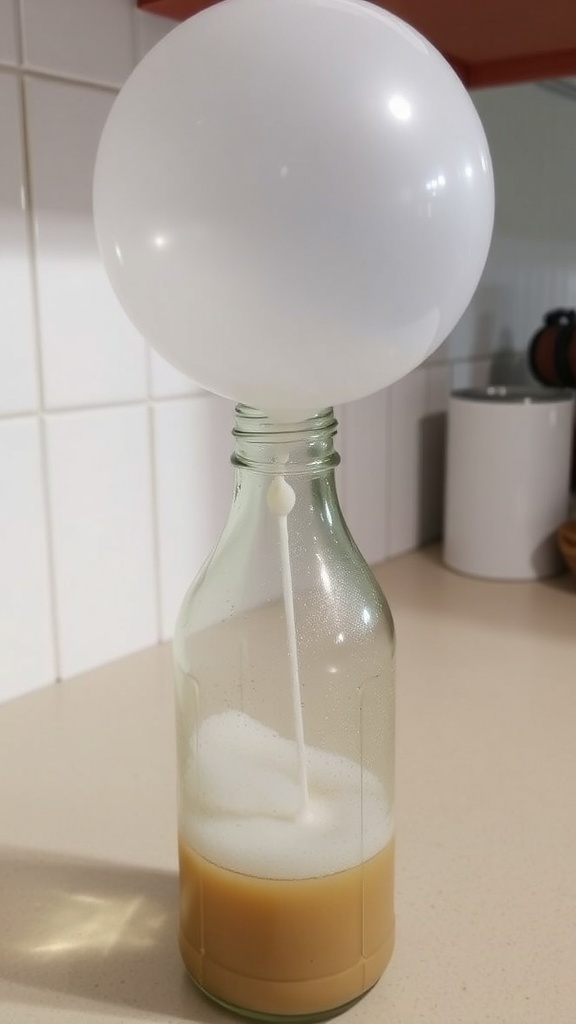
In this experiment, you’ll mix yeast with sugar and warm water to create a bubbly reaction. The process takes about 30 minutes to observe the initial fermentation, and it can be extended for further observations over several hours.
Ingredients
- 1 packet of active dry yeast (about 2 1/4 teaspoons)
- 1/4 cup of sugar
- 1 cup of warm water (about 110°F or 43°C)
- A clear bottle or jar
- A balloon (optional, for capturing gas)
Instructions
- Prepare the Mixture: In a clear bottle or jar, combine the warm water and sugar. Stir until the sugar is fully dissolved.
- Add the Yeast: Sprinkle the yeast over the surface of the sugar water. Allow it to sit for about 5 minutes to activate.
- Observe the Reaction: After 5 minutes, gently stir the mixture. You should start to see bubbles forming as the yeast begins to ferment.
- Capture the Gas (Optional): If using a balloon, stretch the balloon over the opening of the bottle to capture the carbon dioxide gas produced by the yeast. Watch as the balloon inflates!
- Record Your Observations: Take notes on the changes you observe over time, including the amount of bubbles, the inflation of the balloon, and any changes in the mixture’s appearance.
Cook and Prep Times
- Prep Time: 5 minutes
- Observation Time: 30 minutes to several hours
- Total Time: Variable based on observation
- Servings: 1 experiment
- Calories: N/A
- Fat: N/A
- Protein: N/A
- Carbohydrates: N/A