A 1000TB (terabyte) hard drive is a theoretical storage device that has the potential to store an immense amount of data. Currently, the largest commercially available hard drives have a capacity of around 20TB, so a 1000TB hard drive would be a significant technological achievement.
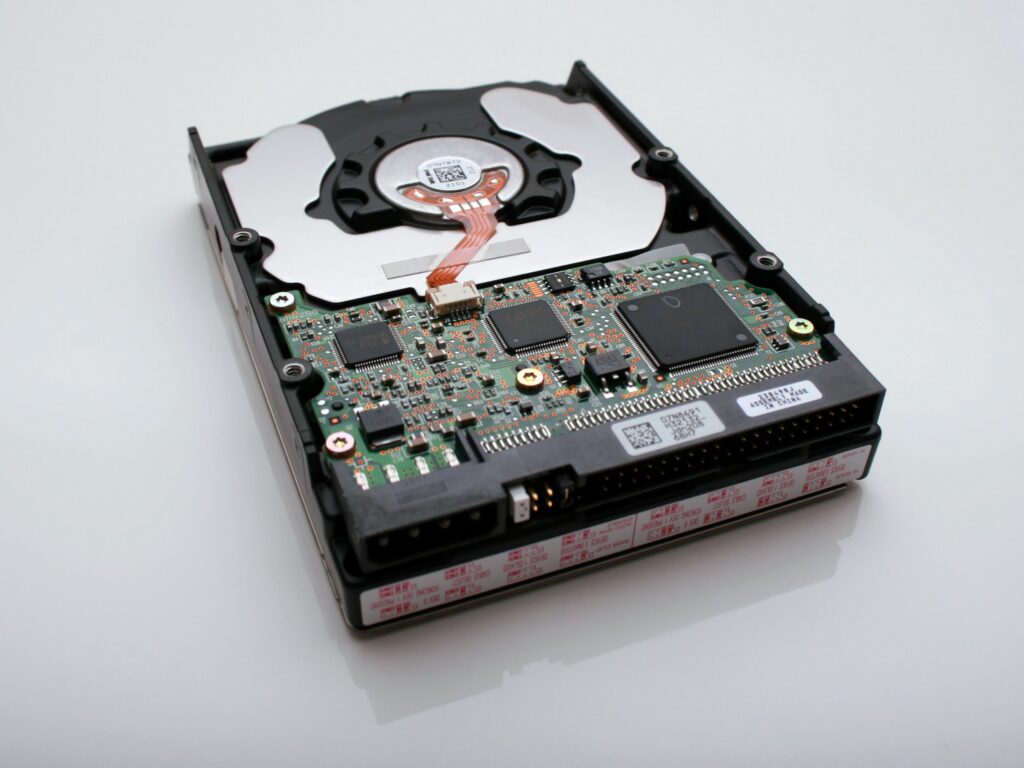
The capacity of a hard drive is determined by the number of platters, the density of the data on those platters, and the amount of data that can be stored on each sector of the platter. To achieve a 1000TB capacity, a hard drive would require a large number of platters with high-density data storage, along with advanced read/write technology that can handle the amount of data involved.
One of the challenges of creating a 1000TB hard drive is the physical size of the device. The more platters you add to a hard drive, the larger the physical size of the drive becomes. Additionally, the motors and other components required to spin and read the platters become more complex as the size of the hard drive increases, which can lead to higher failure rates and lower performance.
Another challenge of creating a 1000TB hard drive is the cost. Currently, the cost per terabyte of hard drive storage decreases as the capacity of the drive increases, but there is a limit to how low this cost can go. Building a 1000TB hard drive would require a significant investment in research and development, and the resulting device would likely be very expensive.
However, the potential benefits of a 1000TB hard drive are significant. For example, a 1000TB hard drive could be used in data centers to store vast amounts of data for cloud computing, machine learning, or artificial intelligence applications. It could also be used for storing massive amounts of video, such as for surveillance or streaming services.
The development of a 1000TB hard drive could also have implications for the future of computing. With the advent of the Internet of Things (IoT), there is a growing need for devices that can store and process vast amounts of data. A 1000TB hard drive could be used in these devices to store data locally, reducing the need for data to be transmitted over the internet.
In addition to hard disk drives (HDDs), there are other types of storage devices that could potentially achieve a 1000TB capacity. For example, solid-state drives (SSDs) are a type of storage device that uses flash memory instead of spinning disks. SSDs have several advantages over HDDs, including faster read and write speeds, lower power consumption, and increased durability. However, they are currently more expensive than HDDs and have lower storage capacities.
In conclusion, a 1000TB hard drive would be a significant technological achievement that could have a variety of practical applications. While there are several challenges to creating such a device, including the physical size, cost, and complexity of the technology involved, the potential benefits make it an exciting prospect for the future of computing and data storage. As technology continues to advance, it is possible that we will see the development of even larger and more powerful storage devices that can meet the growing demand for data storage and processing.