This 90-day carnivore meal plan is designed for those looking to adopt a meat-based diet. It focuses on animal products, eliminating all plant-based foods to promote health and weight loss.
The plan includes a variety of meats, fish, and animal-derived products to ensure nutritional balance while adhering to the carnivore diet principles.
The Carnivore Diet: A Focus on Meat
The carnivore diet emphasizes a meat-centric approach, eliminating plant-based foods entirely. This dietary choice is rooted in the belief that animal products can provide all necessary nutrients for optimal health.
With a variety of meats available, individuals can enjoy a diverse range of flavors and textures. From juicy steaks to tender chicken and fresh fish, the options are plentiful. This diet not only supports weight loss but also promotes overall well-being.
Visual Appeal of a Meat Arrangement
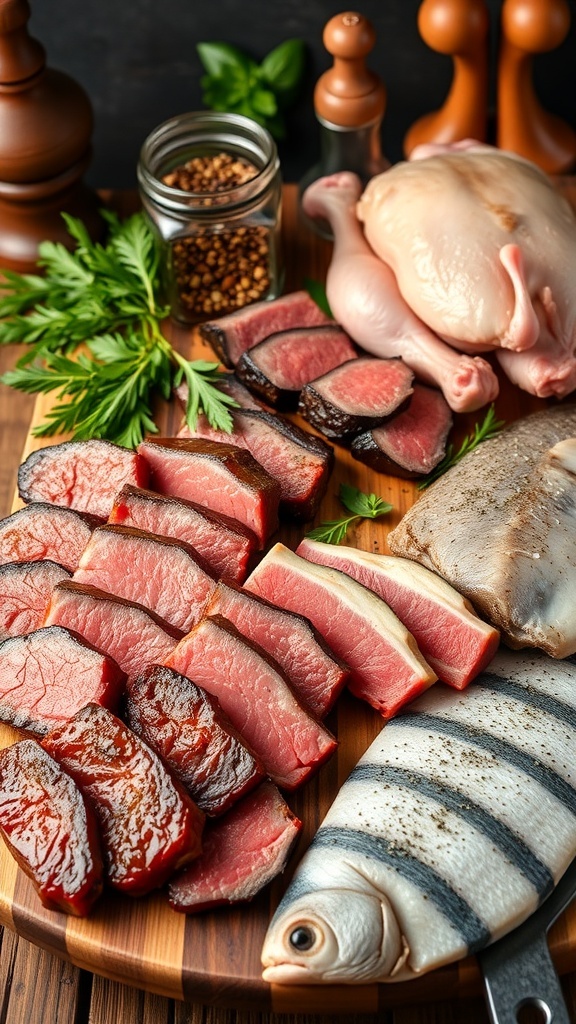
Picture a wooden cutting board adorned with an array of meats. Steaks, chicken, and fish are artfully arranged, showcasing their vibrant colors and textures. The rustic kitchen setting, complete with herbs and spices, adds to the visual allure.
This presentation not only highlights the focus on animal-based foods but also evokes a sense of satisfaction. The hearty arrangement invites one to indulge in a fulfilling meal, making it an enticing option for carnivore diet enthusiasts.
Meal Planning for Success
Transitioning to a carnivore diet can be seamless with a well-structured meal plan. Over a span of 90 days, individuals can explore various meats and animal products, ensuring nutritional balance while enjoying their meals.
Starting with simple combinations, such as beef and eggs, allows for an easy introduction to this lifestyle. Gradually incorporating different cuts of meat and fish can enhance the experience, keeping meals exciting and satisfying.
Key Ingredients for a Carnivore Diet
Essential ingredients for a successful carnivore meal plan include a variety of meats like beef, pork, chicken, and fish. Eggs and optional dairy products can also contribute to the diet, providing additional sources of protein and fat.
Bone broth is another valuable addition, offering hydration and nutrients. By focusing on high-quality animal products, individuals can ensure they meet their dietary needs while enjoying delicious meals.
Cooking Techniques and Tips
Cooking methods play a significant role in preparing meats for the carnivore diet. Grilling, roasting, and pan-searing are excellent techniques that enhance flavor while maintaining the integrity of the meat.
Experimenting with different seasonings, such as herbs and spices, can elevate the taste without straying from the diet’s principles. Staying hydrated and considering electrolyte supplementation can further support the transition to a carnivore lifestyle.
Embracing the Carnivore Lifestyle
Adopting a carnivore diet is not just about the food; it’s a lifestyle choice that emphasizes the enjoyment of meat. The visual appeal of a well-arranged meat platter can inspire individuals to embrace this way of eating.
With a focus on quality ingredients and satisfying meals, the carnivore diet offers a fulfilling approach to nutrition. As individuals explore their preferences and adjust portion sizes, they can find joy in the simplicity and richness of animal-based foods.
Comprehensive Carnivore Meal Plan
This meal plan spans 90 days, providing daily meal suggestions that emphasize high-quality meats and animal products. It is structured to help you transition smoothly into a carnivore lifestyle while maintaining energy and satisfaction throughout the day.
Ingredients
- Beef (steaks, ground beef, roasts)
- Pork (chops, bacon, ribs)
- Chicken (breasts, thighs, wings)
- Fish (salmon, tuna, sardines)
- Eggs (whole eggs, egg yolks)
- Dairy (cheese, butter, heavy cream) – optional depending on individual tolerance
- Bone broth
Instructions
- Week 1: Start with simple meals focusing on beef and eggs. Example: Breakfast – scrambled eggs with bacon; Lunch – grilled steak; Dinner – roasted chicken.
- Weeks 2-4: Introduce variety by adding different cuts of meat and fish. Example: Breakfast – omelet with cheese; Lunch – pork chops; Dinner – salmon with butter.
- Month 2: Continue rotating meats and incorporate organ meats for added nutrients. Example: Breakfast – liver pâté; Lunch – beef stew; Dinner – grilled lamb.
- Month 3: Focus on personal preferences and adjust portion sizes based on hunger levels. Example: Breakfast – steak and eggs; Lunch – chicken wings; Dinner – seafood platter.
- Stay hydrated and consider supplementing with electrolytes if needed.
Cook and Prep Times
- Prep Time: Varies by meal
- Cook Time: Varies by meal
- Total Time: 90 days
- Servings: Individualized based on appetite
- Calories: Varies by meal
- Fat: High
- Protein: High
- Carbohydrates: 0g
Related
- Carnivore Diet Meal Plan
- Carnivore Diet Meal Plan
- Carnivore Diet Meal Plan for Beginners
- Carnivore Diet Meal Plan