The AMD Radeon TM Vega 8 Graphics is an integrated graphics card that is frequently used on both laptops and desktops. This essay will discuss the features and benefits of the AMD Radeon TM Vega 8 Graphics, as well as its performance capabilities in various scenarios.
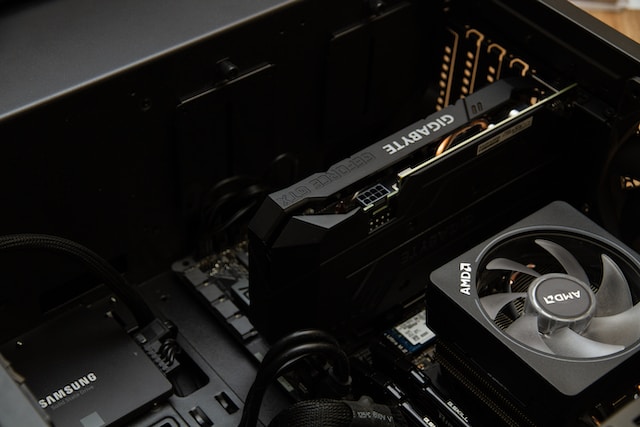
Based on the Vega architecture and built on the 14nm FinFET process, the AMD Radeon TM Vega 8 Graphics has 512 shading units and a base clock speed of 300 MHz that can boost up to 1100 MHz. The graphics card supports DirectX 12 and Vulkan APIs and has a maximum resolution of 4K.
One of the primary advantages of the AMD Radeon TM Vega 8 Graphics is its power efficiency. Compared to traditional discrete graphics cards, the graphics card is designed to consume less power, making it ideal for laptops and other mobile devices. Additionally, it draws power directly from the system’s motherboard and does not require an external power source.
The AMD Radeon TM Vega 8 Graphics also provide excellent performance capabilities. It can handle most games at 1080p resolution with medium to high settings, depending on the game’s complexity. It can also run some games at 1440p resolution, although the performance may drop to low to medium settings. However, the graphics card is not designed for high-end gaming and may struggle with the latest, most demanding games.
Apart from gaming, the AMD Radeon TM Vega 8 Graphics is also suitable for other graphics-intensive applications. It can handle video editing, image processing, and 3D modeling with ease, making it an excellent option for professionals who need a powerful graphics card for their work.
Another advantage of the AMD Radeon TM Vega 8 Graphics is its ability to support multiple displays. It can handle up to three displays simultaneously, with support for various display outputs, including HDMI, DisplayPort, and DVI. This feature makes it an ideal option for users who need a multi-display setup for their work or gaming.
However, there are also some limitations to the AMD Radeon TM Vega 8 Graphics. One of the main drawbacks is its limited VRAM, which can affect its performance when handling high-resolution textures or multiple applications simultaneously. Additionally, it is not suitable for high-end gaming or graphics-intensive applications that require a dedicated graphics card.
To conclude, the AMD Radeon TM Vega 8 Graphics is an excellent option for users who need a powerful integrated graphics card for their work or gaming needs. Its power efficiency, excellent performance capabilities, and multi-display support make it a popular choice for laptops and desktops. However, users must be aware of its limitations and understand that it may struggle with the latest, most demanding games or graphics-intensive applications that require a dedicated graphics card.