The two-dollar bill was first introduced in 1862 as a legal tender note. The note featured a portrait of Alexander Hamilton, the first Secretary of the Treasury, on the front and a depiction of the signing of the Declaration of Independence on the back. However, the two-dollar bill was not widely used and was often associated with bad luck or as a novelty item. As a result, the two-dollar bill was discontinued in 1966.
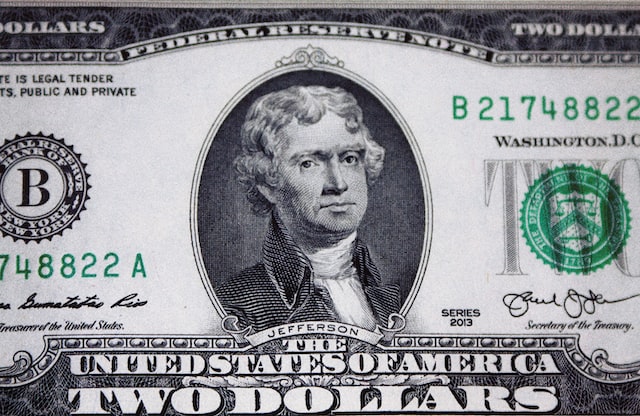
In 1976, as part of the bicentennial celebration of the United States, a new two-dollar bill was introduced. This bill featured a portrait of Thomas Jefferson, the third President of the United States, on the front and a depiction of the signing of the Declaration of Independence on the back. The new two-dollar bill was intended to be a commemorative item and was not meant to replace other denominations of bills. However, the two-dollar bill was not widely circulated, and many people still viewed it as a novelty item.
Today, the two-dollar bill is still printed, but it is not as commonly circulated as other denominations of bills. According to the Federal Reserve, only about 1% of all bills in circulation are two-dollar bills. This is because many people still view the two-dollar bill as a novelty item or do not know that it is a legitimate form of currency.
However, there are some people who actively seek out two-dollar bills. These individuals may collect the bills or use them as a way to promote awareness of the two-dollar bill. Some businesses, particularly in the tourism industry, may also use two-dollar bills as a way to create a unique experience for their customers.
Despite the relatively low circulation of two-dollar bills, they are still considered legal tender, and businesses are required to accept them. In fact, the United States Treasury Department encourages the use of two-dollar bills by promoting them as a way to celebrate and honor the country’s history.
In conclusion, the United States still prints and circulates two-dollar bills, but they are not as commonly used as other denominations of bills. The two-dollar bill has a unique history and is often viewed as a novelty item or a way to celebrate and honor the country’s history. Despite their relatively low circulation, two-dollar bills are still considered legal tender, and businesses are required to accept them.