The concept of purple eyes is a common theme in literature and other forms of media. However, in reality, purple eyes do not occur naturally in humans. Human eye color is determined by the type and amount of pigments present in the iris, which is the colored part of the eye.
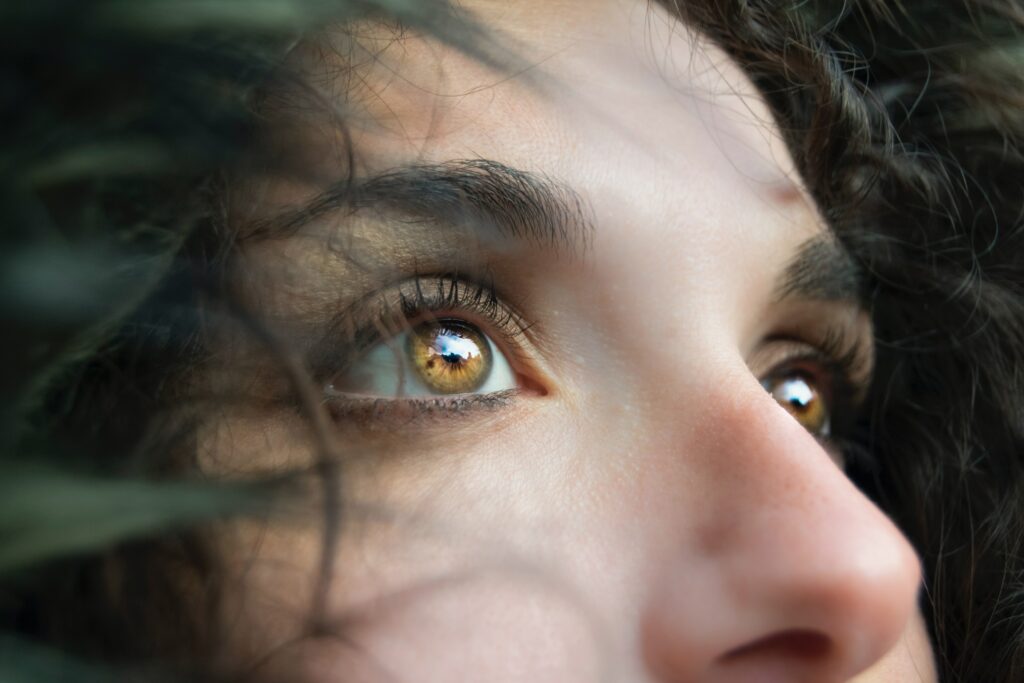
Two types of pigments, melanin and lipochrome, are responsible for eye color variation. While melanin produces brown, black, and hazel eyes, lipochrome creates shades of green, blue, and gray. Despite the vast range of eye colors present in the human population, there are no natural pigments capable of producing a true purple color in the iris. Blue-violet is the closest natural hue, which results from the combination of blue and red light.
Nevertheless, certain genetic variations may produce violet or blue-violet eye color. These mutations typically involve a decrease in melanin production, causing light to scatter more readily and creating a lighter color. In certain lighting conditions, a blue-violet tint may even appear purple. Waardenburg syndrome is a genetic disorder that affects the pigmentation development in the eyes, skin, and hair, resulting in blue, green, gray, or even violet-colored eyes.
Nonetheless, the color is still not a true purple. Another mutation, known as Alexandria’s Genesis or the “purple eyes” mutation, is a myth with no scientific evidence to support it. This legend claims that those with this mutation have purple eyes, pale skin, disease immunity, and the ability to never gain weight.
To sum up, while genetic variations may produce violet or blue-violet eye color, there are no natural pigments in the human body capable of generating a true purple hue. As a result, purple eyes are not a realistic representation of human eye color, despite being a popular trope in fiction.