Cockroaches are known for their resilience and ability to survive in a variety of conditions, including being able to flip themselves over if they end up on their backs. However, the question remains: can a cockroach survive on its back for an extended period?
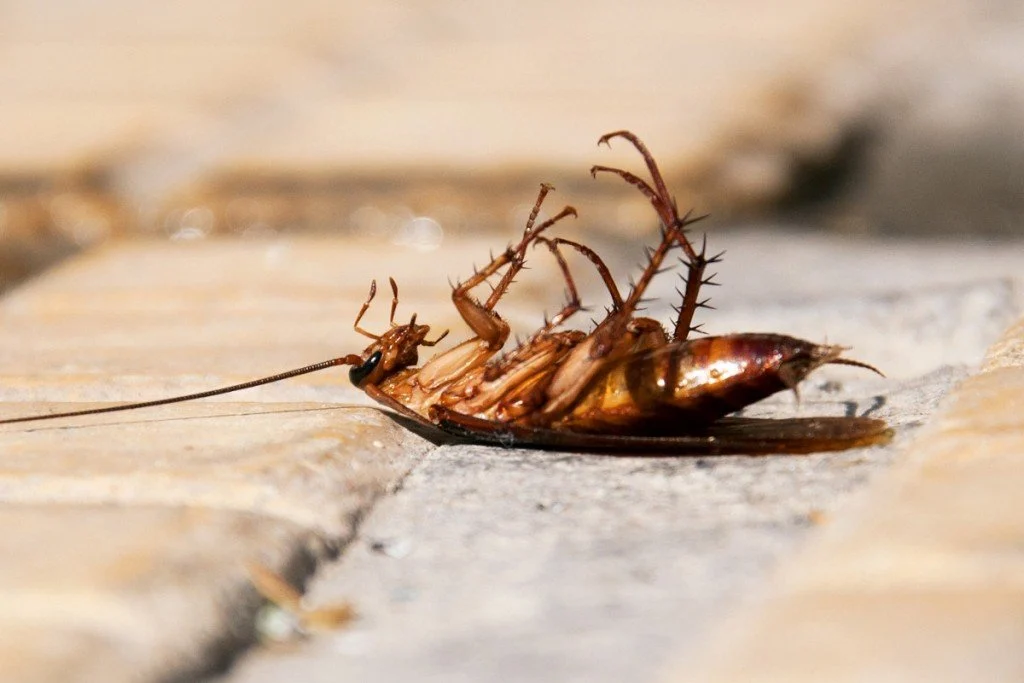
To answer this question, we need to understand some basic anatomy and physiology of cockroaches. Cockroaches have an exoskeleton, which is a hard outer shell that provides protection and support for their body. This exoskeleton is made up of chitin, a tough polysaccharide that also provides resistance to desiccation (drying out).
Cockroaches also have a complex circulatory system that is open, meaning that their blood or hemolymph is not confined to vessels, but instead, it circulates freely within the body cavity. This system allows for efficient transport of nutrients and waste products, as well as immune cells.
Now, let’s consider what happens when a cockroach is flipped onto its back. Cockroaches have legs that are adapted for walking on a horizontal surface, with spines and hairs that help them grip onto surfaces. However, when a cockroach is on its back, its legs are unable to grip onto anything, making it difficult for it to right itself.
In this position, the weight of the cockroach’s internal organs can put pressure on its respiratory system, making it difficult for the cockroach to breathe. This is because cockroaches do not have lungs like mammals do. Instead, they have a network of tubes called tracheae that allow air to diffuse directly to their cells. When a cockroach is on its back, the weight of its organs can compress these tracheae, making it difficult for air to circulate.
In addition, being on their back can also make it difficult for cockroaches to access food and water, which are essential for their survival. Cockroaches are known to be able to survive for long periods without food or water, but being deprived of these resources for an extended period can weaken their immune system and make them more vulnerable to disease and predation.
So, can a cockroach survive on its back for an extended period? The answer is yes, but it depends on several factors, including the species of cockroach, the age and health of the individual, and the availability of resources.
Some species of cockroaches, such as the American cockroach (Periplaneta americana), are better adapted to survive on their backs than others. These cockroaches have a larger body size and are more robust, making them better able to withstand the pressure on their respiratory system when they are on their back. They are also able to survive for longer periods without food or water, making them more resilient in general.
However, even the most resilient cockroaches will eventually succumb to the effects of being on their back for an extended period. Without access to food and water, they will eventually weaken and become more susceptible to disease and predation. In addition, the longer they are on their back, the more likely they are to suffer from respiratory distress, which can lead to death.
It is worth noting that cockroaches are not the only insects that are able to survive on their backs. Many other insects, such as beetles and ants, have also evolved mechanisms to right themselves when they end up in this position. Some species of beetles have specialized structures on their legs that allow them to flip themselves over, while some ants work together to flip their fallen comrades back onto their feet.
In conclusion, while cockroaches are able to survive on their backs for a limited period, it is not an ideal position for them. Being on their back can put pressure on their respiratory system, make it difficult