Yes, flamingos can fly. Despite their large size and unique body shape, flamingos are skilled fliers that use their wings to travel long distances.
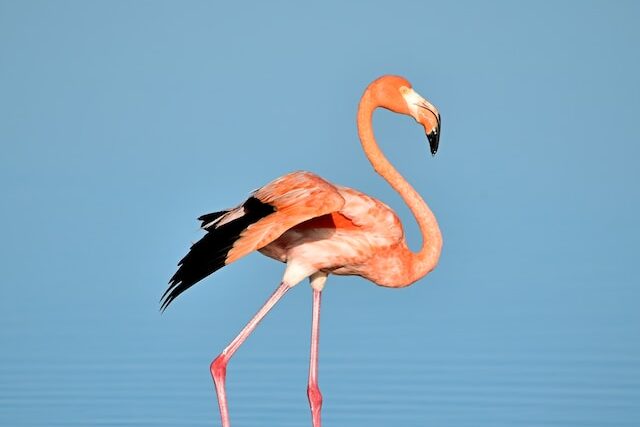
Flamingos are water birds that are found in various parts of the world, including Africa, South America, the Caribbean, and southern Europe. They are known for their bright pink feathers, long legs, and distinctive beaks. In the wild, flamingos are found in large flocks in shallow, saline or alkaline lakes, lagoons, and estuaries.
One of the most fascinating aspects of flamingos is their ability to fly. Although they may appear awkward on land due to their long legs and heavy bodies, they are actually quite graceful in the air. Flamingos use their wings to fly long distances, and they can reach impressive speeds of up to 55 kilometers per hour.
So how do flamingos fly? Like all birds, flamingos have a number of adaptations that make flight possible. Here are a few of the key features that allow flamingos to take to the skies:
- Powerful wings: Flamingos have large wings that are designed for sustained flight. Their wingspan can be up to 1.5 meters in length, which helps them generate lift and stay aloft. Flamingos have strong muscles in their wings that allow them to flap rapidly and generate enough lift to become airborne.
- Light bones: Another adaptation that helps flamingos fly is their light bones. Flamingos have hollow bones that are filled with air pockets, which makes them lighter and easier to lift into the air. This is essential for a bird as large as a flamingo to become airborne.
- Aerodynamic shape: Flamingos have a unique body shape that is well-suited to flight. Their long necks and legs are held outstretched during flight, which helps them maintain stability and balance. Additionally, their bodies are streamlined, with a tapered tail and curved wings that reduce drag and allow for efficient flight.
- Migration: Flamingos are known for their long-distance migrations, which often involve flying over vast distances. These migrations allow flamingos to find suitable habitats and breeding grounds, and they rely on their flying abilities to make these journeys safely.
It’s important to note that not all flamingos fly equally. While all flamingo species are capable of flight, some are more proficient flyers than others. For example, the Andean flamingo is known for its powerful flight, while the lesser flamingo is a weaker flier that tends to rely more on its ability to swim.
In addition, flamingos tend to fly in a particular way that is unique to their species. Rather than flying in a straight line like many other birds, flamingos often fly in a V-formation that allows them to conserve energy and stay close to their flock. This formation also helps flamingos maintain communication with one another during long flights.
In conclusion, flamingos are skilled fliers that are well-suited to long-distance travel. They have a number of adaptations that make flight possible, including powerful wings, light bones, an aerodynamic body shape, and the ability to migrate long distances. Despite their unusual appearance, flamingos are impressive birds that demonstrate the incredible diversity and adaptability of the avian species.