Yes, Muslims can have piercings, but there are certain guidelines and restrictions that need to be followed. Islam is a religion that emphasizes modesty, cleanliness, and self-restraint, and these principles should be taken into consideration when making any decisions about body modifications like piercings.
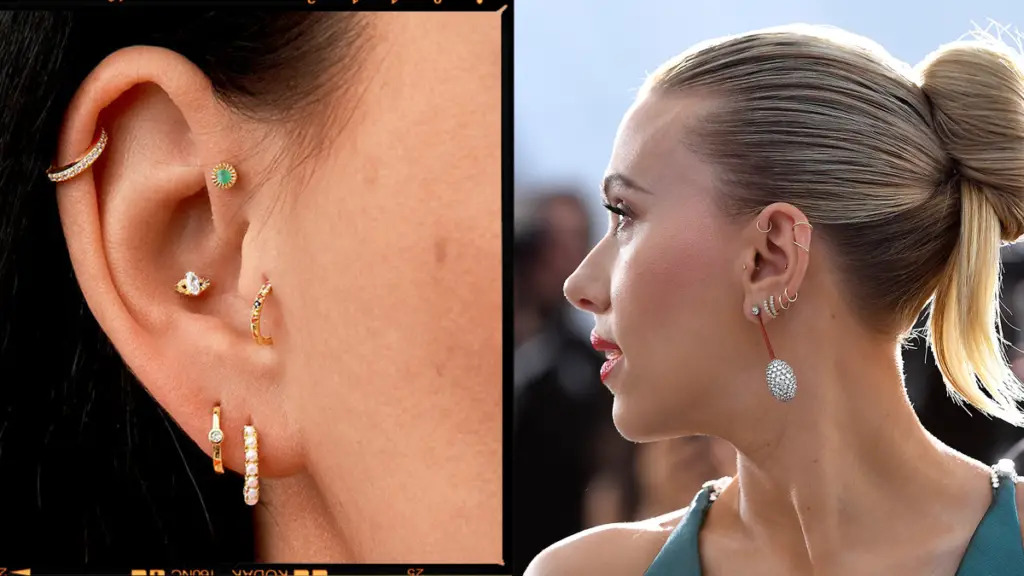
Firstly, it’s important to understand that there is no explicit prohibition on piercings in Islam. Unlike tattoos, which are generally discouraged or forbidden in Islam due to their permanent nature and association with pagan practices, piercings are not mentioned in the Quran or hadith (the sayings and actions of the Prophet Muhammad). This means that there is no inherent religious issue with getting a piercing.
However, there are some considerations that should be taken into account. For example, some scholars argue that piercings can be considered a form of mutilation, which is generally discouraged in Islam. They argue that altering the body in such a way is unnecessary and potentially harmful, and that it goes against the natural order of things.
Additionally, there are some specific guidelines that should be followed when getting a piercing. For example, piercings should not be done in a way that causes harm or injury to the body. This means that piercings should be done by a qualified professional in a sterile environment, and that proper aftercare should be taken to prevent infection and promote healing.
Another consideration is the placement of the piercing. In Islam, certain parts of the body are considered more private and should be covered, while others are considered more public and can be exposed. Piercings in private areas, such as the genitals or nipples, are generally considered inappropriate and should be avoided. Piercings in more public areas, such as the ears or nose, are generally more acceptable.
It’s also important to consider the cultural and societal norms surrounding piercings. While there may be no inherent religious issue with getting a piercing, certain cultures or communities may view piercings in a negative light. For example, some Muslim communities may view piercings as a sign of immodesty or indecency, especially for women.
Ultimately, the decision to get a piercing should be based on personal preference and individual circumstances. If a Muslim feels that a piercing is an important form of self-expression or personal adornment, they should consider the guidelines and restrictions outlined above and make a decision that is in line with their values and beliefs.
It’s also worth noting that the issue of piercings is not a black-and-white one, and there may be differences of opinion among Muslims and Islamic scholars. Some may view piercings as a harmless form of self-expression, while others may view them as unnecessary or even harmful. As with many issues in Islam, there is often room for interpretation and discussion, and individuals should strive to make informed decisions based on their own understanding of Islamic principles and teachings.
In conclusion, Muslims can have piercings, but there are guidelines and restrictions that should be followed. Piercings should be done in a way that does not cause harm or injury to the body, and should be placed in appropriate areas. Additionally, cultural and societal norms should be taken into consideration, and individuals should make decisions that are in line with their values and beliefs. As with many issues in Islam, there may be differing opinions and interpretations, and individuals should strive to make informed decisions based on their own understanding of Islamic teachings.