Yes, it is possible to be too close to a WiFi router. While WiFi routers are designed to emit low levels of electromagnetic radiation, the closer you are to the router, the higher the exposure to this radiation. In this article, we will discuss how WiFi routers work, the potential health risks associated with exposure to electromagnetic radiation, and the factors that determine safe distances from a WiFi router.
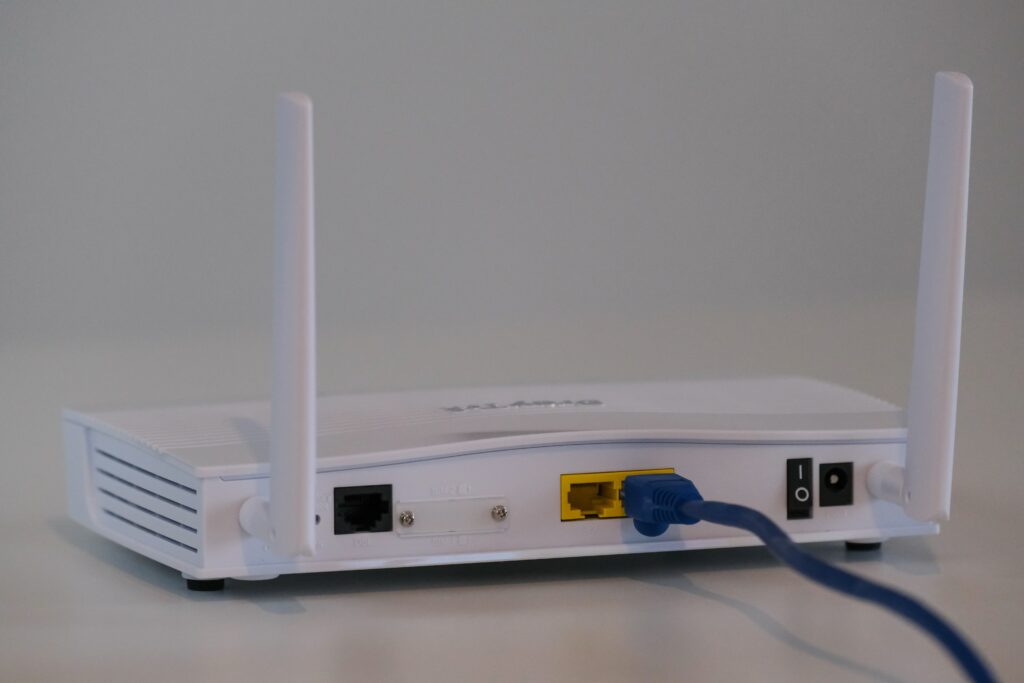
How do WiFi routers work?
WiFi routers use radio waves to transmit data between devices wirelessly. These radio waves are a type of electromagnetic radiation, which is a form of energy that travels through space. The frequency of these waves is measured in hertz (Hz), and the higher the frequency, the more energy the radiation carries.
WiFi routers use a specific frequency range called the 2.4 GHz or 5 GHz band. The router emits these waves in all directions to create a wireless signal that your devices can connect to. The strength of the signal decreases as you move further away from the router, which is why you may experience weaker or slower WiFi connections in some areas of your home.
Potential health risks associated with electromagnetic radiation
There is still ongoing debate about the potential health risks associated with exposure to electromagnetic radiation. While some studies have suggested that long-term exposure to high levels of electromagnetic radiation could increase the risk of cancer and other health issues, other studies have not found any clear evidence to support these claims.
The World Health Organization (WHO) has classified electromagnetic radiation as a Group 2B possible carcinogen, which means that there is some evidence that it may cause cancer in humans, but the evidence is not conclusive. However, this classification was made in 2011, and more recent studies have suggested that the risk may be lower than previously thought.
Factors that determine safe distances from a WiFi router
There are several factors that can determine safe distances from a WiFi router, including the strength of the signal, the frequency of the waves, and the amount of time you spend near the router.
The strength of the signal
The strength of the WiFi signal decreases rapidly as you move away from the router. However, even at close range, the signal strength can still be relatively high. The strength of the signal is usually measured in decibels (dBm), and the higher the number, the stronger the signal.
The Federal Communications Commission (FCC) recommends that WiFi routers should have a signal strength of no more than 100 milliwatts (mW) or 20 dBm. This is considered safe for most people, and the radiation exposure at this level is well below the recommended limits.
The frequency of the waves
The frequency of the waves emitted by a WiFi router can also impact the level of exposure to electromagnetic radiation. The 2.4 GHz band used by most routers has a lower frequency than the 5 GHz band. This means that it carries less energy and is less likely to cause harm.
However, some routers also have a feature called beamforming, which can concentrate the signal in a specific direction. If you are standing in the path of this concentrated signal, you may be exposed to higher levels of radiation.
The amount of time you spend near the router
The amount of time you spend near the router can also impact the level of exposure to electromagnetic radiation. If you only spend a few minutes near the router each day, the exposure is likely to be minimal. However, if you spend several hours each day in close proximity to the router, the exposure could be higher.
Safe distances from a WiFi router
The safe distance from a WiFi router will depend on several factors, including the strength of the signal, the frequency of the waves, and the amount of time you spend near the router. However, as a general rule, it is recommended that you stay at least 1 meter (3