The human uterus is a remarkable organ that is responsible for supporting the growth and development of a fetus during pregnancy. In certain situations, such as during a hysterectomy or after childbirth, the uterus may be removed or damaged. This raises the question: Can a human uterus grow back?
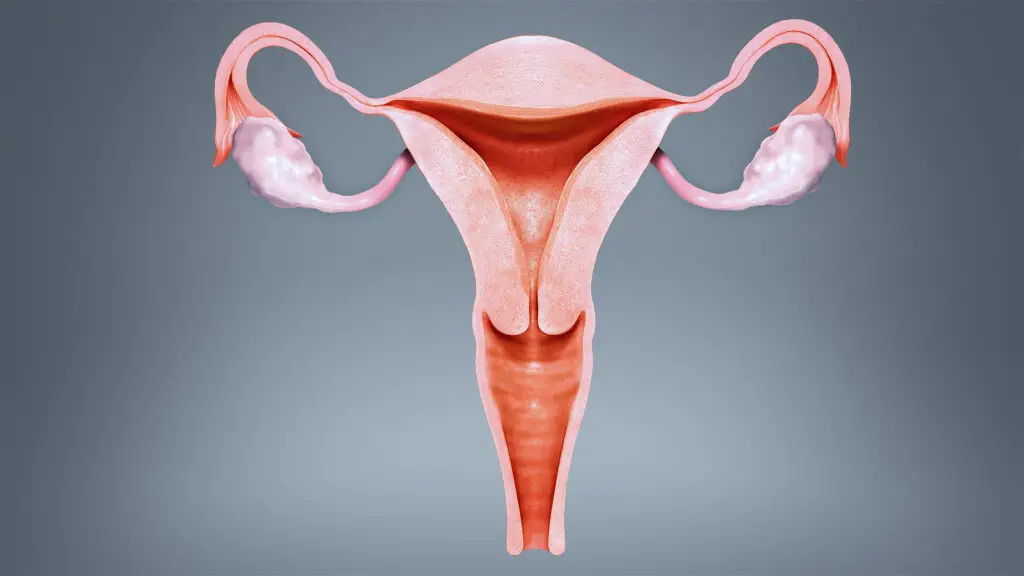
The short answer is no, a human uterus cannot grow back. However, there are some caveats to this answer that we will explore in greater detail.
Firstly, it is important to understand the anatomy of the uterus. The uterus is a muscular organ located in the pelvic region of the female body. It is roughly the size and shape of a small pear, with the narrow end (the cervix) opening into the vagina. The walls of the uterus consist of three layers: the innermost layer (the endometrium), the middle layer (the myometrium), and the outermost layer (the perimetrium).
During pregnancy, the endometrium thickens and becomes highly vascularized, providing a nourishing environment for the developing fetus. The myometrium also expands to accommodate the growing fetus. After childbirth, the uterus undergoes a process called involution, in which it returns to its pre-pregnancy size and shape.
In some cases, the uterus may be surgically removed in a procedure called a hysterectomy. This can be done for a variety of reasons, such as to treat uterine fibroids, endometrial cancer, or other conditions. There are several types of hysterectomies, including a partial hysterectomy (in which only the uterus is removed), total hysterectomy (in which the uterus and cervix are removed), and radical hysterectomy (in which the uterus, cervix, and surrounding tissues are removed).
In a hysterectomy, the entire uterus (or a portion of it) is removed. The uterus is a non-regenerative organ, meaning that it cannot grow back on its own. Therefore, after a hysterectomy, a woman will no longer be able to carry a pregnancy. However, in some cases, the ovaries (which produce hormones and release eggs) may be left intact, allowing the woman to continue to experience menstrual cycles.
There are some rare cases in which a portion of the uterus may be left intact during a hysterectomy, such as in a partial hysterectomy. In these cases, it is possible that the remaining portion of the uterus may regenerate some of its function, such as menstruation. However, it is unlikely that the uterus would be able to support a pregnancy, as the myometrium (the muscular layer of the uterus responsible for contractions during labor) would not be intact.
Another scenario in which the uterus may be damaged is during childbirth. In some cases, the uterus may rupture or tear, requiring emergency medical attention. In these cases, the damaged portion of the uterus may be surgically removed. While the uterus cannot regrow on its own, it is possible for the remaining portion of the uterus to heal and regain some of its function. However, as with a partial hysterectomy, it is unlikely that the uterus would be able to support a pregnancy.
In recent years, there has been growing interest in uterine transplantation as a way to help women who are unable to carry a pregnancy due to uterine factor infertility. In this procedure, a healthy uterus is transplanted from a donor into a recipient. The recipient undergoes a series of immunosuppressive treatments to prevent rejection of the transplanted uterus. If successful, the recipient may be able to carry a pregnancy to term using the transplanted uterus.
While uterine transplantation is still considered an experimental procedure, it has shown promising results in a small number of cases. However, it is important to note that the procedure is complex and carries