The carnivore diet focuses exclusively on animal products, emphasizing meat, fish, and animal-derived foods while excluding plant-based foods. This diet is often adopted for its potential benefits in weight loss, muscle gain, and overall health.
This food list provides a comprehensive overview of what to include in a carnivore diet, ensuring you have a variety of options to choose from while adhering to this eating plan.
The Carnivore Diet: A Focus on Meat
The carnivore diet emphasizes the consumption of animal products, making it a unique approach to nutrition. This diet is centered around meats, fish, and animal-derived foods, while completely excluding plant-based options.
Many individuals adopt this eating plan for its potential benefits, including weight loss, muscle gain, and improved overall health. By focusing solely on animal foods, followers of the carnivore diet aim to simplify their dietary choices while maximizing nutrient intake.
Essential Foods for the Carnivore Diet
At the core of the carnivore diet are various types of meats and animal products. Beef, pork, poultry, and fish form the primary components of this eating plan.
When selecting meats, opting for high-quality sources is crucial. Grass-fed beef and pasture-raised poultry not only enhance flavor but also provide superior nutritional benefits. Incorporating organ meats, such as liver and heart, can further boost the diet’s nutrient profile, offering essential vitamins and minerals that support overall health.
Meat Varieties to Include
Beef is a staple in the carnivore diet, with options ranging from juicy steaks to ground beef and roasts. Each cut offers distinct flavors and textures, allowing for diverse meal preparations.
Pork also plays a significant role, with crispy bacon and savory sausages being popular choices. These meats add richness to meals and can be enjoyed in various ways.
Poultry, including chicken and turkey, provides lean protein options, while fish such as salmon and tuna contribute healthy fats and essential omega-3 fatty acids.
Incorporating Dairy and Animal Fats
While the primary focus is on meats, certain dairy products can be included if tolerated. Cheese, butter, and heavy cream can complement meals, adding creaminess and flavor.
Animal fats, such as lard and tallow, are essential for cooking and can enhance the taste of dishes. These fats not only provide energy but also contribute to the overall richness of the carnivore diet.
Hydration and Nutritional Balance
Staying hydrated is vital on the carnivore diet. Drinking plenty of water helps maintain hydration levels, especially when consuming high-protein foods.
Some individuals may also consider supplementing electrolytes to support overall well-being. This can be particularly beneficial during the initial transition to a meat-based diet, as the body adjusts to the new eating pattern.
Preparing Meals in a Rustic Kitchen Setting
Creating meals in a rustic kitchen setting can enhance the experience of following the carnivore diet. The ambiance of a warm, inviting kitchen, complete with herbs and spices, sets the stage for delicious meat-based dishes.
Using a wooden cutting board to display various meats not only adds a touch of charm but also emphasizes the focus on animal-based foods. The visual appeal of juicy steaks, crispy bacon, and fresh fish can inspire creativity in meal preparation.
Essential Foods for the Carnivore Diet
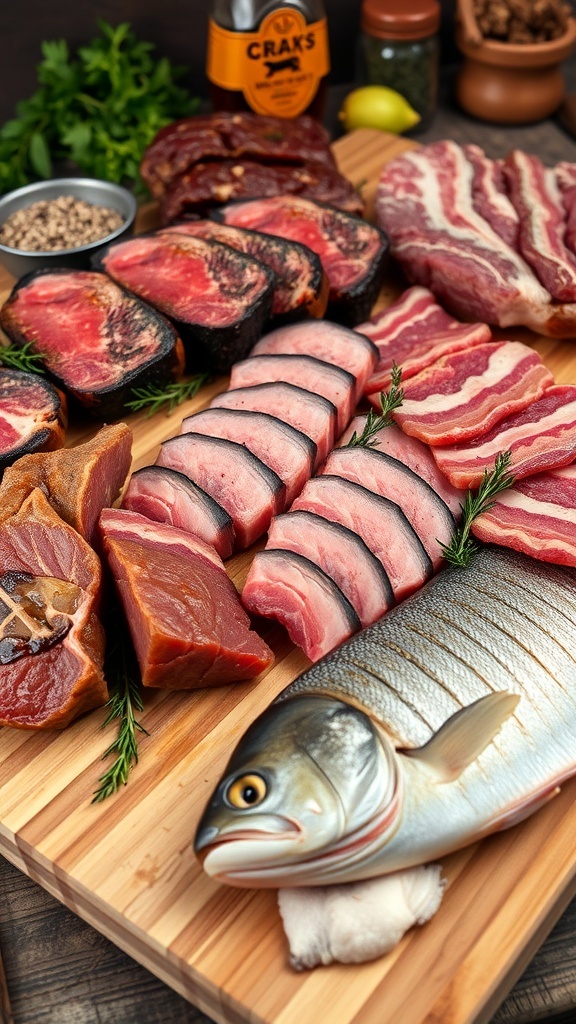
The carnivore diet primarily consists of beef, pork, poultry, fish, and animal-derived products. It’s important to choose high-quality sources of meat and include organ meats for their nutritional benefits. This list serves as a guide to help you navigate your food choices.
Ingredients
- Beef (steaks, ground beef, roasts, organ meats like liver and heart)
- Pork (chops, bacon, ham, sausages)
- Poultry (chicken, turkey, duck, eggs)
- Fish (salmon, tuna, sardines, shellfish)
- Dairy (cheese, butter, heavy cream, if tolerated)
- Bone broth
- Animal fats (lard, tallow, duck fat)
- Processed meats (bacon, salami, if free from additives)
Instructions
- Choose high-quality meat sources, preferably grass-fed or pasture-raised.
- Incorporate a variety of meats to ensure a well-rounded intake of nutrients.
- Consider including organ meats for additional vitamins and minerals.
- Stay hydrated and consider supplementing electrolytes if needed.
Cook and Prep Times
- Prep Time: Varies based on meal preparation
- Cook Time: Varies based on cooking method
- Total Time: N/A
- Servings: Varies based on individual needs
- Calories: Varies based on food choices
- Fat: Varies based on food choices
- Protein: Varies based on food choices
- Carbohydrates: 0g