While it is unlikely that a tsunami would directly hit New York City, it is not impossible. Tsunamis are typically generated by large undersea earthquakes or underwater landslides, which can cause massive waves that can travel across entire oceans. The potential for a tsunami to hit a particular area depends on several factors, including the location and strength of the earthquake or landslide, the depth of the ocean, and the topography of the coast.
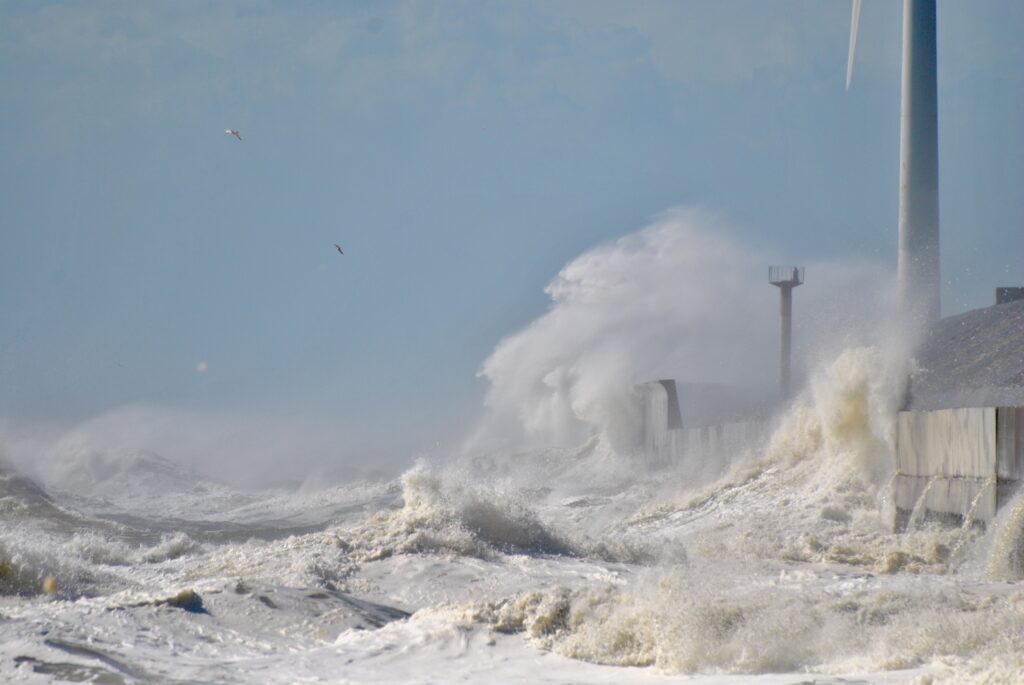
New York City is located on the east coast of the United States, facing the Atlantic Ocean. While the Atlantic Ocean is not as prone to tsunamis as the Pacific Ocean, it is still possible for a tsunami to occur in the region. The most likely scenario for a tsunami to hit New York City would be if a massive earthquake were to occur in the Atlantic Ocean, either along the Mid-Atlantic Ridge or near the coast of Africa or Europe. Such an earthquake could generate a tsunami that could travel across the ocean and potentially impact the east coast of the United States.
However, the likelihood of such an event occurring is relatively low. The Atlantic Ocean is not as seismically active as the Pacific Ocean, which is located along the “Ring of Fire,” a region with a high concentration of earthquakes and volcanic activity. While there have been several large earthquakes in the Atlantic Ocean in the past, they have not generated significant tsunamis that have impacted the east coast of the United States.
Additionally, New York City is located on a relatively shallow continental shelf, which would cause any incoming tsunami waves to slow down and lose energy before reaching the coast. This would reduce the impact of a tsunami on the city, although it is still possible that some damage could occur.
In conclusion, while it is possible for a tsunami to hit New York City, the likelihood of such an event occurring is relatively low. The city is not located in a region that is highly prone to tsunamis, and the topography of the coast would reduce the impact of any incoming waves. However, it is important for coastal cities to have emergency plans in place for the unlikely event of a tsunami or other natural disaster.