Creating a duck pond in your backyard can enhance your outdoor space while providing a habitat for ducks and other wildlife. With the right design and features, you can create a serene environment that attracts various birds and adds beauty to your landscape.
This guide offers practical ideas for building and maintaining a duck pond, including considerations for size, location, and landscaping to ensure a thriving ecosystem.
Designing Your Ideal Duck Pond
Creating a duck pond in your backyard can significantly enhance your outdoor space.
A well-thought-out design is essential for attracting ducks and other wildlife while ensuring a peaceful atmosphere.
Consider incorporating shallow areas for ducks to wade and deeper sections for aquatic plants and fish, which can contribute to a balanced ecosystem.
Natural elements such as rocks, logs, and native plants can make the pond more inviting.
These features not only provide shelter for the ducks but also add visual interest to your landscape.
Regular maintenance is crucial to keep the pond healthy and thriving.
Choosing the Right Location
Location plays a vital role in the success of your duck pond.
Opt for a sunny spot that offers shade options to help regulate water temperature.
This balance is important for the well-being of both the ducks and the plants in the pond.
Additionally, ensure the area is free from pollutants and harmful chemicals.
A clean environment will promote a healthy habitat for your feathered friends.
Consider the proximity to your home for easy access and enjoyment.
Incorporating Natural Features
Adding a small waterfall or fountain can enhance the pond’s aesthetic while aerating the water.
The soothing sound of flowing water creates a tranquil atmosphere that can be enjoyed from your backyard.
This feature also helps maintain water quality, which is essential for the health of the pond.
Creating a sloped bank allows ducks easy access to the water while preventing erosion.
This design element is not only functional but also adds to the natural look of the pond.
Consider installing a small dock or platform where ducks can rest and sunbathe, further enriching their habitat.
Planting for Diversity
Incorporating a variety of plants is key to a thriving duck pond.
Both submerged and emergent plants provide food and shelter for ducks, creating a balanced ecosystem.
Choose native plants that are well-suited to your climate for the best results.
Regularly monitor the health of the plants and replace any that are not thriving.
Healthy vegetation contributes to water quality and provides essential habitat for wildlife.
A diverse plant life also enhances the visual appeal of your pond.
Maintenance Tips for a Healthy Pond
Maintaining your duck pond is essential for its longevity and the well-being of its inhabitants.
Regularly check water levels and quality, adding fresh water as needed to keep it clean and clear.
Removing debris and algae helps maintain a healthy environment for the ducks.
Ensure there are no harmful chemicals or pollutants in the area surrounding the pond.
This precaution is vital for protecting the health of the ducks and the overall ecosystem.
With consistent care, your backyard duck pond can become a serene retreat for both you and your feathered friends.
Designing Your Ideal Duck Pond
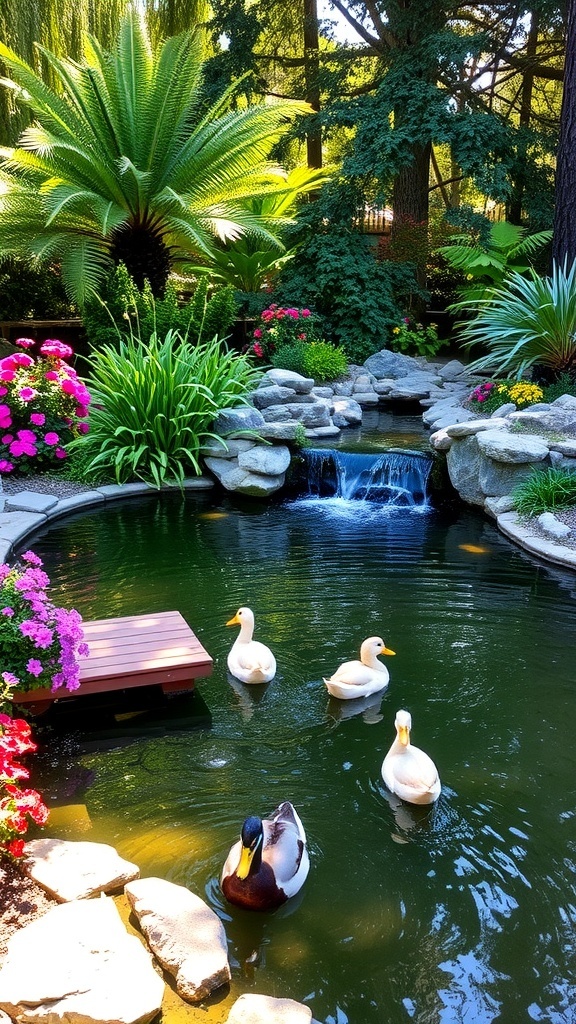
A well-planned duck pond should include shallow areas for ducks to wade and deeper sections for aquatic plants and fish. Incorporating natural elements like rocks, logs, and native plants can create a more inviting habitat. Regular maintenance, such as cleaning and monitoring water quality, is essential for a healthy pond.
Ingredients
Related
- Duck Pond Salad Recipe
- Duck Pond with Drain Design
- Creative Duck Run Ideas for Your Backyard
- Is it daisy or daphne duck?