Fish are aquatic animals that live in water and obtain the water they need through their gills. While fish do not drink water in the same way that humans and other animals do, they do require water to survive and can become dehydrated if they are exposed to excessively salty or dry environments.
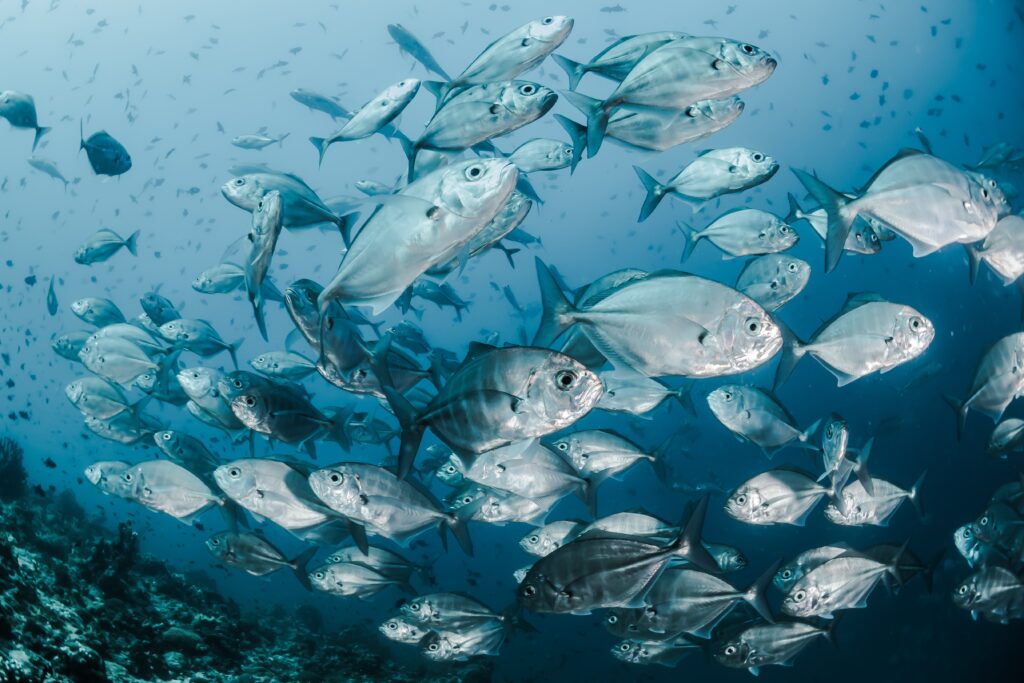
In order to understand how fish obtain water, it is important to understand the role of gills in the fish respiratory system. Gills are specialized organs that fish use to extract oxygen from water and release carbon dioxide. When water flows over the gills, oxygen diffuses from the water into the fish’s bloodstream, while carbon dioxide diffuses from the fish’s bloodstream into the water.
While gills are primarily responsible for gas exchange, they also play a role in regulating the fish’s water balance. Fish are osmoregulators, which means that they must maintain a balance of water and salts in their bodies to survive. This is particularly important for freshwater fish, which must actively absorb salts from the water in order to maintain the proper balance. Fish are able to obtain the water they need to survive through a combination of osmosis and diffusion. Osmosis is the process by which water moves from an area of high concentration (i.e. outside the fish’s body) to an area of low concentration (i.e. inside the fish’s body), while diffusion is the process by which substances move from an area of high concentration to an area of low concentration.
Fish are able to regulate the amount of water that enters and leaves their bodies through their gills, which are able to selectively absorb or excrete salts depending on the fish’s needs. In addition, fish are able to conserve water by excreting concentrated urine and minimizing the amount of water lost through their skin and gills. While fish do not experience thirst in the same way that humans do, they can become dehydrated if they are exposed to excessively salty or dry environments. For example, if a freshwater fish is placed in saltwater, it will lose water through its gills and skin and may become dehydrated if it is unable to compensate for the increased salt concentration. Similarly, if a fish is removed from water and exposed to a dry environment, it may become dehydrated if it is unable to absorb sufficient water through its skin.
In conclusion, while fish do not get thirsty in the same way that humans do, they do require water to survive and can become dehydrated if they are exposed to excessively salty or dry environments. Fish are able to obtain the water they need through their gills and by regulating the balance of water and salts in their bodies. Understanding the unique adaptations of fish to their aquatic environments is important for ensuring their well-being and conservation.