The Tyrannosaurus rex, or T. rex, is one of the most famous and recognizable dinosaurs that ever lived. This massive predator roamed North America during the Late Cretaceous period, around 68 to 66 million years ago. While the T. rex is well-known for its massive size, powerful jaws, and razor-sharp teeth, it is also sometimes depicted with small, almost vestigial wings. But did the T. rex actually have little wings?
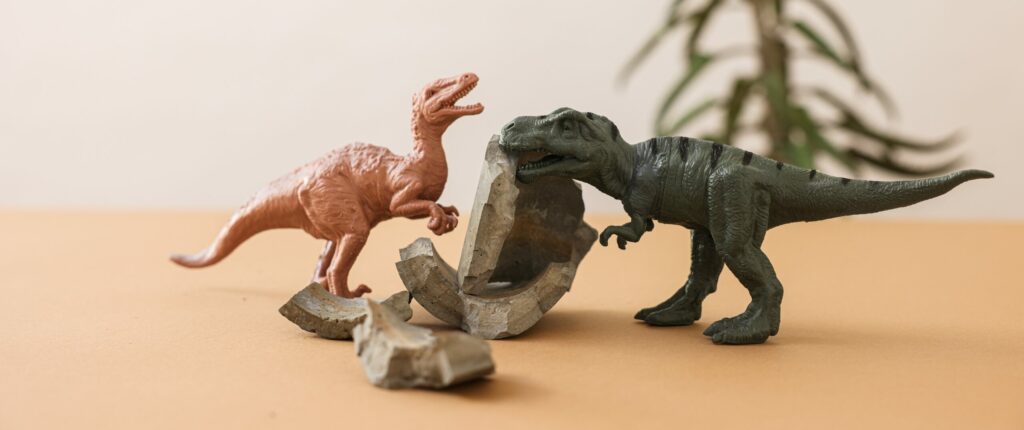
To answer this question, we need to explore what these “wings” actually are and what they were used for. In the case of the T. rex, the “wings” in question are actually the forelimbs, which are relatively short and small compared to the rest of the dinosaur’s body. While these forelimbs are often depicted as tiny and useless, they actually had some important functions.
For one thing, the T. rex’s forelimbs would have been important for balance and stability. Despite their small size, the forelimbs were relatively robust and muscular, and would have helped to support the massive weight of the dinosaur’s head and body. In addition, the forelimbs may have been used to help the T. rex rise from a prone position, such as when it was lying down to rest or after it had made a kill.
But what about flight? Did the T. rex’s forelimbs have any role in flying, or were they truly vestigial wings? The answer is that while the T. rex’s forelimbs may have been used for limited flight or gliding, they were not true wings in the sense that we typically think of them.
It is important to understand that not all wings are the same. There are many different types of wings in the animal kingdom, each with their own unique structures and functions. For example, the wings of birds are highly specialized for powered flight, with complex arrangements of feathers and muscles that allow the bird to generate lift and maneuver in the air.
The wings of bats are also highly specialized, with elongated fingers that support a flexible membrane of skin. This allows bats to achieve powered flight in a way that is quite different from birds, using a combination of flapping and gliding.
In contrast, the forelimbs of the T. rex were not specialized for flight in the way that bird or bat wings are. While they may have been used for limited gliding or flapping, they would not have been capable of generating the lift necessary for sustained flight.
So what kind of flight, if any, could the T. rex have engaged in? It is possible that the T. rex could have engaged in something called “powered gliding.” Powered gliding is a type of flight that is intermediate between true powered flight and gliding.
In powered gliding, an animal uses brief bursts of power to gain altitude, then glides for short distances before repeating the process. This allows the animal to cover greater distances than it could with pure gliding, but without the energy expenditure required for sustained powered flight.
While it is not clear whether the T. rex actually engaged in powered gliding, it is theoretically possible. In this scenario, the T. rex would use its powerful leg muscles to launch itself into the air, then use its forelimbs to stabilize and steer itself during the glide. This would allow the T. rex to travel short distances through the air, perhaps to reach a distant prey item or to escape a predator.
In conclusion, while the T. rex is sometimes depicted with small, vestigial wings, the reality is more complex. The T. rex’s forelimbs were relatively small and robust, and likely served important functions related to balance and stability.