Creating a carnivorous plant terrarium is an engaging project that allows you to cultivate unique plants that thrive on insects. These fascinating plants, such as Venus flytraps and sundews, can be grown indoors with the right conditions.
This guide provides straightforward steps to set up your own terrarium, including the necessary materials and care tips to ensure your carnivorous plants flourish.
Creating Your Carnivorous Plant Terrarium
Building a carnivorous plant terrarium is a rewarding endeavor that not only beautifies your space but also allows you to nurture fascinating plants.
These unique species, such as Venus flytraps and sundews, thrive in environments that mimic their natural habitats.
Setting up a terrarium can be an enjoyable project, perfect for both seasoned gardeners and beginners alike.
Essential Materials for Your Terrarium
To get started, gather the necessary materials.
You will need a glass terrarium or container with a lid to maintain humidity.
Select vibrant carnivorous plants like Venus flytraps and sundews, which will be the stars of your miniature ecosystem.
Sphagnum moss or peat moss serves as the growing medium, while perlite or sand will ensure proper drainage.
Don’t forget distilled water to keep your plants hydrated without harmful chemicals, and decorative stones or gravel for added aesthetics.
Step-by-Step Assembly
Begin by thoroughly cleaning your glass container to create a healthy environment for your plants.
Next, add a drainage layer of perlite or sand at the bottom to prevent water from accumulating.
Once the drainage layer is in place, layer sphagnum moss or peat moss on top, ensuring it remains moist but not overly wet.
Carefully remove your plants from their pots and position them in the terrarium, allowing enough space for growth.
Watering and Maintenance
After planting, it’s time to water the terrarium.
Use distilled water to moisten the growing medium, ensuring it is damp but not soggy.
Cover the terrarium with its lid to maintain humidity, which is vital for the health of your carnivorous plants.
Position your terrarium in a spot that receives bright, indirect sunlight to promote growth while avoiding direct sunlight that could cause overheating.
Creating a Miniature Ecosystem
Your terrarium is not just a display; it’s a miniature ecosystem that can thrive with minimal maintenance once established.
The combination of sphagnum moss, decorative stones, and the vibrant plants creates a visually stunning centerpiece.
Soft natural light enhances the unique shapes and textures of the plants, making it an eye-catching addition to any room.
Enjoying Your Carnivorous Plant Terrarium
As your terrarium matures, you’ll find joy in watching your carnivorous plants flourish.
These plants not only serve as a conversation starter but also provide a glimpse into the fascinating world of nature.
With proper care, your terrarium will remain a vibrant and lively display, showcasing the beauty of these extraordinary plants.
Step-by-Step Guide to Building a Carnivorous Plant Terrarium
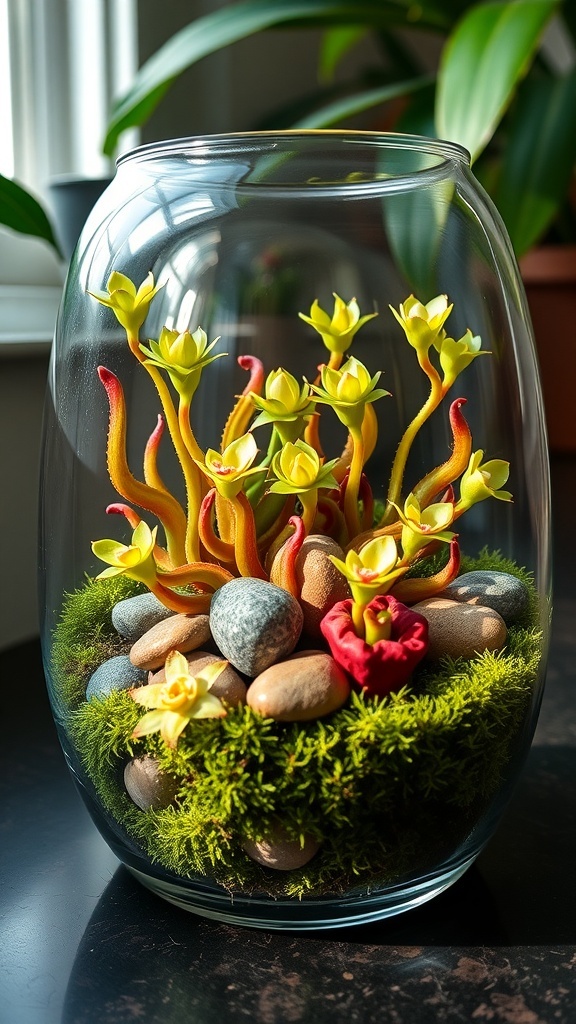
This DIY project involves assembling a terrarium that mimics the natural habitat of carnivorous plants. It typically takes about 1-2 hours to set up and requires minimal maintenance once established.
Ingredients
- A glass terrarium or container with a lid
- Carnivorous plants (e.g., Venus flytrap, sundew, pitcher plant)
- Sphagnum moss or peat moss
- Perlite or sand for drainage
- Distilled water (avoid tap water)
- Decorative stones or gravel (optional)
Instructions
- Prepare the Container: Clean the glass terrarium thoroughly to ensure a healthy environment for your plants.
- Create a Drainage Layer: Add a layer of perlite or sand at the bottom of the container to facilitate drainage.
- Add the Growing Medium: Layer sphagnum moss or peat moss on top of the drainage layer, ensuring it is moist but not soggy.
- Plant the Carnivorous Plants: Carefully remove the plants from their pots and plant them in the terrarium, spacing them appropriately.
- Water the Plants: Use distilled water to moisten the growing medium. Ensure the soil is damp but not waterlogged.
- Cover the Terrarium: Place the lid on the terrarium to maintain humidity, which is essential for the plants’ growth.
- Positioning: Place the terrarium in a location with bright, indirect sunlight. Avoid direct sunlight to prevent overheating.
Cook and Prep Times
- Prep Time: 30 minutes
- Setup Time: 1 hour
- Total Time: 1.5 hours
- Servings: N/A
- Calories: N/A
- Fat: N/A
- Protein: N/A
- Carbohydrates: N/A