Yes, ants have brains. However, their brain structure and function differ significantly from that of humans and other vertebrates.
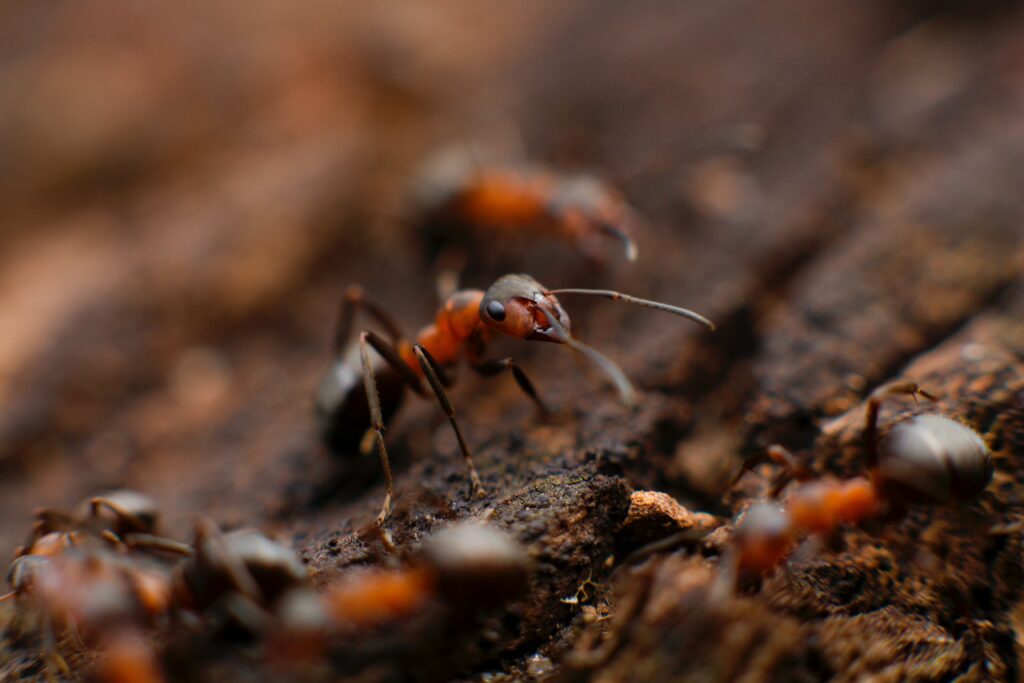
Ants are social insects that live in large colonies or communities. These colonies can contain thousands or even millions of individuals, each with its own role and specialized tasks. Despite the lack of a centralized nervous system like vertebrates, ants have evolved a sophisticated social organization and behavior that allows them to thrive and survive in their environments.
An ant’s brain is a collection of ganglia, also known as a cluster of nerve cells, that are distributed throughout the body. The brain is located in the head, with a pair of large optic lobes that process visual information, and smaller antennal lobes that process chemical signals from the antennae. Unlike vertebrates, ants do not have a single brain that controls their entire body but rather have several ganglia that are responsible for different functions.
The largest ganglion in the ant’s brain is called the mushroom body. It is responsible for processing sensory information, learning, and memory. The mushroom body is particularly important for ants’ ability to navigate their environment and find food sources. Ants are known to have an excellent sense of smell and can use this sense to navigate their environment and communicate with other members of their colony.
Another important ganglion in the ant’s brain is the subesophageal ganglion, which controls the movement and behavior of the ant’s mouthparts. The subesophageal ganglion is responsible for coordinating the actions of the mandibles, maxillae, and labium, which are used for feeding, grooming, and defense.
Despite the relatively small size of the ant’s brain, it is capable of complex behaviors and interactions with other ants in the colony. Ants use chemical signals called pheromones to communicate with each other and coordinate their actions. These pheromones can signal a wide range of behaviors, from identifying the location of food sources to warning of danger and recruiting other ants for specific tasks.
Ants also exhibit a wide range of social behaviors, such as division of labor, foraging, and caring for the young. These behaviors are controlled by a combination of genetic and environmental factors, with some tasks being genetically predetermined and others being learned through experience and social interaction.
For example, worker ants in a colony are typically responsible for tasks such as foraging, caring for the young, and defending the colony. These tasks are determined by a combination of genetic factors and environmental cues, such as the availability of food or the presence of predators. However, the specific task that an individual worker ant performs is also influenced by social interactions with other ants in the colony. Ants use pheromones to communicate with each other and coordinate their behavior, and this communication allows them to adapt to changing conditions and respond to threats.
In conclusion, ants have brains that are distributed throughout their body in the form of ganglia. These ganglia are responsible for processing sensory information, controlling movement and behavior, and coordinating social interactions with other ants in the colony. While ants’ brains are much simpler than those of humans and other vertebrates, they are nonetheless capable of complex behaviors and interactions that allow ants to thrive and survive in their environments. Ants’ social behavior is particularly remarkable, and their ability to communicate and coordinate their actions with other members of the colony is essential to their success.