First of all, it’s important to clarify that cows don’t actually have “breasts.” The anatomical structures that produce milk in cows are called mammary glands, and they are located on the underside of the cow’s body, between the hind legs.
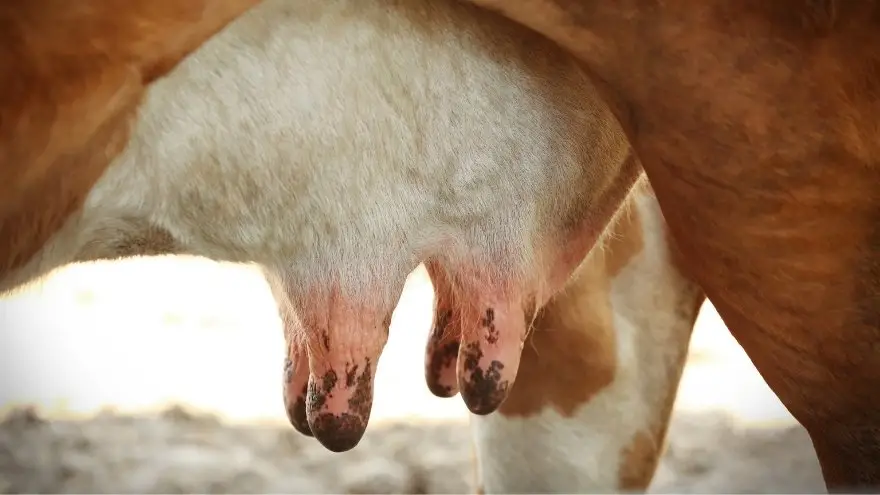
To answer the question, yes, cows do have four mammary glands, one for each quarter of their udder. Each mammary gland contains a complex network of ducts and alveoli (small sacs) that produce and store milk.
The number of mammary glands and the number of teats (the openings through which milk is released) can vary among different species of animals. For example, goats typically have two mammary glands with two teats each, while pigs have between six and twenty-two teats arranged in two rows along the underside of the body.
In the case of cows, the four quarters of the udder are generally evenly sized and spaced, although there can be some variation between individual cows. The teats themselves are typically located towards the rear of the udder, and they can vary in size and shape as well.
One thing to keep in mind is that the number of mammary glands and teats a cow has does not necessarily correspond to how much milk it can produce. Milk production is influenced by a variety of factors, including genetics, nutrition, and management practices. In some cases, cows with fewer mammary glands or teats may actually produce more milk than cows with more.
Another important point to consider is that milk production in cows is not a continuous process. Milk production is stimulated by the hormone prolactin, which is released in response to suckling or milking. As the udder is emptied of milk, the cow’s body produces more to replace it. However, if the udder is not emptied regularly, milk production will decrease.
Overall, while cows do have four mammary glands, it’s important to remember that milk production is a complex process that is influenced by many factors. If you have specific questions about milk production or cow anatomy, it’s always best to consult with a veterinarian or other expert in the field.