Flies are a common sight in the natural world and are among the most well-known and studied of all insects. They belong to the Diptera order, which means “two-winged” in Greek, and are characterized by their large compound eyes, short antennae, and membranous wings. Flies are known for their quick movements, agility, and ability to fly in different directions.
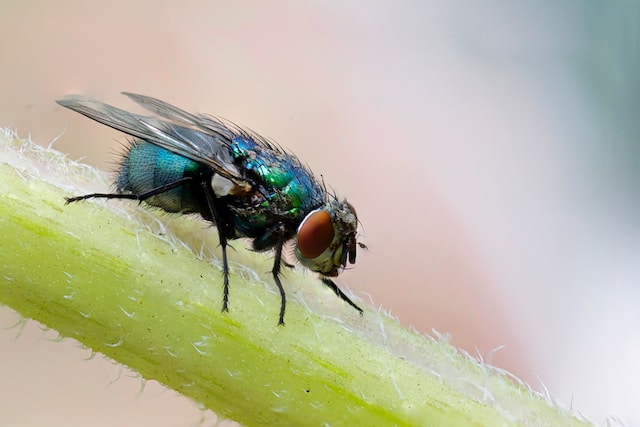
One of the essential aspects of fly biology is their reproductive behavior. Like many other insects, flies lay eggs as part of their life cycle. However, the frequency of egg-laying is affected by various factors, such as age, health, habitat, and food sources.
Flies go through a process of metamorphosis that involves four stages: egg, larva, pupa, and adult. The adult female fly lays her eggs on a suitable substrate, such as decaying organic matter or animal skin. The eggs hatch into larvae or maggots, which feed on the substrate and shed their skins several times as they mature. After maturing, the maggots enter the pupal stage, during which they transform into adult flies. The adult flies emerge from the pupal case and repeat their reproductive cycle.
Age is an essential factor that can affect fly reproduction. Younger flies are more active and energetic than older flies, and they may lay more eggs as a result. However, as flies age, their reproductive capacity may decline, and they may lay fewer eggs or stop laying eggs altogether.
The health of a fly can also affect its reproductive behavior. Flies that are healthy and well-nourished are more likely to lay eggs than flies that are sick or malnourished. In addition, flies that are infected with parasites or pathogens may lay fewer eggs or not lay eggs at all.
The availability of suitable habitat and food sources can also influence the reproductive behavior of flies. Flies require a suitable substrate to lay their eggs and food sources to feed and develop. If suitable habitats and food sources are scarce, flies may lay fewer eggs or not lay eggs at all.
While flies may lay eggs every time they land under specific circumstances, such as when they are actively seeking out suitable substrates, they do not always lay eggs every time they land. Flies are adaptable insects, and their reproductive behavior is influenced by a wide range of environmental and physiological factors. While they may be capable of laying eggs every time they land, they may choose not to do so if the conditions are not optimal.
To conclude, flies lay eggs as part of their life cycle, and the frequency with which they lay eggs depends on several factors, including age, health, habitat, and food sources. Flies do not lay eggs every time they land and may choose not to lay eggs if the conditions are not ideal. Understanding the reproductive behavior of flies is crucial in managing their populations and reducing their impact on the environment.