Spiders are fascinating creatures that are found in almost every corner of the world. These eight-legged arthropods are known for their intricate webs, venomous bites, and ability to strike fear into the hearts of many people. But when it comes to noise, most people probably don’t associate spiders with making any significant sounds. So, do spiders make noise? Let’s explore this question in more detail.
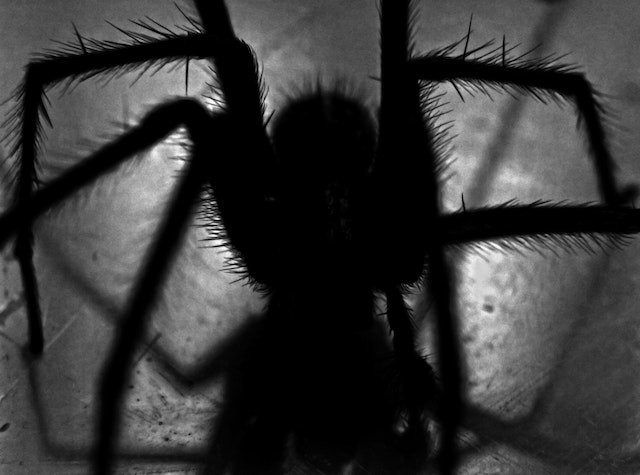
Firstly, it is important to understand that spiders do not have vocal cords or any other anatomical structure that is specifically designed for creating sound. This means that they cannot produce sounds in the same way that mammals or birds do. However, this does not mean that spiders are completely silent creatures. In fact, there are several ways in which spiders can create noise, albeit in a much more subtle manner than other animals.
One of the most common ways in which spiders make noise is by stridulation. Stridulation refers to the act of rubbing body parts together to create sound. Many spiders have specialized structures on their legs or other body parts that allow them to produce a faint, rasping noise when they move. This noise is usually too quiet for humans to hear without the aid of special equipment, but it can be detected by sensitive instruments.
Some species of spiders are more likely to stridulate than others. For example, wolf spiders (family Lycosidae) are known for their stridulatory behavior. These spiders have a specialized structure on their front legs called a stridulatory organ. When they rub this structure against their abdomen, they create a distinctive sound that is used for communication and courtship. Male wolf spiders use stridulation to attract females and to establish dominance over other males.
Other spiders that are known to stridulate include tarantulas, jumping spiders, and orb-weaving spiders. The exact function of stridulation in these species is not well understood, but it is thought to play a role in mate selection, territorial defense, and other aspects of social behavior.
Another way in which spiders can create noise is by vibrating their webs. Many species of spiders use webs to capture prey, and these webs are often constructed with remarkable precision and complexity. When an insect or other small animal becomes trapped in a spider’s web, the spider will typically rush over to subdue it. As the spider moves across the web, it creates vibrations that can be detected by other spiders in the vicinity.
These vibrations are not technically sound waves, but they do serve as a form of communication between spiders. Some spiders are able to interpret the vibrations of a web to determine the size and strength of the prey that is caught, and to determine whether or not it is safe to approach. Other spiders may use web vibrations to locate potential mates or to signal their presence to other spiders in the area.
One interesting example of spider communication via web vibrations is the “tuning fork” behavior of male wolf spiders. When a male wolf spider detects the presence of a female, he will typically begin to approach her by tapping his front legs on the ground. As he gets closer, he will start to vibrate his body in a specific pattern that causes the ground to resonate like a tuning fork. This vibration is picked up by the female’s sensitive hairs, allowing her to locate the male even in complete darkness.
It is worth noting that not all spiders use their webs for communication in this way. Some spiders, such as tarantulas, do not construct webs at all, while others use their webs primarily for shelter rather than for catching prey.
In addition to stridulation and web vibrations, there are a few other ways in which spiders can create noise. For example, some spiders are known to make clicking sounds by snapping their pedipalps, which are small appendages near their mouthparts.