Worms, specifically the common earthworms (Lumbricus terrestris), do possess a simple nervous system. But their ability to experience pain is a topic of scientific debate. Pain is a complex phenomenon involving sensory perception, emotional response, and conscious awareness. It is difficult to determine if worms, with their limited nervous system, truly experience pain as humans do.
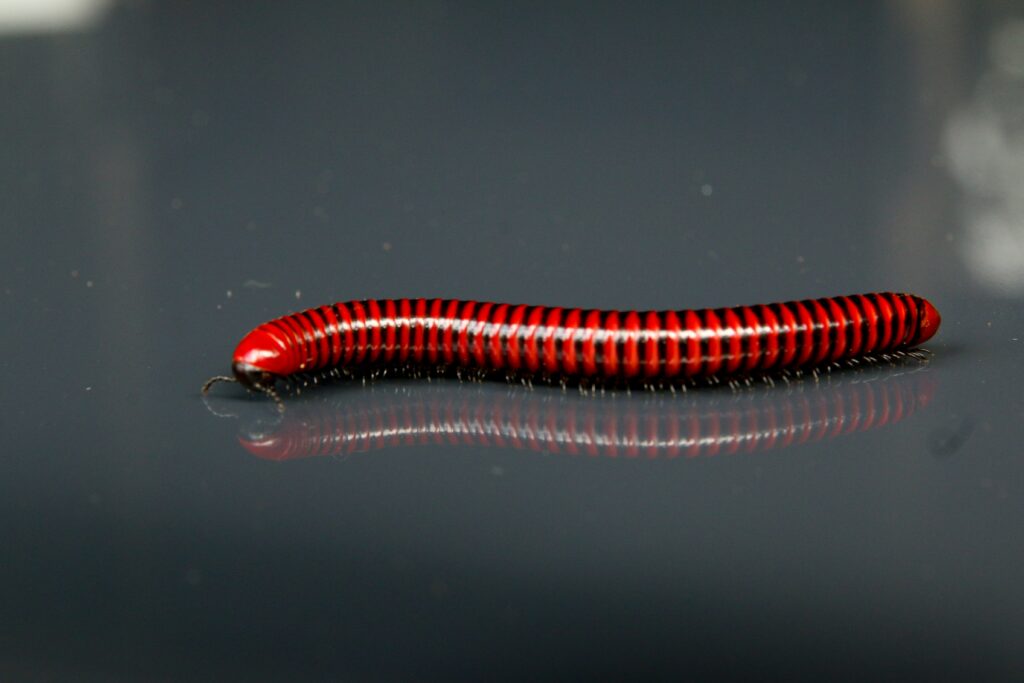
Worms have a decentralized nervous system consisting of a ventral nerve cord and ganglia, or clusters of nerve cells, that run along the length of their body. They lack a central brain or complex sensory organs. Their nervous system primarily serves to coordinate basic physiological functions like locomotion and digestion.
Some researchers argue that worms do not experience pain. Because their nervous system is simple and lacks the specialized receptors and pathways associated with pain perception in vertebrates. Worms do not have nociceptors. Which are sensory receptors that respond to harmful stimuli like tissue damage or extreme temperatures. They are considered to be the primary detectors of pain in animals. Additionally, worms do not exhibit behaviors commonly associated with pain. Such as vocalization or withdrawal reflexes, which are seen in animals with more advanced nervous systems.
Furthermore, studies have shown that worms can survive and recover from injuries that would be highly painful or even fatal to animals with more complex nervous systems. For example, earthworms can regenerate and fully regenerate their entire body from just a small fragment. They can continue to feed and reproduce even when injured. This suggests that worms may not experience pain in the same way that animals with more advanced nervous systems do.
On the other hand, some researchers argue that worms may still experience pain in a different, more basic way. They suggest that worms may have a form of nociception, which is the ability to sense and respond to harmful stimuli, even without specialized nociceptors. Studies have shown that worms can exhibit aversive behaviors. Such as avoiding or withdrawing from harmful stimuli, such as heat or toxic substances. For example, when exposed to high temperatures, worms have been observed to move away from the heat source. Which could be interpreted as a response to a harmful stimulus. This suggests that worms may have some basic capacity to sense and respond to potentially harmful stimuli.
Additionally, recent research has shown that worms have a complex network of neurons that are involved in sensory perception, motor control, and information processing. Suggesting that their nervous system may be more sophisticated than previously thought. These neurons could potentially play a role in processing sensory information related to harmful stimuli. Although the exact mechanisms and functions are not yet fully understood.
Another argument in favor of worms experiencing pain is based on evolutionary considerations. Pain is thought to have evolved as a protective mechanism to help animals avoid or respond to harmful stimuli, and it is reasonable to assume that worms, as living organisms, would also have some form of pain perception to aid in their survival. However, this is still a topic of ongoing research and debate among scientists.
In conclusion, the question of whether worms feel pain when stepped on remains a topic of scientific debate. While worms have a simple nervous system compared to animals with more advanced nervous systems, they do exhibit behaviors that suggest a capacity to sense and respond to harmful stimuli. However, worms lack specialized receptors associated with pain perception, and their behaviors in response to harmful stimuli may be driven by basic reflexes rather than conscious awareness of pain. Further research is needed to better understand the complex nature of pain perception in worms and other animals with simple nervous systems.