Some people believe that cold water boils faster because it has less energy to start with, while others believe that hot water boils faster because it is already closer to the boiling point. In reality, the answer is not as simple as either of these options.
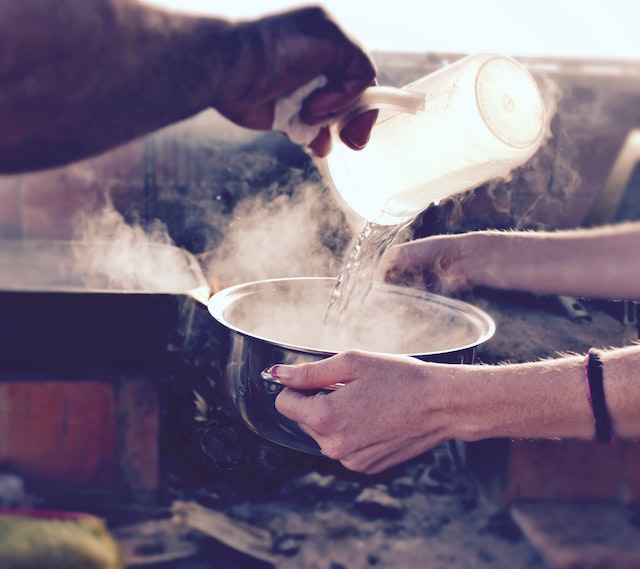
First, it’s important to understand what boiling is and what factors affect it. Boiling is the process by which a liquid reaches its boiling point and turns into a gas. The boiling point is the temperature at which the vapor pressure of the liquid equals the pressure surrounding the liquid, which typically means atmospheric pressure at sea level.
The boiling point of water is 100 degrees Celsius (212 degrees Fahrenheit) at sea level. However, this can vary depending on factors such as altitude, pressure, and the composition of the liquid. For example, water will boil at a lower temperature at higher altitudes because there is less atmospheric pressure pushing down on the liquid.
Now, let’s consider the question of whether cold or hot water boils faster. To start, it’s important to note that both hot and cold water will eventually reach the same boiling point if they are heated under the same conditions. However, the time it takes for them to reach this point can vary.
One factor that can affect the time it takes for water to boil is the starting temperature of the water. As mentioned earlier, the boiling point of water is 100 degrees Celsius. This means that if you start with water that is already close to this temperature, it will take less time to reach boiling than if you start with water that is much colder.
For example, let’s say you have two identical pots of water, one filled with cold water straight from the tap and the other filled with water that has been heated to 80 degrees Celsius. If you put both pots on the stove at the same time and turn up the heat to the same level, the pot with the hot water will reach boiling point faster than the pot with the cold water. This is because the hot water is already much closer to the boiling point than the cold water, so it requires less energy to reach it.
Another factor that can affect the time it takes for water to boil is the amount of energy being added to the system. In general, the more energy you add to the water, the faster it will boil. This is why turning up the heat on the stove will cause the water to boil faster, regardless of whether the water is hot or cold to begin with.
However, it’s important to note that there is a limit to how much energy you can add to the water before it starts to boil over or evaporate too quickly. This means that there is an optimal amount of energy to add to the water to achieve the fastest possible boiling time.
A related factor is the surface area of the water. The more surface area the water has, the faster it will boil because more water molecules will be exposed to the heat source. This is why a shallow pot of water will boil faster than a deep pot of water, all other things being equal.
So, to summarize, the answer to the question of whether cold or hot water boils faster is not a simple one. Both hot and cold water will eventually reach the same boiling point if they are heated under the same conditions. However, the time it takes for them to reach this point can vary depending on factors such as the starting temperature of the water, the amount of energy being added to the system, the surface area of the water, and other environmental factors such as altitude and pressure.