yes, putting salt in water can help it boil faster. However, the reason for this is a bit more complicated than you might think. In this article, we’ll explore the science behind boiling water and salt’s role in the process.
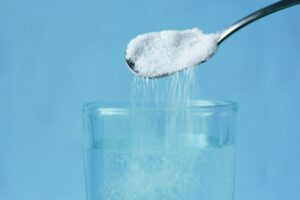
Before we dive into the details, it’s important to understand what happens when you boil water. When you apply heat to water, the molecules in the liquid begin to move faster and faster. As they gain energy, they start to break away from each other and turn into steam. This is what we see when we boil water – the liquid turns into a gas and rises up in the form of steam.
So how does salt affect this process? The key is in the chemistry of salt. Salt is made up of two elements – sodium and chlorine – that are attracted to each other through an electrostatic force. When you add salt to water, the salt molecules dissolve and separate into their individual sodium and chlorine ions.
These ions have an impact on the properties of the water. For one, they increase the boiling point of the liquid. In other words, it takes more heat energy to turn the water into steam when there is salt present. This is because the salt ions attract some of the water molecules and prevent them from escaping as steam. As a result, the boiling point of the water is raised.
This might seem counterintuitive at first – after all, you want the water to boil quickly, not slowly! However, the increased boiling point can actually help the water reach boiling temperature faster. This is because the salt ions help to distribute the heat more evenly throughout the liquid. Without the salt, the water at the bottom of the pot would heat up faster than the water at the top. This creates hot spots in the liquid and can cause it to boil unevenly.
When you add salt to the water, the salt ions act as a sort of mediator, helping to transfer heat from the bottom of the pot to the top more efficiently. This means that the water as a whole heats up faster and reaches boiling temperature more quickly. So while the increased boiling point might seem like a disadvantage at first, it actually helps the water boil faster in the long run.
It’s worth noting that the effect of salt on the boiling point of water is relatively small. Adding a teaspoon or two of salt to a pot of water won’t make a huge difference in the boiling time. However, every little bit helps, and in some cases, the faster boiling time can be noticeable.
Of course, there are other factors that can affect how quickly water boils as well. The size and shape of the pot, the amount of water in the pot, and the heat source all play a role. Adding salt to the water is just one small piece of the puzzle.
It’s also important to remember that there are some situations where you don’t want to add salt to the water. For example, if you’re cooking pasta, you might want to hold off on adding salt until after the water has come to a boil. This is because salt can make the pasta water “hard,” which can affect the texture of the pasta. Similarly, if you’re cooking vegetables, you might want to avoid adding salt to the water, as it can cause the vegetables to become mushy.
In summary, adding salt to water can help it boil faster by increasing the boiling point and distributing heat more evenly. However, the effect is relatively small, and there are some situations where you might not want to add salt to the water. So go ahead and add salt to your next pot of water if you want it to boil faster, but remember that it’s just one piece of the boiling puzzle.