Yes, but there is a lot more to the story than that. In this response, I will explore the science behind why water freezes at 0 degrees Celsius. The factors that can affect this process.
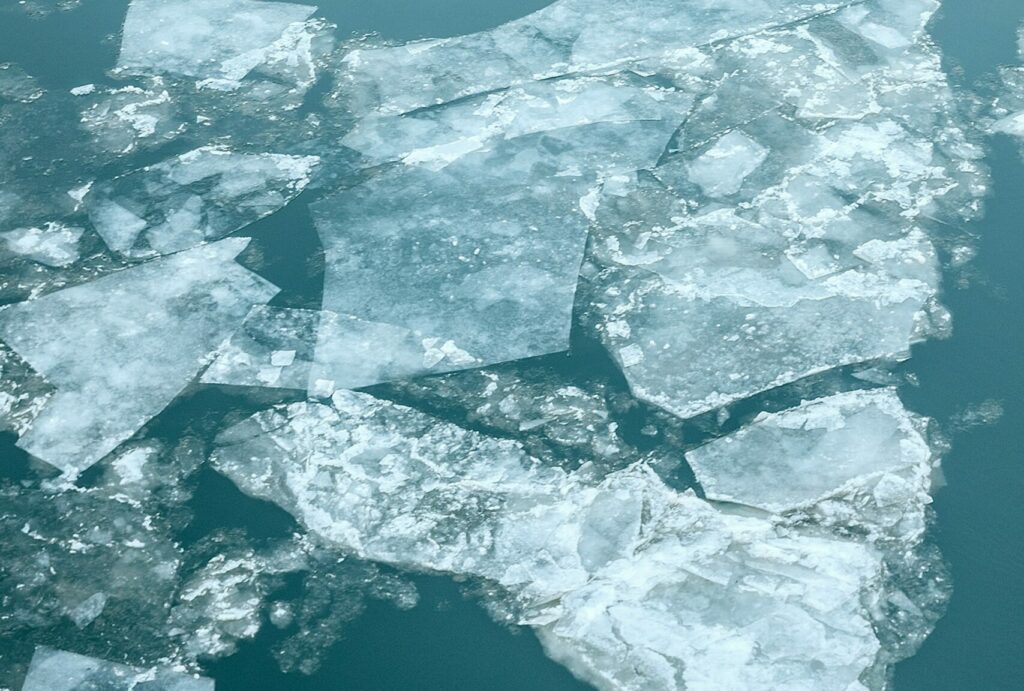
First, it’s important to understand what we mean by “freezing.” When a substance freezes, it transitions from a liquid state to a solid state. In the case of water, this means that the individual water molecules slow down and come together to form a crystalline structure that we recognize as ice. The temperature at which this transition occurs is called the freezing point.
So why does water freeze at 0 degrees Celsius (or 32 degrees Fahrenheit)? The answer has to do with the unique properties of water molecules. Water is a polar molecule, which means it has a slightly positive end and a slightly negative end. This polarity allows water molecules to form hydrogen bonds with each other. Which are relatively strong attractions between the positive and negative ends of different molecules. In liquid water, these hydrogen bonds are constantly breaking and reforming as the molecules move around.
As the temperature of water decreases, the molecules begin to move more slowly. At 0 degrees Celsius, the hydrogen bonds between water. Water molecules become strong enough that they start to form a crystalline structure. This is the point at which water freezes.
It’s worth noting that the freezing point of water is affected by atmospheric pressure. At sea level, where the pressure is about 1 atmosphere, water freezes at 0 degrees Celsius. But if you were to climb a mountain and reach a higher altitude, where the pressure is lower, the freezing point of water would actually be lower as well. This is why it can be more difficult to cook or bake at high altitudes. The lower air pressure can affect the boiling and freezing points of water, which can throw off cooking times and temperatures.
Another factor that can affect the freezing point of water is the presence of impurities. Pure water, with no impurities, will freeze at 0 degrees Celsius. But if you were to add salt or sugar to the water, for example, the freezing point would actually decrease. This is because the impurities interfere with the hydrogen bonds between water molecules, making it harder for them to form the crystalline structure that is characteristic of ice. So if you’ve ever used salt to de-ice a sidewalk or driveway, you’re actually lowering the freezing point of the water to prevent it from forming ice in the first place.
It’s also worth noting that water doesn’t always freeze uniformly. If you have ever left a bottle of water in the freezer and come back to find it only partially frozen, you have seen this phenomenon in action. The reason this happens is because the temperature in the freezer isn’t necessarily uniform – there may be areas that are colder or warmer than others. When water is exposed to these temperature variations, it can start to freeze in some areas while remaining liquid in others. This can create interesting patterns and shapes in the ice that forms.
Finally, it’s important to note that the freezing point of water is just one aspect of the complex behavior of this vital substance. Water is incredibly important to life on Earth. Its unique properties play a crucial role in everything from weather patterns to biological processes. By understanding the science behind water’s freezing point. We can gain a greater appreciation for the ways in which this simple molecule shapes our world.
In conclusion, water does indeed freeze at 0 degrees Celsius (or 32 degrees Fahrenheit). But this is just the beginning of the story. The freezing point of water is affected by a variety of factors, including atmospheric pressure and the presence of impurities.