This guide provides insights into creating captivating duck illustrations. Whether you’re a beginner or an experienced artist, understanding the fundamentals of illustration design can enhance your skills.
Duck illustrations can be used in various projects, including children’s books, educational materials, and decorative art. This guide will cover techniques and tips to help you create engaging and visually appealing designs.
Understanding Duck Anatomy
To create a captivating duck illustration, start by familiarizing yourself with the anatomy of ducks. Observe their distinctive features, including the shape of their bodies, the structure of their beaks, and the arrangement of their feathers.
Pay attention to the proportions of the duck’s body. Ducks have a unique silhouette that can vary between species. Understanding these differences will help you create a more accurate representation.
Choosing Your Materials
Selecting the right materials is essential for bringing your duck illustration to life. A sketchbook or drawing paper serves as the foundation for your artwork.
Gather pencils and erasers for initial sketches, along with inking pens or markers for outlining. If you prefer digital art, a drawing tablet can be a valuable tool. For coloring, consider using watercolors, colored pencils, or digital software to achieve the desired effect.
Sketching the Duck
Begin your illustration by sketching basic shapes to outline the duck’s body. Focus on getting the proportions right, as this will set the stage for the details to come.
Establish the duck’s posture and position in relation to its surroundings. A dynamic pose can add interest to your illustration, making it more engaging for viewers.
Adding Details and Textures
Once the basic sketch is complete, it’s time to add details. Focus on the feathers, eyes, and other unique characteristics that define the duck.
Incorporate textures to give depth to the feathers. This can be achieved through various techniques, such as cross-hatching or stippling, depending on your chosen medium.
Inking Your Illustration
After finalizing your sketch, proceed to the inking stage. Use inking pens or markers to outline your drawing, ensuring clean and defined lines.
If you’re working digitally, create a new layer for inking to maintain flexibility. This allows for adjustments without altering your original sketch.
Coloring and Final Touches
Choose a color palette that reflects the natural hues of ducks. Rich greens, blues, and browns can enhance the realism of your illustration.
Apply highlights and shadows to create depth and dimension. This will help your duck stand out against the serene pond backdrop, complete with lily pads and reeds.
Finally, review your illustration for any last-minute adjustments. Small details can make a significant difference in the overall impact of your artwork.
Techniques for Duck Illustration
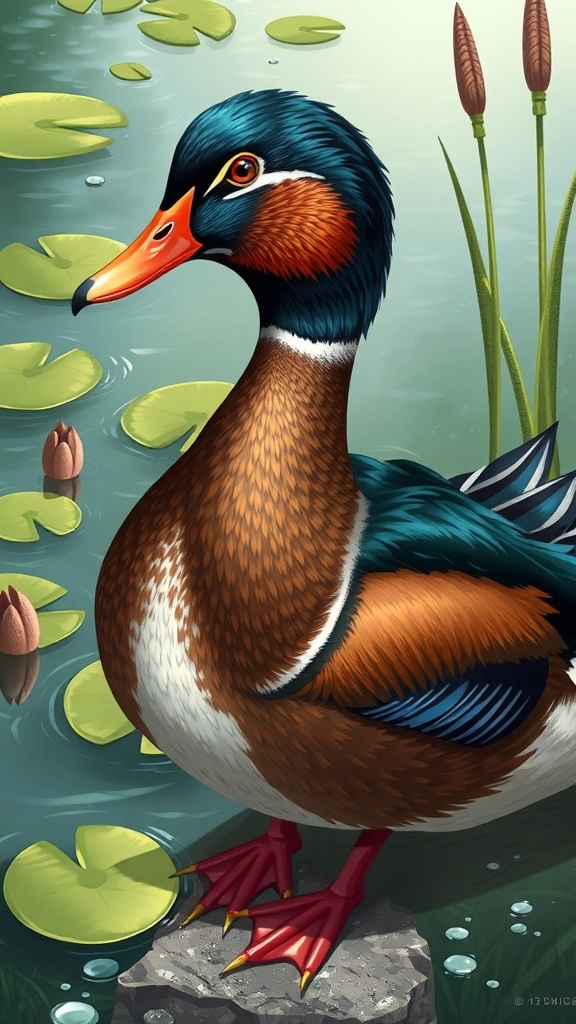
Creating a duck illustration involves understanding the anatomy and characteristics of ducks. Focus on their unique features such as their beaks, feathers, and body shapes. Experiment with different styles, from realistic to cartoonish, to find your preferred approach.
Ingredients
Related
- Duck-Themed Nail Art Design
- Duck Egg Blue Bedroom Design Ideas
- Duck Egg Blue Kitchen Design Ideas
- Duck Egg Blue Living Room Design Ideas