This easy bread drawing tutorial will guide you through the steps to create a simple yet realistic illustration of a loaf of bread. Perfect for beginners and those looking to improve their drawing skills, this tutorial focuses on basic shapes and shading techniques.
You will learn how to sketch the outline, add texture, and apply shading to give your bread drawing depth and dimension.
Materials Needed for Your Drawing
Before you start your drawing, gather the necessary materials to ensure a smooth process. You will need:
- Pencil
- Eraser
- Paper
- Fine-tip pen or marker (optional for outlining)
- Colored pencils or markers (optional for coloring)
Having these tools ready will help you focus on the drawing itself without interruptions. A good quality pencil will allow for clean lines and easy shading, while an eraser will help correct any mistakes along the way.
Understanding the Basic Shapes
The first step in creating your loaf of bread drawing is to establish the basic shapes. Begin by sketching a simple oval for the top of the loaf. This will serve as the foundation for the bread’s rounded shape.
Next, draw a rectangle beneath the oval to represent the body of the loaf. This combination of shapes will give you a solid starting point to refine your drawing. Don’t worry about perfection at this stage; focus on getting the proportions right.
Refining the Shape
Once you have the basic shapes in place, it’s time to refine them. Add curves to the sides of the rectangle to create a more natural look for the bread. A slight indentation at the top will help represent the crust, giving your loaf a realistic appearance.
Take your time with this step, as the shape of the loaf is crucial for capturing its essence. Use light pencil strokes to adjust the curves until you’re satisfied with the overall outline.
Adding Texture Details
To bring your drawing to life, it’s important to add texture. Draw lines across the top of the loaf to indicate the crust’s texture. These lines can be short and slightly curved to mimic the natural patterns found in bread.
Texture adds depth to your drawing, making it more engaging. Experiment with the spacing and direction of the lines to achieve a realistic look. Remember, bread has a unique texture, so don’t hesitate to reference real loaves for inspiration.
Shading for Depth
Shading is a key technique that will enhance the three-dimensional quality of your drawing. Choose one side of the loaf to apply shading, using light pencil strokes to create a gradient effect.
Blend the shading gently to avoid harsh lines, which can detract from the realism of your drawing. This step is where your loaf will start to gain depth and dimension, making it appear more lifelike.
Final Touches and Optional Coloring
After completing the shading, you may want to outline your drawing with a fine-tip pen for a clean finish. This step is optional but can help define the edges and make your loaf stand out.
If you wish to add color, use colored pencils or markers to bring your drawing to life. Choose shades that reflect the natural colors of bread, such as warm browns and soft yellows. This final touch can add vibrancy and personality to your artwork.
Step-by-Step Bread Drawing Guide
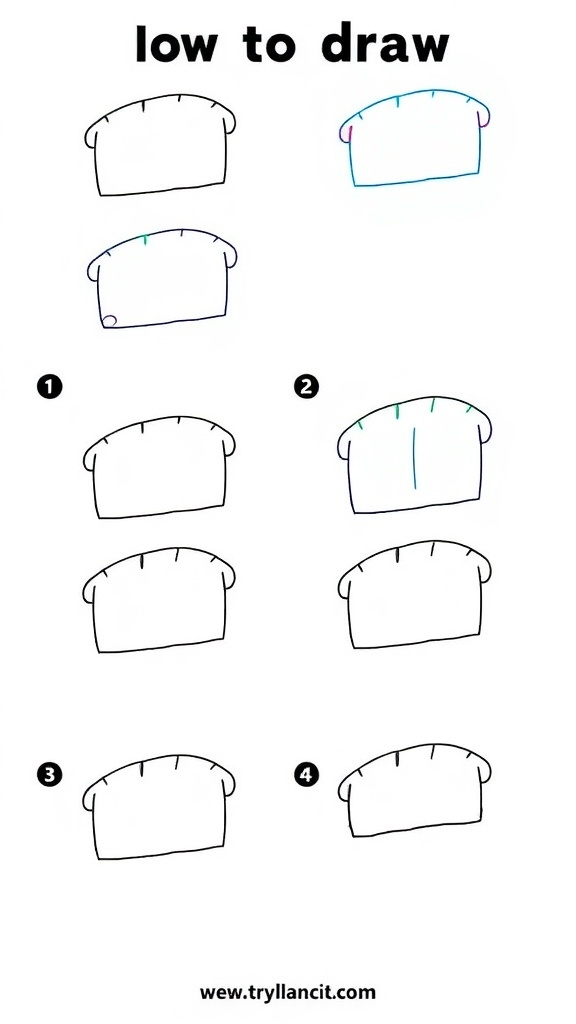
This tutorial covers the essential steps to draw a loaf of bread, including the basic shape, crust details, and shading techniques. It is designed to be completed in about 30 minutes and is suitable for artists of all skill levels.
Ingredients
Related
- Stylish Double Braid Hairstyle Tutorial
- Realistic Rice 3D Modeling Tutorial
- Simple Lobster Drawing Tutorial
- Charming Lobster Nail Art Tutorial