A bread knife is a specialized kitchen tool designed for slicing bread with ease. Its long, serrated blade allows for clean cuts through crusty loaves without crushing the soft interior.
This guide provides insights into the features of a good bread knife, its uses, and maintenance tips to ensure longevity.
Understanding Bread Knives
A bread knife is an essential tool in any kitchen, specifically crafted for slicing through bread with precision.
With a blade length typically ranging from 8 to 10 inches, it features a serrated edge that grips the crust, allowing for clean and effortless cuts.
This design makes it ideal for various types of bread, from crusty baguettes to soft sourdough.
Key Features of a Quality Bread Knife
When selecting a bread knife, several features stand out that contribute to its effectiveness.
The serrated blade is paramount, as it enables easy slicing without crushing the soft interior of the bread.
A longer blade length is beneficial for larger loaves, ensuring that each slice is uniform and neat.
Additionally, a comfortable handle is crucial for a secure grip, allowing for better control while slicing.
Durable materials used in the knife’s construction also play a significant role in its longevity, making it a worthwhile investment for any baking enthusiast.
Using Your Bread Knife Effectively
To achieve the best results when using a bread knife, it’s important to employ the right technique.
Start by positioning the loaf securely on a cutting board, ensuring it doesn’t move while slicing.
Using a gentle sawing motion, let the serrated edge do the work, applying minimal pressure to avoid squishing the bread.
For crusty loaves, begin at the tip of the knife and work your way through the crust, allowing the serrations to grip and slice.
This method will yield clean, even slices, enhancing the presentation of your bread for any occasion.
Maintenance Tips for Longevity
Proper care of your bread knife will ensure it remains sharp and effective for years to come.
Hand washing with mild soap and water is recommended; avoid using a dishwasher, as this can damage the blade and handle.
After washing, dry the knife immediately to prevent any rust from forming.
To maintain the sharpness of the blade, consider using a honing rod periodically.
This simple maintenance step will keep your knife ready for action, ensuring that each slice is as effortless as the first.
Creating a Rustic Baking Environment
The right kitchen setting can enhance the bread-making experience.
A rustic kitchen, complete with wooden cutting boards and flour-dusted surfaces, sets the stage for creativity and comfort.
Surrounding yourself with freshly baked loaves and essential baking tools can inspire a love for the art of bread making.
Incorporating elements like a high-quality bread knife into this environment not only elevates the process but also adds to the aesthetic appeal.
The combination of a well-crafted knife and a cozy kitchen creates an inviting atmosphere for both baking and sharing delicious bread.
Conclusion: The Importance of a Good Bread Knife
Investing in a high-quality bread knife is essential for anyone who enjoys baking.
Its unique design and features make slicing bread a simple task, while proper maintenance ensures it remains a staple in your kitchen for years to come.
With the right tools and environment, the joy of baking can be fully realized, making each loaf a masterpiece.
Understanding Bread Knives
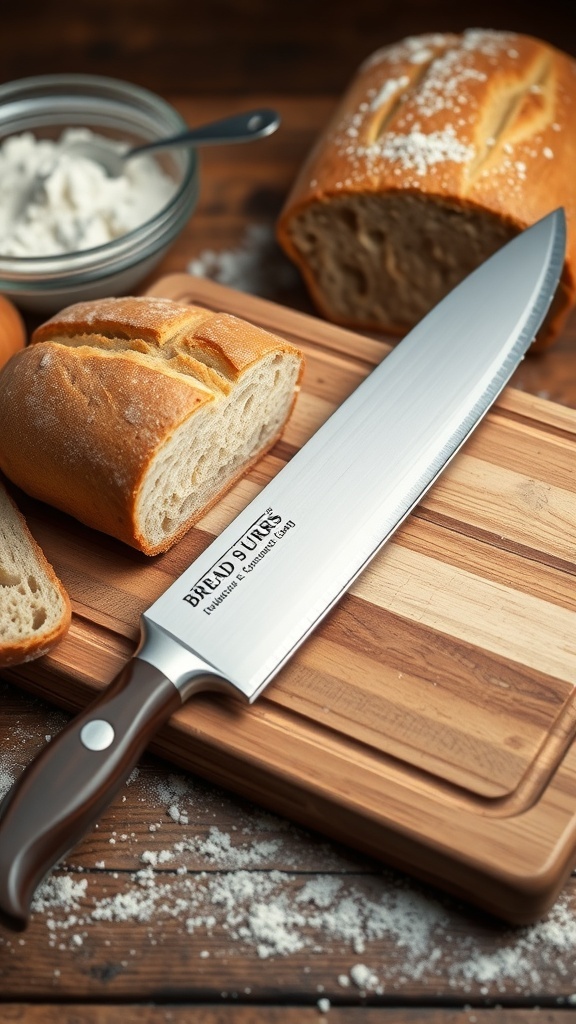
A quality bread knife typically features a blade length of 8 to 10 inches, with a serrated edge that grips the crust while slicing. Ideal for various types of bread, including baguettes and sourdough, it is a must-have for any kitchen.
Ingredients
Related
- Essential Salad Knife for Perfectly Chopped Greens
- Essential Cheese Knife for Every Cheese Lover
- Essential Cheese Knife Set for Every Cheese Lover
- What is the longest knife you can carry on a plane?