Noodles are a staple in many cuisines around the world, each type offering unique textures and flavors. From wheat-based to rice varieties, understanding the different types of noodles can enhance your cooking and dining experience.
This guide provides an overview of popular noodle types, their characteristics, and common uses in dishes.
Understanding Noodle Varieties
Noodles are a fundamental part of various culinary traditions, with each type bringing its own distinct characteristics to the table.
From the chewy texture of udon to the delicate nature of rice noodles, these versatile ingredients can be used in countless dishes.
Recognizing the differences among noodle types can significantly enhance both cooking and dining experiences.
Categories of Noodles
Noodles can be classified based on their ingredients, shapes, and cooking methods.
Wheat noodles, such as spaghetti and fettuccine, are popular in Italian cuisine, while udon noodles are a staple in Japanese dishes.
Rice noodles, commonly found in Southeast Asian cuisine, offer a gluten-free alternative that pairs well with a variety of flavors.
Popular Types of Noodles
Among the most recognized types are wheat noodles, which include spaghetti and fettuccine, known for their ability to hold sauces well.
Rice noodles, like vermicelli and Pad Thai noodles, are light and often used in stir-fries and soups.
Egg noodles, such as chow mein noodles and fresh egg pasta, add richness to dishes, while soba noodles, made from buckwheat, provide a nutty flavor. Ramen noodles are wheat noodles made with alkaline water (kansui), which gives them their springy bite and yellow color.
Cooking Techniques for Noodles
Cooking noodles requires attention to detail, as each type has specific instructions that affect texture and flavor.
Start by identifying the noodle type needed for your recipe, then follow the package instructions for cooking times, which can vary based on thickness and type.
Pairing noodles with the right sauces, vegetables, and proteins is essential for creating a balanced and satisfying dish.
Creating a Noodle Feast
To create an inviting noodle feast, consider presenting a variety of noodles on a wooden table, each in its own bowl.
Incorporate colorful vegetables and flavorful sauces to enhance the visual appeal and taste.
Adding chopsticks and a small dish of soy sauce can further elevate the dining experience, inviting guests to enjoy a diverse range of flavors and textures.
Nutrition and Serving Suggestions
The nutritional content of noodles varies widely based on the type chosen.
Cooked wheat and rice noodles have broadly similar calories and carbohydrates per portion. Rice noodles, glass noodles and 100% buckwheat soba are gluten-free, while wheat noodles, egg noodles, ramen and most soba (which usually contains some wheat flour) are not.
When planning a meal, consider the serving size and balance the dish with proteins and vegetables for a wholesome experience.
Exploring Various Noodle Types
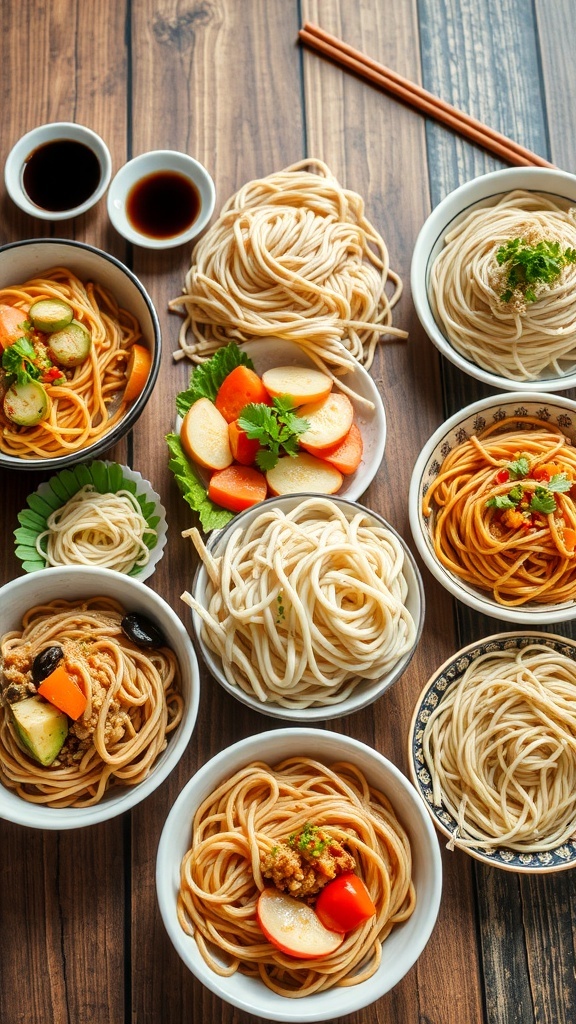
Noodles can be categorized based on their ingredients, shape, and cooking methods. Common types include spaghetti, ramen, udon, and rice noodles, each suited for specific dishes and preparation styles.
Ingredients
- Wheat Noodles: Spaghetti, Fettuccine, Udon
- Rice Noodles: Vermicelli, Pad Thai Noodles
- Egg Noodles: Chow Mein, Fresh Egg Pasta
- Soba Noodles: Buckwheat Noodles
- Glass Noodles: Made from mung bean starch
Instructions
- Identify the type of noodle you want to use based on your recipe.
- Cook the noodles according to package instructions, adjusting time based on thickness and type.
- Pair the noodles with appropriate sauces, vegetables, and proteins to create a balanced dish.
Cook and Prep Times
- Prep Time: 5 minutes
- Cook Time: 10-15 minutes
- Total Time: 15-20 minutes
- Servings: Varies based on type
- Calories: Varies based on type
- Fat: Varies based on type
- Protein: Varies based on type
- Carbohydrates: Varies based on type