Creating a duck feeder can enhance the feeding experience for your ducks while ensuring they have access to food without waste. This simple design is easy to build and can be customized to fit your yard or farm.
The feeder can be made from readily available materials and is suitable for various types of duck feed, making it a practical solution for duck owners.
DIY Duck Feeder Design
Building a duck feeder can significantly improve the feeding experience for your ducks. This particular design incorporates a sloped roof, which helps keep the feed dry and protected from the elements.
The trough is designed to minimize spillage, ensuring that your ducks can access their food without creating a mess. This feeder is not only functional but also easy to construct, making it suitable for both novice and experienced DIY enthusiasts.
Materials Needed
To create your duck feeder, you will need a few essential materials.
Plywood sheets serve as the base and sides, providing a sturdy structure. You will also require wood screws or nails to assemble the pieces securely. Hinges are necessary for the roof, allowing for easy access when refilling the feeder.
For the trough, wooden dowels or PVC pipes work well, ensuring that ducks can easily reach their feed. Optionally, wood sealant or paint can be used for weatherproofing, extending the life of your feeder.
Construction Steps
The construction process is straightforward and can be completed in just a couple of hours.
Begin by cutting the plywood into the appropriate sizes for the base, sides, and roof of the feeder. Assemble the sides to the base using screws or nails, making sure the structure is stable and secure.
Next, attach the trough using wooden dowels or PVC pipes, ensuring there is ample space for the ducks to access their feed comfortably. Finally, add hinges to the roof for easy access when it’s time to refill the feeder.
Finishing Touches
Once the feeder is assembled, consider sealing or painting it to protect against the elements.
This step, while optional, can significantly enhance the durability of your feeder, allowing it to withstand rain, sun, and other outdoor conditions. A well-finished feeder not only looks good but also serves its purpose effectively.
Placement and Enjoyment
After constructing your duck feeder, the next step is finding the perfect spot for it.
Choose a grassy area where ducks can easily approach the feeder. Ideally, this location should be near a serene pond, enhancing the outdoor setting and providing a peaceful environment for your ducks.
Once in place, watch as your ducks eagerly approach the feeder, enjoying their meals without the worry of waste or spoilage.
Benefits of a Homemade Duck Feeder
Creating a homemade duck feeder offers numerous benefits for both the ducks and their caretakers.
Not only does it provide a reliable source of food, but it also encourages a more organized feeding routine. Ducks can feed comfortably without competing for space, promoting a healthier feeding environment.
Moreover, building your own feeder allows for customization, ensuring it meets the specific needs of your ducks and fits seamlessly into your outdoor space.
DIY Duck Feeder Design
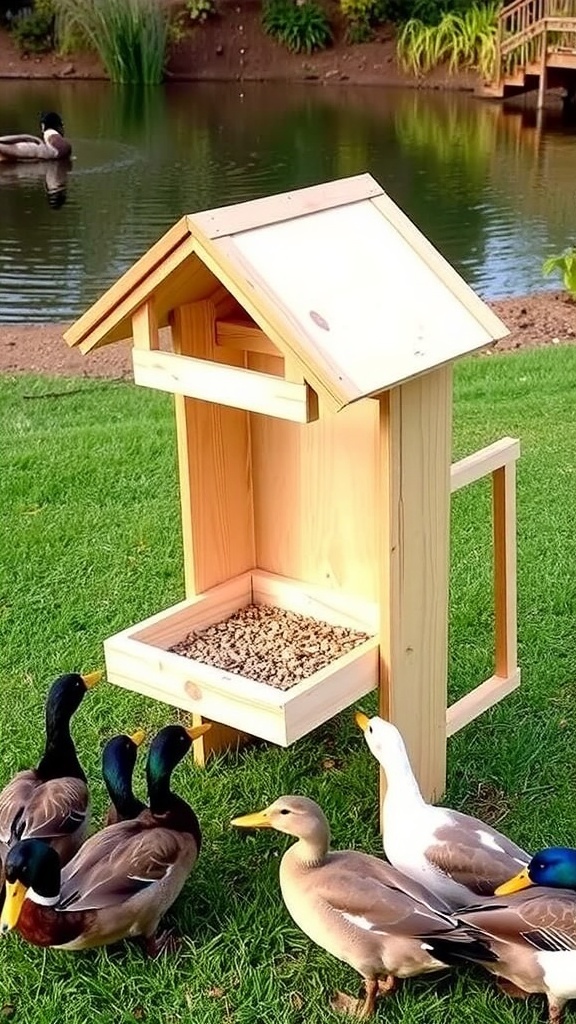
This duck feeder design features a sloped roof to keep food dry and a trough that minimizes spillage. The construction takes about 1-2 hours and can accommodate multiple ducks at once.
Ingredients
Related
- DIY Duck House Plans
- Comprehensive Duck House Plans
- 5 Charming Small House Plans for Cozy Living
- 5 Stunning House Plans for Your Dream Home