Lightning is a dangerous and unpredictable natural phenomenon that can strike with devastating consequences. Knowing how close is too close for lightning is essential for staying safe during a thunderstorm. While there is no definitive answer to this question, there are several factors to consider when evaluating the danger posed by a thunderstorm.
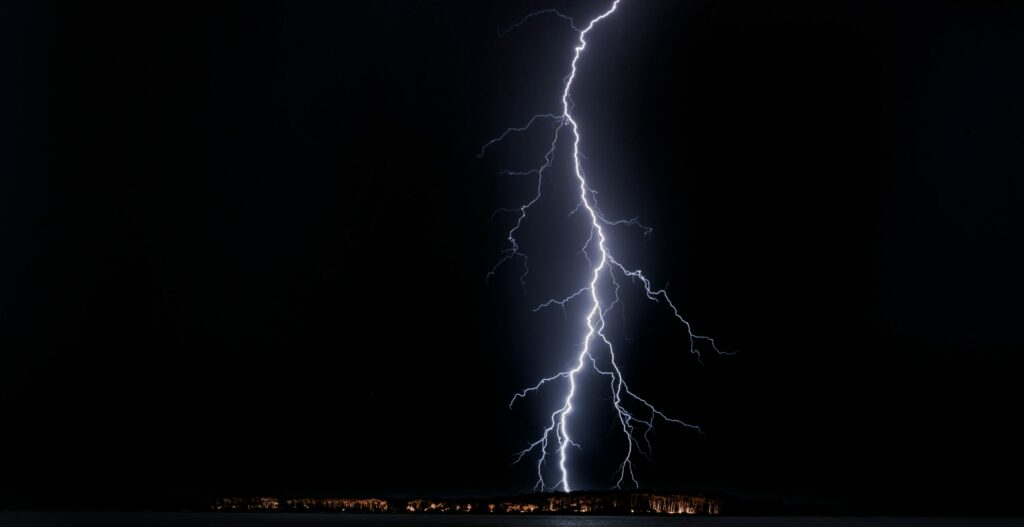
First and foremost, it is important to understand how lightning works. Lightning is a discharge of electrical energy that occurs when the difference in electric potential between the ground and the atmosphere becomes too great. This usually happens during a thunderstorm, when the rising and falling air currents within a storm cloud create a separation of charges. When the electrical potential difference becomes high enough, a lightning bolt can be triggered, which travels through the air towards the ground.
The distance at which lightning becomes dangerous depends on several factors, including the strength and frequency of the lightning strikes, the height of the storm cloud, and the terrain and topography of the surrounding area. In general, lightning strikes can be lethal if they are within about 30 meters (100 feet) of a person or object.
One way to estimate the distance of a lightning strike is to use the “flash-to-bang” method. This involves counting the number of seconds between seeing a lightning flash and hearing the corresponding thunder. For every five seconds of time difference, the lightning is about one mile away. This method is not precise, but it can provide a rough estimate of the distance of a lightning strike.
However, it is important to remember that lightning can strike beyond the range of thunder, so even if you cannot hear thunder, you may still be in danger. Lightning can also strike horizontally for several miles from the point of origin, so it is important to stay indoors or in a vehicle during a thunderstorm, rather than seeking shelter under a tree or in an open field.
Another factor to consider when evaluating the danger of lightning is the type of storm cloud present. There are several types of thunderstorms, including single-cell, multi-cell, and supercell storms. Supercell storms are the most dangerous type of thunderstorm, as they can produce large hail, damaging winds, and tornadoes in addition to lightning strikes. These storms are also more likely to produce multiple lightning strikes, increasing the likelihood of a direct strike.
The height of the storm cloud is also an important factor to consider when evaluating the danger of lightning. Lightning strikes are more common and more intense in taller storm clouds, which can extend upwards of 10-15 kilometers (6-9 miles) into the atmosphere. If a storm cloud is particularly tall, it may be visible from a great distance, but this does not necessarily mean that it is far enough away to be safe.
The terrain and topography of the surrounding area can also affect the danger posed by lightning. Lightning tends to strike the highest point in an area, so if you are in a flat, open field or on a mountaintop, you are at increased risk of being struck. Similarly, if you are near a tall tree or other tall object, you are more likely to be struck by lightning if it hits that object.
In general, if you can see or hear thunder, you are within striking distance of a thunderstorm and should take appropriate precautions. This means seeking shelter indoors or in a vehicle, staying away from windows and electrical appliances, and avoiding contact with metal objects or water. If you are caught outside during a thunderstorm, try to find shelter in a low-lying area, such as a ditch or depression, and avoid standing near tall objects or trees.
In conclusion, the distance at which lightning becomes dangerous depends on several factors, including the strength and frequency of the lightning strikes, the height of the storm cloud, and the terrain and topography of the surrounding area. In general, lightning strikes can be lethal.