Voltage and amperage are two important electrical measurements that are often used in electronics and electrical engineering. Voltage, measured in volts (V), is the electrical potential difference between two points in a circuit. Amperage, measured in amperes (A) or amps, is the measure of the flow of electrical current in a circuit. Understanding how to convert volts to amps is essential for designing and troubleshooting electrical systems.
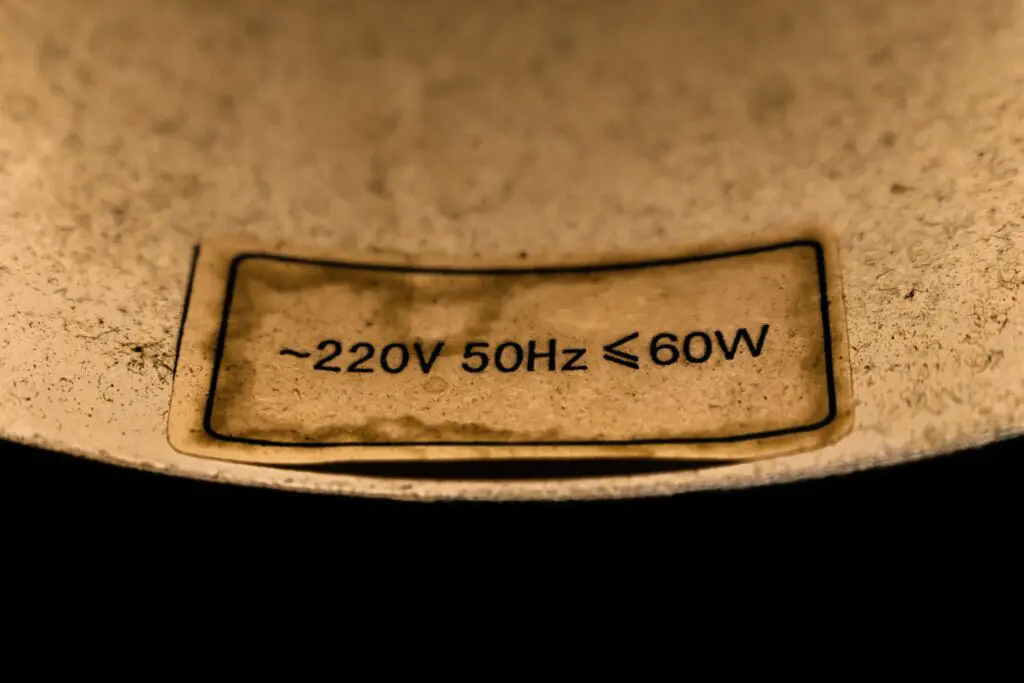
The relationship between volts and amps is defined by Ohm’s law, which states that the current (I) flowing through a conductor is directly proportional to the voltage (V) applied across the conductor, and inversely proportional to the resistance (R) of the conductor. The formula for Ohm’s law is I = V/R, where I is the current in amps, V is the voltage in volts, and R is the resistance in ohms.
To convert volts to amps, you will need to know the resistance of the circuit or component you are measuring. If you do not know the resistance, you will not be able to accurately calculate the amperage. Once you have the resistance, you can use Ohm’s law to determine the current.
Here is an example of how to convert volts to amps using Ohm’s law:
Suppose you have a circuit with a voltage of 12 volts and a resistance of 6 ohms. To determine the amperage, you would use the formula I = V/R:
I = 12V / 6Ω = 2A
Therefore, the amperage in the circuit is 2 amps.
In some cases, you may need to convert amps to volts instead of volts to amps. To do this, you can rearrange Ohm’s law to solve for voltage instead of current. The formula for voltage is V = IR, where V is the voltage in volts, I is the current in amps, and R is the resistance in ohms.
Here is an example of how to convert amps to volts using Ohm’s law:
Suppose you have a circuit with a current of 4 amps and a resistance of 3 ohms. To determine the voltage, you would use the formula V = IR:
V = 4A x 3Ω = 12V
Therefore, the voltage in the circuit is 12 volts.
In conclusion, converting volts to amps is a simple process that can be accomplished using Ohm’s law. To convert volts to amps, you will need to know the resistance of the circuit or component you are measuring. Once you have the resistance, you can use Ohm’s law to determine the current. Conversely, if you need to convert amps to volts, you can rearrange Ohm’s law to solve for voltage instead of current.