When dealing with hatching eggs, whether it be for poultry or other avian species, it’s important to ensure the health and viability of the embryos inside. Identifying whether a chick has died in the egg, also known as “pipped,” can be a crucial step in the hatching process. Here’s a comprehensive guide on how to tell if a chick has died in the egg.
- Candling: Candling is a technique that involves shining a bright light through the egg to observe the contents inside. A candling light, which can be a specialized device or even a strong flashlight, is used to illuminate the egg from one end while it is held in a dark room. By doing so, you can see through the eggshell and assess the development of the embryo. A live embryo will appear as a dark shadow, while a dead embryo may appear clear or have dark spots.
- Lack of Movement: During the later stages of incubation, you may be able to observe movement within the egg when candling. Live embryos will often move, reposition themselves, and respond to external stimuli, such as light or sound. However, a dead embryo will not show any signs of movement or response to stimuli, indicating that it may have died in the egg.
- Foul Odor: As an egg ages and begins to decompose, it may emit a foul odor. If you notice an unpleasant smell when candling an egg, it could be an indication that the chick inside has died.
- Delayed Hatching: Chicks typically hatch from the egg within a specific timeframe, depending on the species. If an egg has gone past the expected hatching date and there are no signs of pipping or hatching activity, it could be an indication that the chick has died in the egg.
- Abnormal Appearance: When candling an egg, a live embryo will typically have a uniform, rounded shape with visible blood vessels. In contrast, a dead embryo may appear misshapen, with an irregular outline or unusual discoloration. It could also have a lack of blood vessels or show signs of early or advanced decomposition.
- Floating Eggs: Another method to check for the viability of an egg is to place it in water. Fresh eggs will generally sink to the bottom and lay flat on their sides, while older or potentially dead eggs may float or stand on end. This is because as an egg ages, the air cell inside it grows larger, causing it to float. However, it’s important to note that not all floating eggs are necessarily dead, as some eggs may float due to other factors such as uneven weight distribution or the position of the air cell.
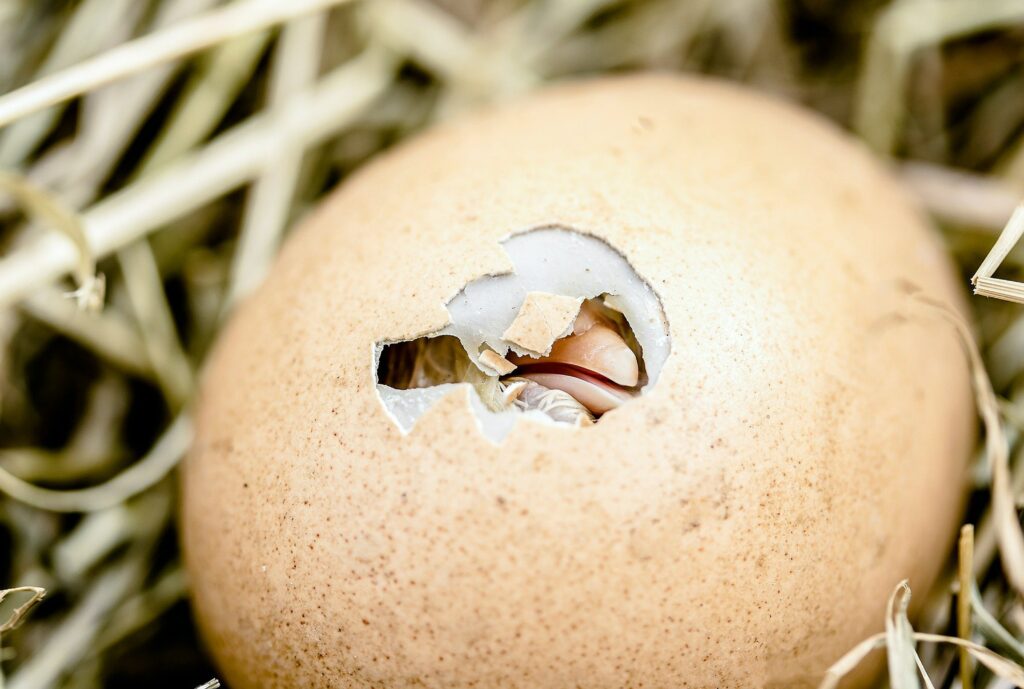
- Lack of Pipping: Pipping is the process by which a chick breaks through the eggshell using a specialized egg tooth to create a small hole or “pip” for breathing before hatching. If you notice that an egg has not pipped within the expected timeframe, it could be an indication that the chick has died in the egg.
- Egg Weight Loss: During the incubation process, eggs will lose weight as moisture evaporates from them. Monitoring the weight loss of eggs can be a useful indicator of their viability. If an egg loses weight too quickly or too slowly compared to the expected rate, it could be a sign that the embryo inside has died.
- Lack of Internal Pip: When candling an egg, you may be able to see the internal pip, which is the initial hole made by the chick inside the eggshell to breathe before hatching. If there is no sign of an internal pip or hatching activity, it could indicate that the chick has died.
- Professional Diagnosis: In some cases, it may be difficult to determine if a chick has died in
How do you tell if a chick has died in the egg?