When a bullet is fired into water, it undergoes significant changes in its trajectory, speed, and effectiveness. The distance that a bullet travels underwater depends on various factors, such as the bullet’s size, weight, shape, velocity, and the type of water it’s fired into. In this article, we’ll explore these factors in detail and try to estimate the maximum distance that a bullet can travel underwater.
The first thing to understand is that water is a much denser medium than air. When a bullet enters water, it has to displace a lot of water molecules, which creates a significant resistance force. This resistance force reduces the bullet’s speed and affects its trajectory, causing it to slow down and change direction. The amount of resistance force depends on the bullet’s velocity, shape, and size. Generally, the faster and more streamlined a bullet is, the less resistance it will encounter in water.
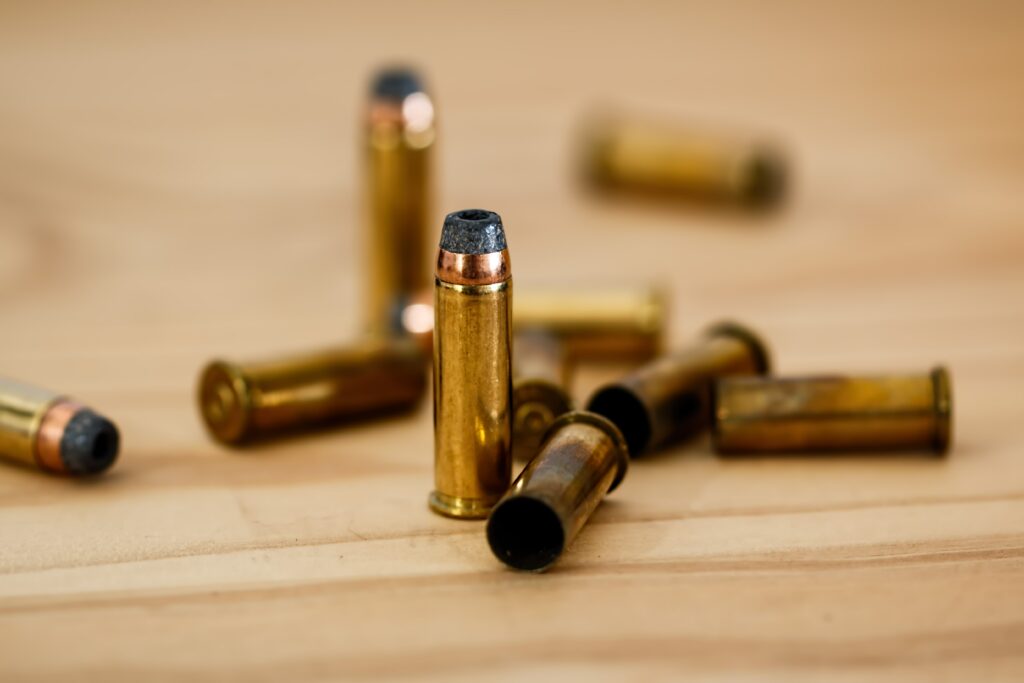
Another important factor to consider is the type of bullet being used. Bullets designed for use in air, such as those used in rifles and pistols, are not designed to be fired underwater. These bullets are typically made of lead or copper and have a hollow point or rounded tip. When fired into water, they quickly lose speed and energy due to the water’s resistance and can only travel a few meters before becoming ineffective.
On the other hand, bullets designed for use underwater, such as those used by divers and special forces, are made of materials that are denser than water, such as tungsten or steel. These bullets are also designed with a streamlined shape and a pointed tip that can penetrate the water more effectively and maintain their speed and accuracy over longer distances.
The velocity of the bullet also plays a significant role in determining how far it can travel underwater. The faster the bullet, the more energy it has, and the further it can travel before losing its effectiveness. A typical rifle bullet travels at speeds between 800 and 3000 feet per second (fps), while a typical underwater bullet travels at speeds between 1000 and 1800 fps.
The density of the water is another important factor to consider. Freshwater has a lower density than saltwater, which means bullets fired into freshwater will travel further than those fired into saltwater. The temperature of the water can also affect how far a bullet can travel. Cold water is denser than warm water, which means bullets fired into cold water will encounter more resistance and travel a shorter distance.
Finally, the depth of the water also affects how far a bullet can travel. As the bullet travels deeper into the water, the pressure increases, which can affect its trajectory and speed. Bullets fired into shallow water will travel further than those fired into deep water.
Given all these factors, it’s difficult to estimate exactly how far a bullet will travel underwater. However, in general, a typical rifle bullet fired into saltwater will travel no more than a few meters before becoming ineffective. In freshwater, the same bullet may travel up to 50 meters before losing its effectiveness.
Specialized underwater bullets fired from a high-powered rifle or submachine gun can travel much further. For example, the Russian APS underwater rifle fires a 5.66mm tungsten bullet at speeds up to 1150 fps. This bullet can travel up to 60 meters underwater and still maintain its accuracy and effectiveness. Similarly, the Heckler & Koch MP5 submachine gun fires 9mm steel-cored bullets at speeds up to 1400 fps. These bullets can travel up to 30 meters underwater before losing their effectiveness.
In conclusion, the distance that a bullet can travel underwater depends on various factors, including the type of bullet, velocity, water density, temperature, and depth. While it’s difficult to estimate exactly how far a bullet will travel, specialized underwater bullets fired from