Calcium chloride (CaCl2) is a type of ionic compound that forms as a result of the attraction of oppositely charged ions. Its structure is made up of a calcium cation (Ca2+) and two chloride anions (Cl-) held together by ionic bonds. This type of chemical bonding involves the transfer of electrons from one atom to another, leading to the formation of positively and negatively charged ions. In this article, we will explore the nature of ionic bonding and how it applies to the formation of calcium chloride.
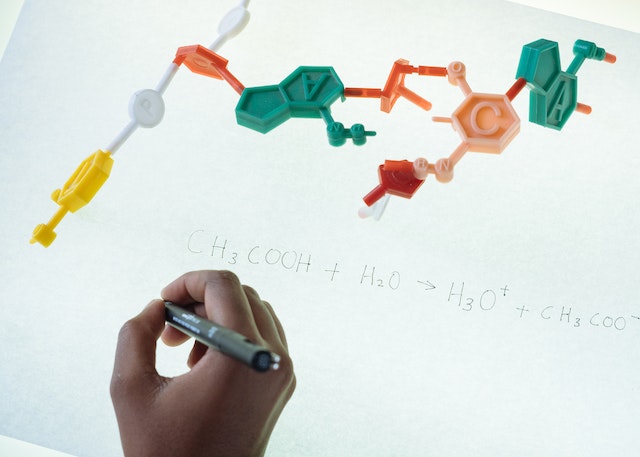
Ionic bonding usually occurs between elements with significantly different electronegativities. Electronegativity is a measure of an atom’s ability to attract electrons towards itself in a chemical bond. When two elements with different electronegativities come into contact, the more electronegative element will tend to pull electrons away from the less electronegative element, resulting in a separation of charge. This process leads to the more electronegative element becoming negatively charged (an anion) and the less electronegative element becoming positively charged (a cation).
For calcium chloride, calcium (Ca) has an electronegativity of 1.0, while chlorine (Cl) has an electronegativity of 3.0. This significant difference in electronegativity means that chlorine will pull electrons away from calcium when the two elements come into contact. Consequently, this leads to the formation of a calcium cation (Ca2+) and two chloride anions (Cl-).
The formation of calcium chloride can be described as follows:
Ca + Cl2 → CaCl2
In this reaction, the two chlorine atoms in the diatomic molecule (Cl2) each take one electron from the calcium atom to form two chloride anions (Cl-) and a calcium cation (Ca2+). As a result, calcium chloride has a neutral charge overall because the positive charge of the calcium ion cancels out the negative charge of the two chloride ions.
The ionic bonds in calcium chloride are very strong and require a significant amount of energy to break. This is because the ions are held together by the electrostatic attraction between the positively charged calcium ion and the negatively charged chloride ions. The strength of the ionic bond is determined by several factors, including the size and charge of the ions involved, as well as the distance between them.
Ionic compounds like calcium chloride typically have high melting and boiling points due to their strong ionic bonds. The amount of energy required to break these bonds is high, which is reflected in the high temperatures needed to melt or vaporize the compound. Calcium chloride has a melting point of 772 °C and a boiling point of 1935 °C.
Moreover, ionic compounds are usually brittle and have a crystalline structure. This is because the strong ionic bonds hold the ions in a fixed lattice structure, which can break apart if subjected to mechanical stress. The crystals are formed as a result of the regular arrangement of the ions in the lattice structure.
In conclusion, calcium chloride is an ionic compound that forms through the attraction of oppositely charged ions. Its structure is made up of a calcium cation and two chloride anions held together by ionic bonds, which are the result of the transfer of electrons from calcium to chlorine atoms. Understanding the nature of ionic bonding is critical to understanding the properties and behavior of ionic compounds such as calcium chloride. The strong ionic bonds give calcium chloride its high melting and boiling points and its brittle crystalline structure.