The newborn scrunch, also known as the fetal tuck or fetal position, refers to the way newborn babies curl up into a ball-like shape with their arms and legs tucked in close to their bodies. This position is common in newborns and is believed to be a natural instinct that helps them feel secure and comfortable in their new environment.
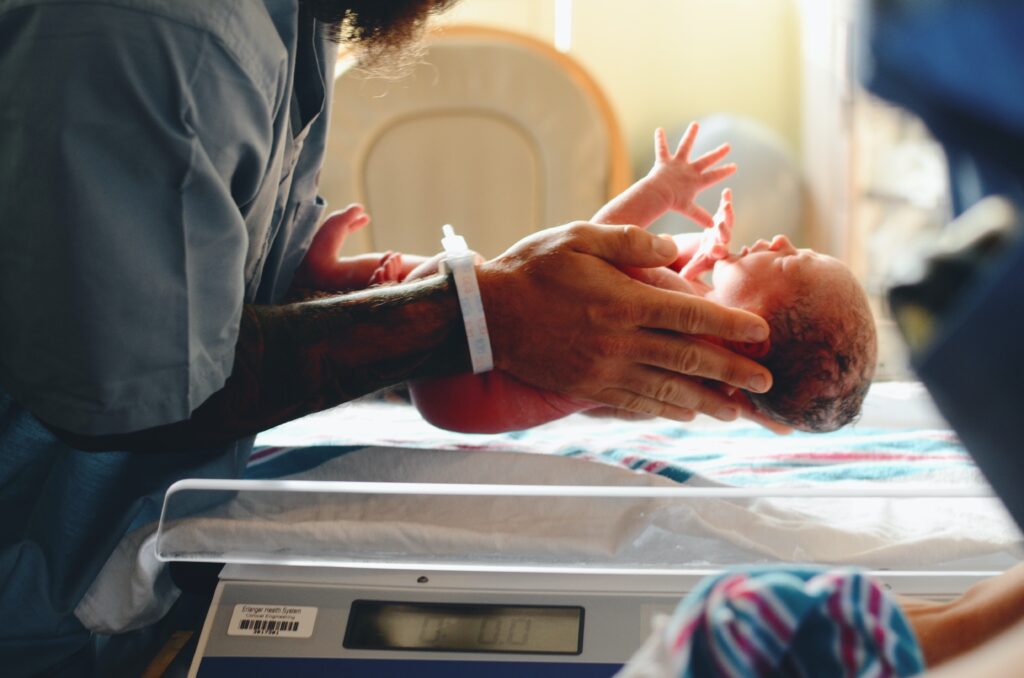
The duration of the newborn scrunch can vary from baby to baby, and there is no set timeframe for when it will start or end. However, it is generally considered to be a temporary phase that lasts for a few weeks to a few months after birth.
During the first few weeks of life, newborns are adjusting to the outside world and are still developing their motor skills and muscle tone. As a result, they may spend much of their time curled up in the fetal position, with their arms and legs close to their bodies.
As babies get older, they gradually start to develop more control over their bodies and their muscles become stronger. This can lead to them spending less time in the newborn scrunch position, and gradually transitioning to other positions, such as lying on their back, sitting up, or crawling.
It is worth noting that some babies may continue to prefer the fetal position even after they have developed more control over their bodies. This is not necessarily a cause for concern, as long as the baby is still able to move freely and is not experiencing any discomfort.
In some cases, prolonged scrunching or curling up into a ball could be a sign of a medical condition, such as a muscle or joint problem. If parents or caregivers are concerned about their baby’s posture or movements, they should consult a healthcare professional for advice.
In conclusion, the newborn scrunch is a common position that newborns assume after birth, and is believed to be a natural instinct that helps them feel secure and comfortable. While the duration of the scrunch can vary from baby to baby, it is generally considered to be a temporary phase that lasts for a few weeks to a few months after birth, before babies begin to develop more control over their bodies and transition to other positions.