The human ribcage serves as a protective shield for several vital organs such as the lungs, liver, and heart. It is composed of 24 individual bones known as ribs, which are arranged in pairs and connected to the thoracic vertebrae of the spinal column at the back, and to the sternum (breastbone) at the front.
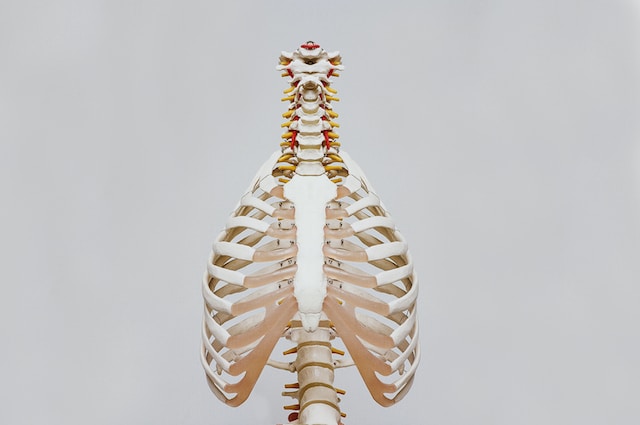
There are different types of ribs, each numbered based on its location in the ribcage. The top seven pairs are known as true ribs, connected directly to the sternum by costal cartilage. The next three pairs, known as false ribs, are indirectly connected to the sternum via the cartilage of the seventh rib. The last two pairs, known as floating ribs, are not attached to the sternum and instead attach to the vertebrae at the back.
Males and females both typically have 12 pairs of ribs or 24 ribs in total. However, rare cases of an extra or missing rib exist, but these are generally harmless and do not affect one’s overall health.
The myth that women have one less rib than men is baseless and has been debunked for centuries. The ribcage is a vital area of medical research, and researchers are studying the use of 3D-printed rib implants for severe rib fractures.
The ribcage is crucial to the respiratory system, as it protects and supports the lungs during breathing. During inhalation, the ribs move up and out, expanding the chest cavity, allowing the lungs to fill with air. During exhalation, the ribs move back down and in, decreasing the chest cavity’s volume, and forcing air out of the lungs.
Rib injuries, such as fractures or dislocations, can be very painful and may lead to severe health complications. Rib fractures are common in older adults, who may have weakened bones due to osteoporosis. Treatment for rib injuries typically involves pain management and rest, but severe cases may require surgery.
In summary, males and females both have 12 pairs of ribs or 24 ribs in total. The ribcage is essential to protect many important organs and support the respiratory system. The myth that women have one less rib than men has no scientific basis, and the anatomy and physiology of the ribcage continue to be subjects of significant medical research.